We had a peaceful night at Moho Cay, in the morning we were slow to rise so it was almost 10 am before we completed breakfast and prepare to get underway. The sky was over cast with thick, guncotton clouds. Off in the distance there were two other vessels that had anchored on the far side of the island. They were already underway and heading for open water. I twisted to look at our exit route out from between the tiny island that we had anchor amongst and when I turned back to see which way the other boats were heading, I was stunned. The boats as well as the other nearby islands had all disappeared. The sea in that direction appeared to be boiling as a dense line of rain swept over our anchorage and within seconds, the deluge and wind struck Maiatla with a great force causing the boat to take on a decided heel while forcing me to flee back below.
The squall only lasted 20 minutes or so and all we could do was listen the drumming of the rain upon the deck. It was fortunate we were late getting underway, unlike our neighbours who were now caught out in the open while being functionally blind while surrounded by hidden reefs.
The sky broke into streaks of blue as the rain and wind departed. Our plan was to sail direct to Placentia which lay some 30 miles to the north but out route would have us weaving between reefs and cays in water depth ranging from 70 to 10 feet, which would make for a nerve-wracking day of sailing. To add to out troubles, the gale that struck at our departure was not alone. Throughout the day every hour or so, a gale of similar intensity struck forcing us to reef frequently while taxing my skills as a navigator as we struggled to keep the boat on a heading that would keep us from grounding hard or plowing a corridor into the interior of a mangrove fringed cay. By 2pm Jackie and I were exhausted and wet, so it was decided to start looking for a place to anchor for the night and fortunately, Great monkey Cay, a few miles a way looked ideal.
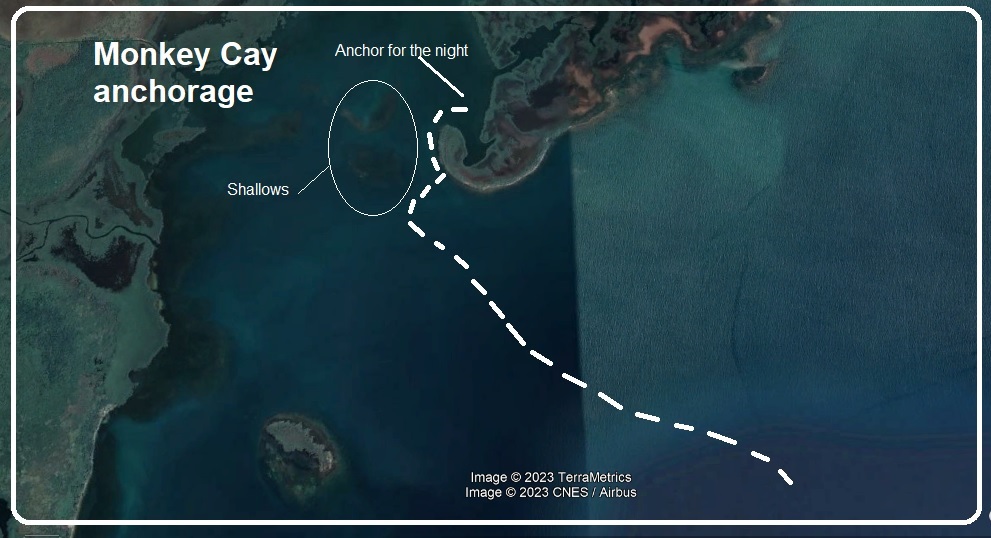
The Cay and the point of land from the mainland formed a perfectly sheltered bay with depths of 10 to 15 feet with a reported good holding, I was sold. The entrance looked easy enough, I plotted a heading between a breaking shallows on the north side and the mainland point where the Navionics indicated there was a deep channel. As we entered what I thought was the channel, the water became unnervingly shallow. Checking the chart and our plotted position put us in the channel, but the depth readings were all wrong. Taking a closer look at the chart, I noticed a little note written near the entrance which shocked me as I read. “THE CHANNEL IS CLOSER TO THE SHORE THAN SHOWN. HUG THE SHARE TO AVOID THE SHOAL!”
Ah shit! I said aloud, startling Jackie who was driving at the time. “Hard a starboard and head for the point!” I ordered. We were only 40 or 50 meters from the shore so it only took a few moments for the water depth to begin to drop to deeper water until finally leveling off at 20 feet. The depth held until we were almost on the beach where it began to raise sharply so we turned inward once again. I could have tossed a beer can to the shore as we entered the tranquil lagoon where we dropped the hook in 9 feet of water.
It was a mill pond surrounded my mangroves and sea birds. It was beautiful but warm in the lee of the Cay which protected us from the cooling sea breeze. After dinner we went for a swim, but instead of diving off of the boat, we cautiously climbed down the ladder while being carful to avoid making any “croc-attracting” splashes.
In the morning what should have been a easy 10 mile sail to Placentia would turn into a grueling day full of surprises.
By 8 am we had the anchor up and were motoring out of the lagoon. The sea beyond at the time was as calm and as breathless as the lagoon, so I anticipated having to motor for part of the morning until the wind filled in. As we were retracing our rout into the lagoon and passing the breaking shallows, an alarm screamed a warning. A quick check revealed that it was the overheat alarm. The engine was cut and after telling Jackie to keep the boat coasting out towards the open water, I dropped down to the engine to see what was up.
It didn’t take long to discover that the raw water pump pulley was simply turning on the shaft, I suspected that the key had broken and if so, it would be an easy fix. I returned to the deck to fill Jackie in.
Glancing about I realized that the current was setting us back towards the lagoon’s southern point. With no wind we would ground out in short order so I decided to drop the anchor which would afford me the time to repair the water pump. The anchor set itself and satisfied that we staying put I dropped below to commence removing the water pump. With the pump removed from the engine I set it upon the galley table and began to disassemble the pump.
Once opened, the remnants of the key, all bent and twisted fell out. I did not have a replacement key so I took a pair of coins, epoxied them together and using a hand file, constructed a new key. To install the new key I would have to remove the pully off of the shaft, but the nut was seized and no matter how hard I tried the nut refused to budge. I tried heating the nut as well as soaking in penetrating oil with no luck. It had been close to an hour since I started my repair and I was starting to get frustrated and while I sat there contemplating my next move, I noticed that the Maiatla’s bow had begun raising and falling with a building swell.
I head topside to have a look about and there to the east was a big black cloud and it was coming our way and from the speed of which the waves were building I suspected that the cloud bore a lot of wind. Back at the galley table I renewed my efforts to get the pump apart but within a few minutes I new I had to give up as Maiatla began to buck deeply with the waves now threatening to board the bow. We had to go and now.
Quickly I recovered the anchor and with the wind whistling through the rigging at better that 25 knots we unfurled the headsail and put the boat on a course bout for open water. I thought of turning around and heading back into the lagoon, but with being engineless and the narrow channel leading back in I didn’t want to risk it, one miscalculation we would be on the beach, an there was no one around to help. Better to be offshore.
With a full main and headsail Maiatla beat into the building waves with great authority. The clouds brought with it gusty gale force winds in the upper 30s and low 40s. In the gusts I would round Maiatla up to dump the excess wind out of the sails, then lay off again as the gust subsided. We would spend the better part of the day threading our way between reefs and cays while beating up wind as gale after gale blew in, dump an ocean full of rain before blowing its self out.
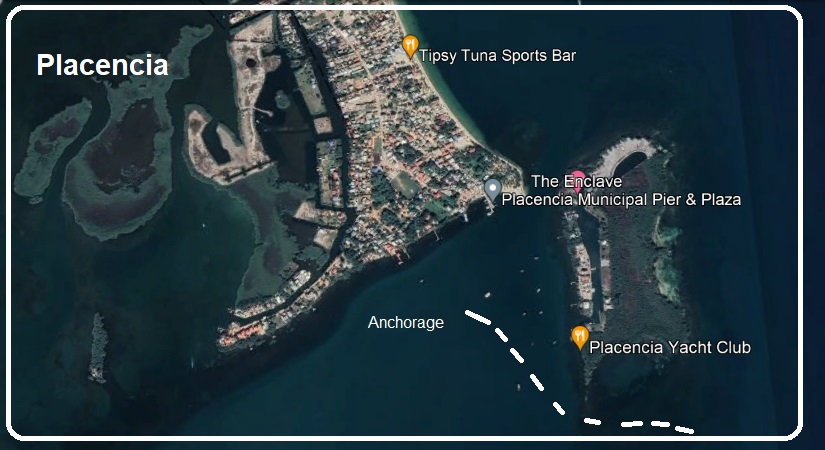
It took us 5 hours to cover the 10 miles to Placentia and it was late in the afternoon when we approached the anchorage. We received many a hard look from the crews of some of the anchored vessels as we charged in under sail, weaving between anchored boats to find a vacant spot on the west side of the harbour. Jackie rounded Maiatla up into the wind as I furled the big headsail. As the boat lost her forward motion, I dropped the anchor and paid out 300 feet of chain. The stiff breeze drove us back on the ground tackle, stretching out the chain with the anchor final bighting in to arrest our drift.
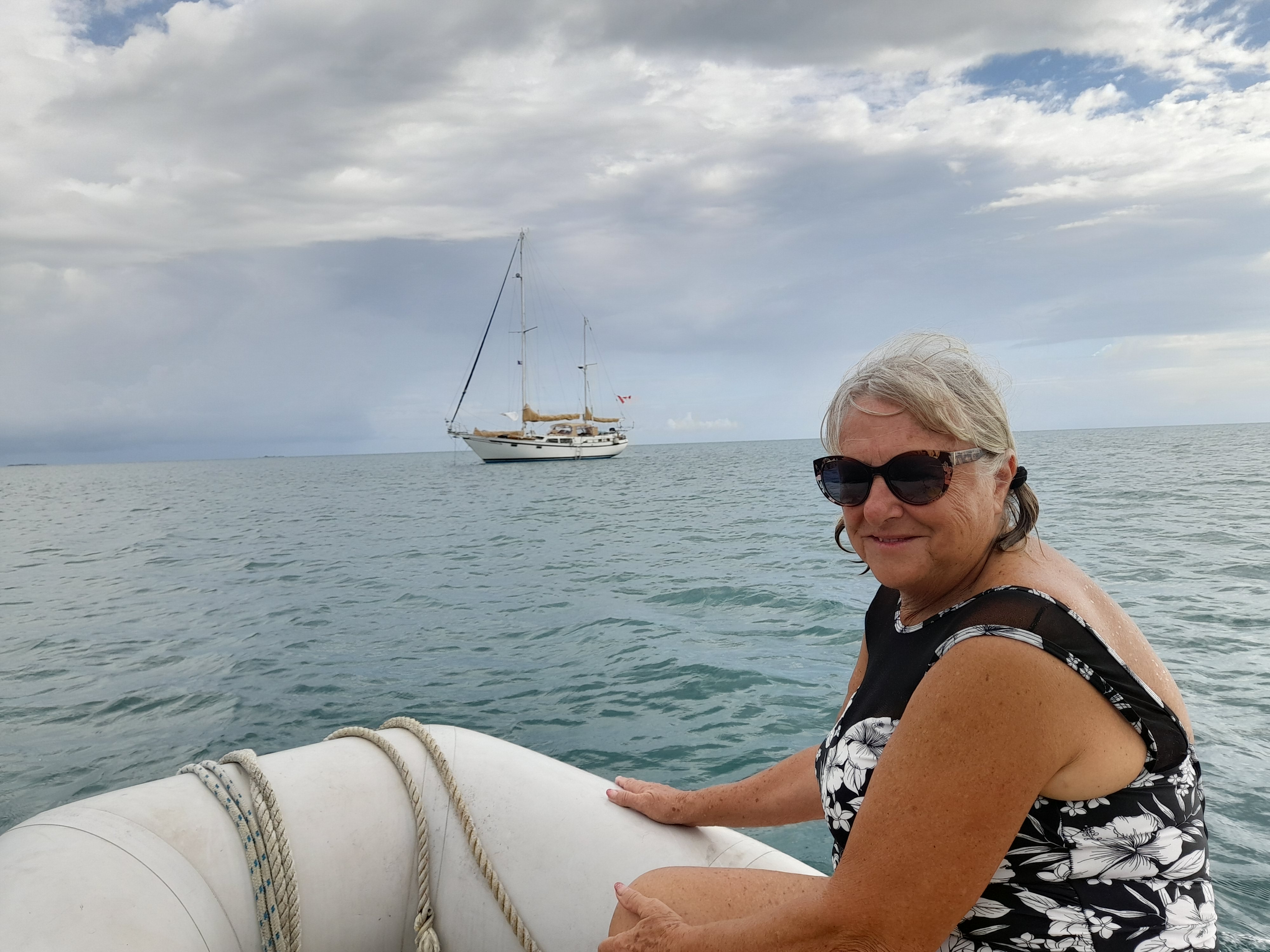
Jackie and Maiatla at anchor at Placentia.
We had made it safely to Placentia but not unscathed. Apparently in our haste to get underway out of Monkey Cay Lagoon, I had forgotten to close the porthole on the starboard side. Well apparently, with each roll to starboard, gallons of water rushed in, soaking the Pilot birth and settee cushions. Everything below in the main salon was soaked, including all of Jackie’s clothes and suitcase. Oops! Good thing the bilge pumps were working.
 The Naked Canadian