Punta Gorda
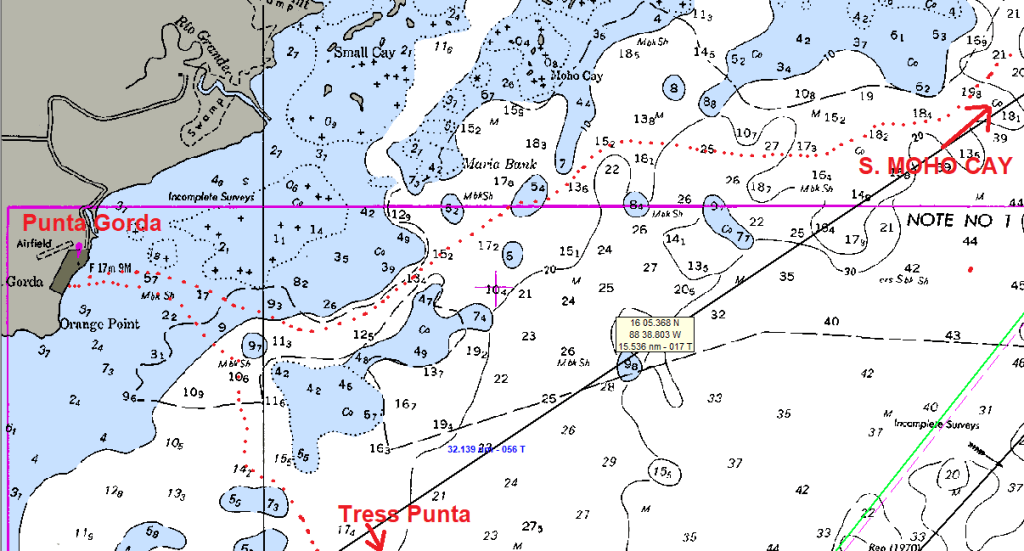
The shallow reefs surrounding Punta Gorda
We had a peaceful night at anchor and by 10 a.m. we had hauled the ground tackle and got underway powered by the big headsail. At first, the day was looking promising as the sun was peaking out of the clouds and a 10-knot breeze filled in putting us on a nice broad reach. But my optimism soon faded as we cleared Tress Punta. With the wind came a steep, 4-foot chop making for an uncomfortable ride and to make maters worse, off to the northeast, a black cloud bank was charging down upon us. We only had 15 miles to go to Punt Gorda, Belize where we intended to clear in but it would prove to be anything but a pleasant Caribbean sail.
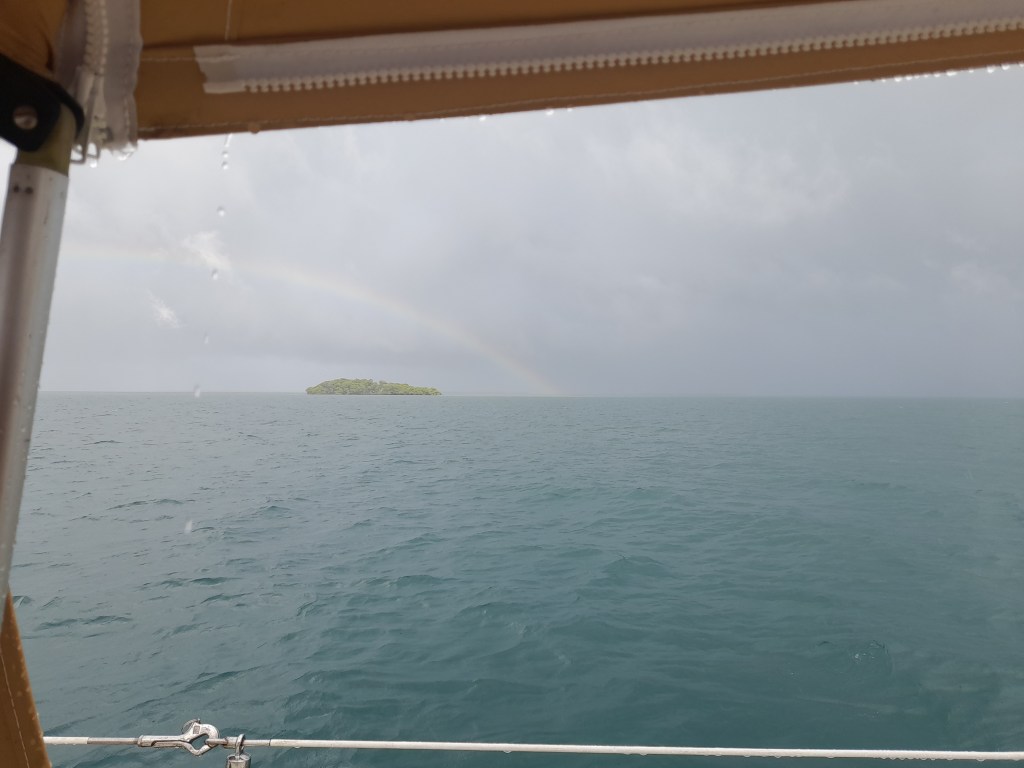
The first of many squalls pass leaving a rainbow over a Cay.
The first of several rain and thunder squalls would strike shortly after clearing the point. The rains came heavy with each squall striking with stiff winds from between 20 and 40 knots. We were thankful that the squalls usually only lasted from 10 to 30 minutes before quickly petering out.
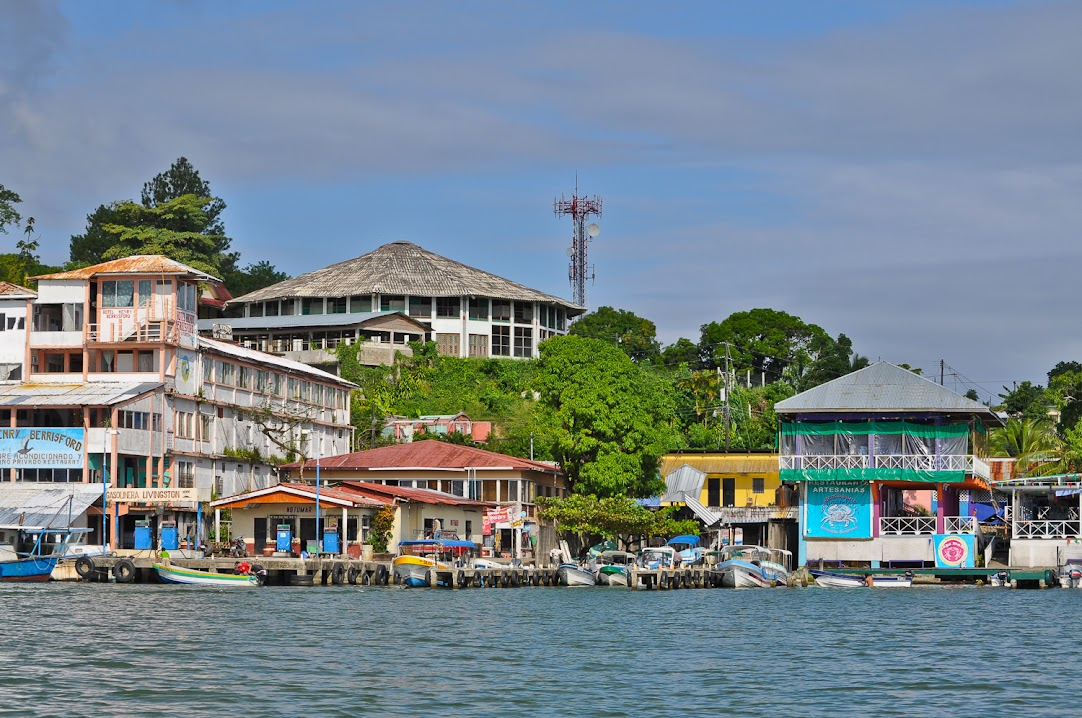
The town of Punta Gorda was reported to be the best place to clear in as they had a long dock and all officialdom was contained in one building at the head of the dock on which you could tie your dink. We had also heard that corruption in the Customs and Immigration office was minimal. Here we would also have to check in with the parks service and pay a fee as well as we would have to visit health department nurse to answer a covid questionnaire.
The drawback with Punta Gorda was that the approach from seaward was fraught with shallows and reefs, it was an open roadstead so there was no protection from the open sea and the easterly squalls. That is how we arrived, during a nasty thunder squall with 2-meter waves lashing the shore and dock. It was noon and we were anxious to get to shore and clear in so with some trepidation, we anchored a hundred meters or so off the dock, next to another cruising boat, some friends from the Rio, then launched the dink.
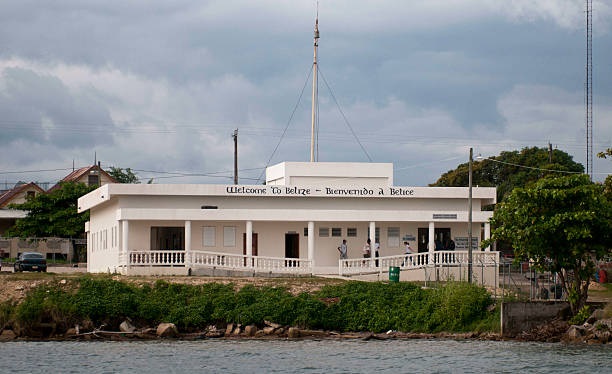
All officialdom, was contained in one building at the head of the dock In Punta Gorda
The boarding ladder was useless because when I mounted it on the side, the boat rolled so deeply that the rail almost disappeared underwater, the force of which dislodge the ladder. We had to just sit on the rail and time our jump into the dink.
If we weren’t already soaked to the skin from the rain, waterspouts shot up between Maiatla and the dink, showering us from beneath. Thankfully the wind died before we hit shore so our landing on the dock we faired better. On the dock we met the other cruisers who briefed us on the prosses, but they didn’t want to hang around for a chat because at the moment of our landing, the squall blew itself out and sea began to calm. They wanted to get back to their boat before the next squall hit.
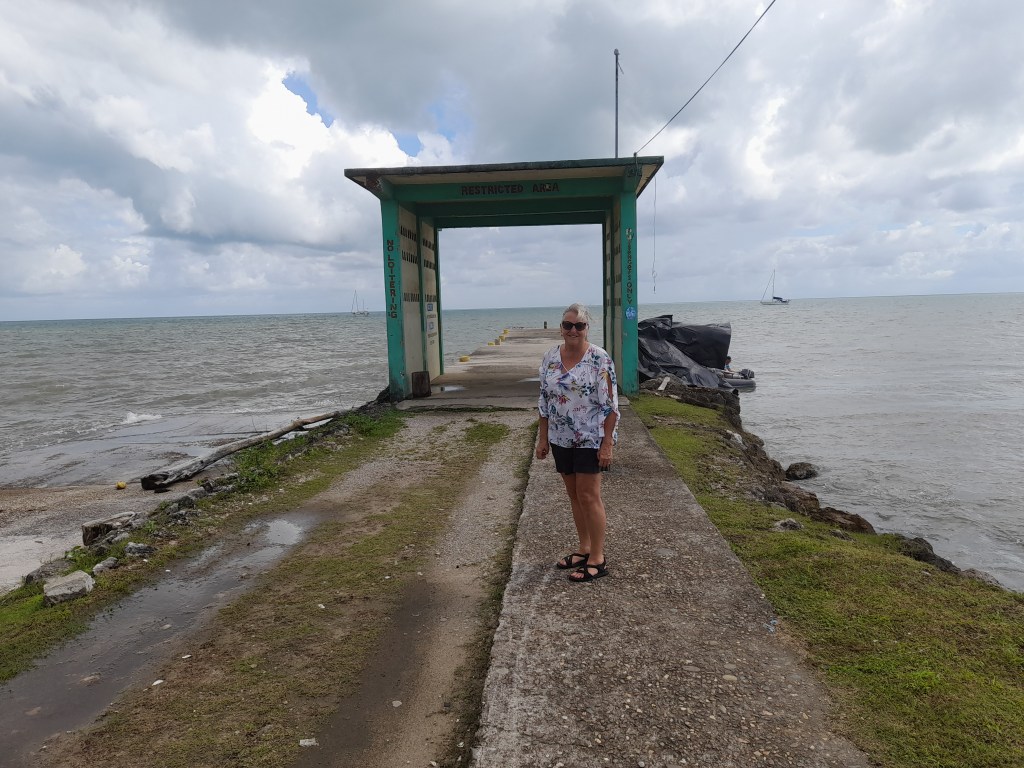
Jackie On the custom dock, you can just see Maiatla off in the left side of the pic and our friend boat to the right.
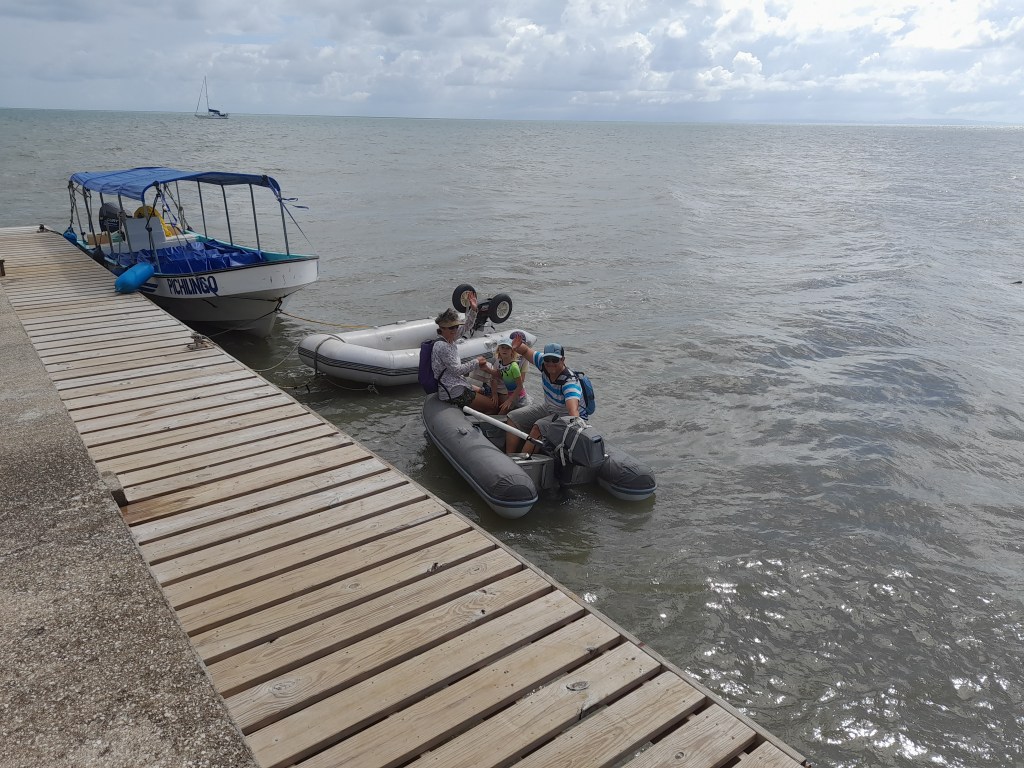
Our friend quickly depart between squalls
As predicted our clearing in was quick and very painless and only cost me $380 US. $50, as I would later learn was an “unofficial” fee the health nurse charged me and I assume, pocketed.
By 2 p.m., we were officially cleared into Belize and since the sky was breaking blue, we took the opportunity to go into town to buy a chip for my phone so I could send an email to let everyone know that we arrived safely. That done, we found a restaurant for an early dinner, which would prove to be a mistake.
We were told in no uncertain terms that we were not to sail at night in Belize, and that we had to be anchored for the nigh at least 1 hour before sunset. After eating we made a beeline back to the customs dock. As we looked seaward, it became apparent that a new squall was about to strike. The rain began to pelt as we bolted towards the dink, As we ran, Jackie spotted a duty-free liqueur store so she just had to stop. Apparently it was my birthday and she wanted to buy a bottle of wine to celebrate. Who was I to argue?
Our trip back out to Maiatla was as wet and wild as our trip in, but getting back aboard Maiatla proved much more difficult. Between bouts of laughter and grunting, with a scraped knee on my part, we finally clambered back aboard.
The nearest protect anchorage was about 7 miles away at South Moho Cay, and of course it was all upwind. And again, our course would have us weaving through reefs and shallows where there was less that 15 feet of water. To see 70 feet of water would be infrequent but anxiety relieving. It was after 3 p.m. before we got underway and I was now regretting stopping to eat. We would be lucky to reach the anchorage before dark.
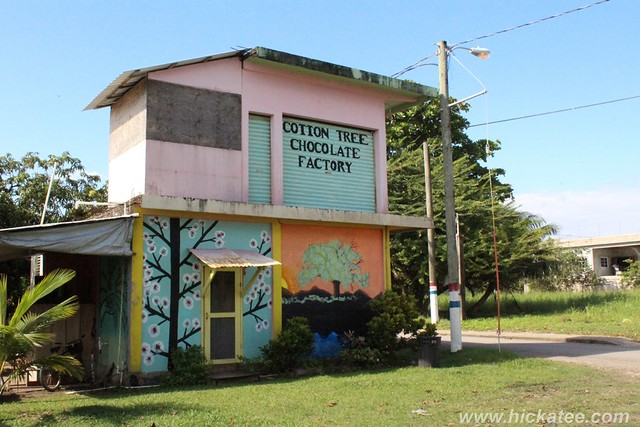
The Punta Gorda Chocolate Factory.
Our latest squall blew itself out before long and we managed to stay off the reefs but we lost all daylight about a half mile from the cay. It would be navigation by chart and radar to get us in. I chose the nearest spot, a tiny, mangrove encased bay on the south side of the uninhabited island. The only visible reference point came from a pair of masthead lights of boats, I presumed to be anchored on the far side of the island a couple of miles away.
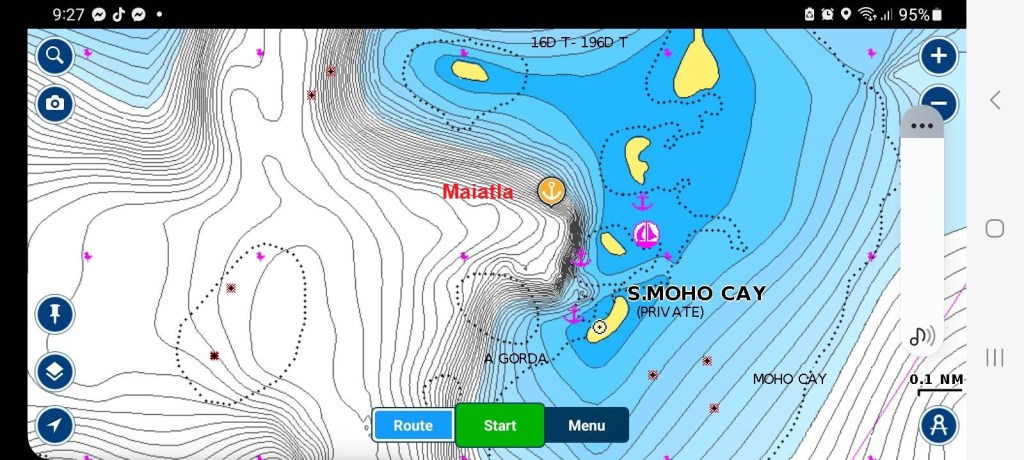
Our anchorage at South MOHO CAY
At a crawl, Jackie drove as I stood on the bow ready to drop the hook. I knew instantly that we were inside as the water suddenly grew calm. The bottom came up fast to 40 feet. I called back to Jackie to let me know when we hit 30 feet, its there I would drop the hook. Moments late she gave the word and down went the anchor. I wanted to put out 3 to 1, so about 90 feet of chain but before that could happen Jackie yelled, “8 feet!”
In the dusk, less than two boat lengths ahead, I could faintly make out the shadow that was a line of mangrove trees. “Reverse!” I yelled back. We would retrace out path and try again, but this time, 40 feet of water would have to do.
 The Naked Canadian