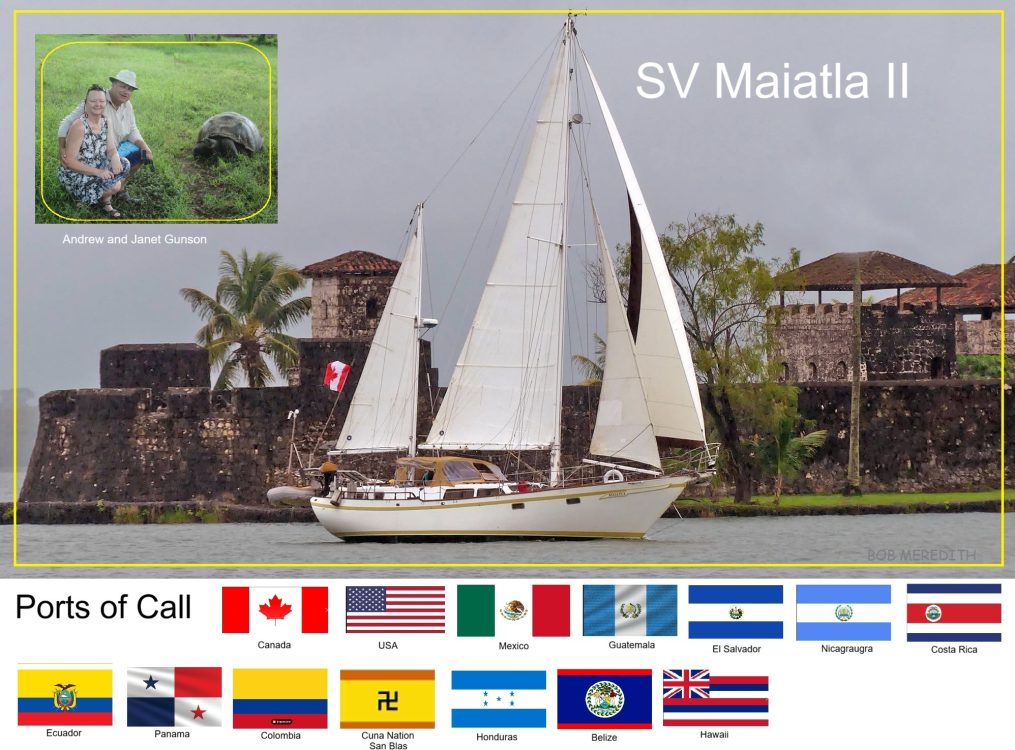
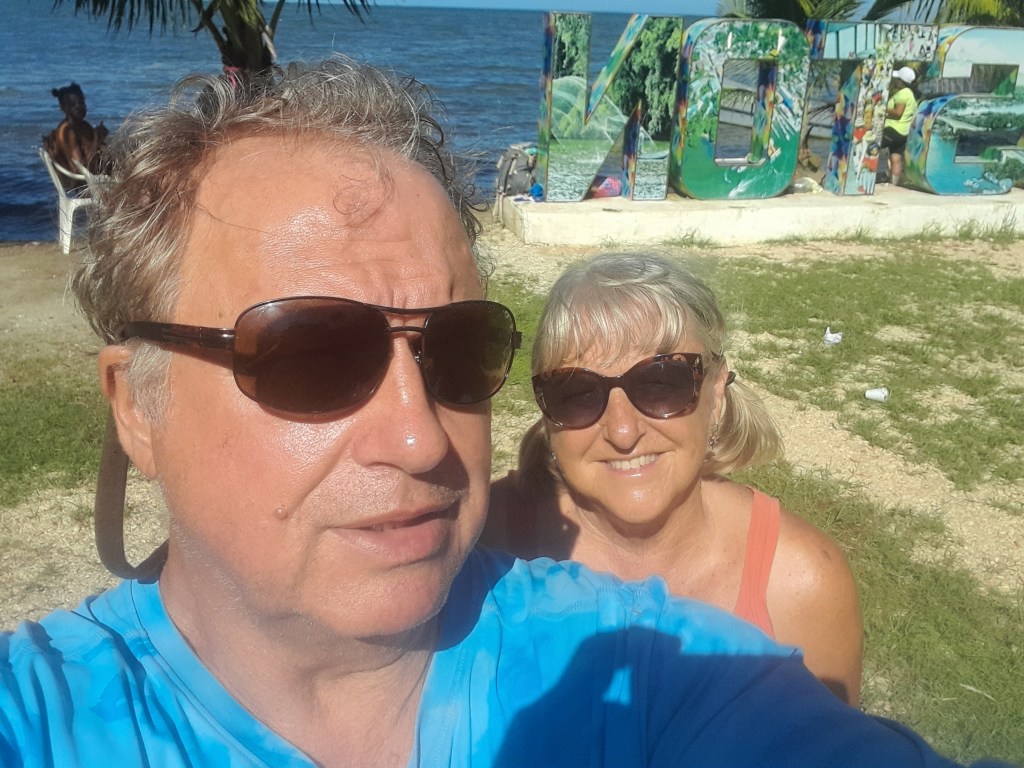
My sister Jackie and I prepare to leave the Rio.
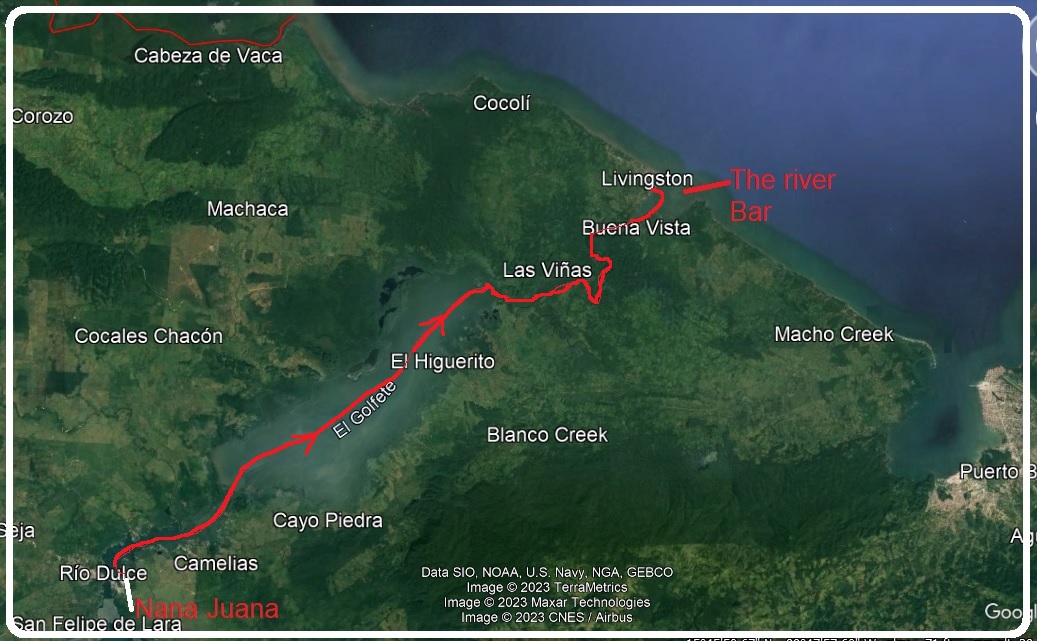
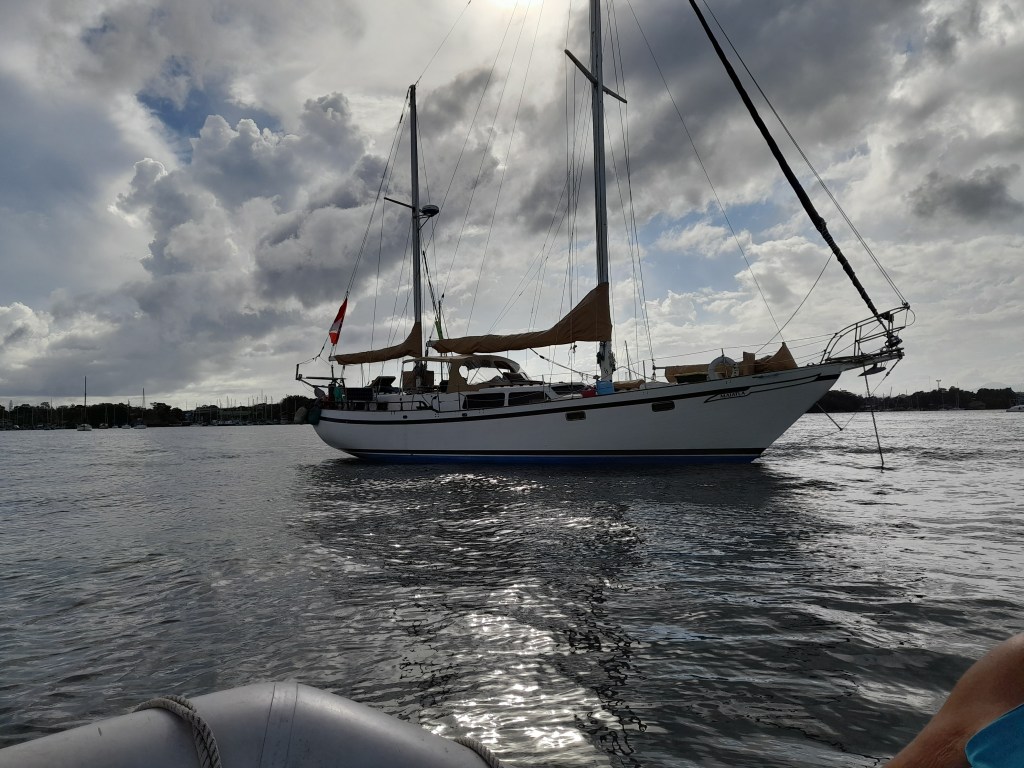
Maiatla at anchor off of Marina Nana Juana the day of our departure.
Jackie and I were up at the crack of dawn which broke clear with the morning heat building quickly. We had a pleasant motor down the river while passing the other half dozen of so marinas which are mostly concealed by the jungle. After a few miles the river opens up into a small lake called, El Golfete. The lake is approximately 9 miles long and 2.7 miles at its widest surrounded by a dense jungle and thick mangroves. The jungle hides several villages but the channels give the villagers access to the lake which is the locals’ principal mode of transportation.
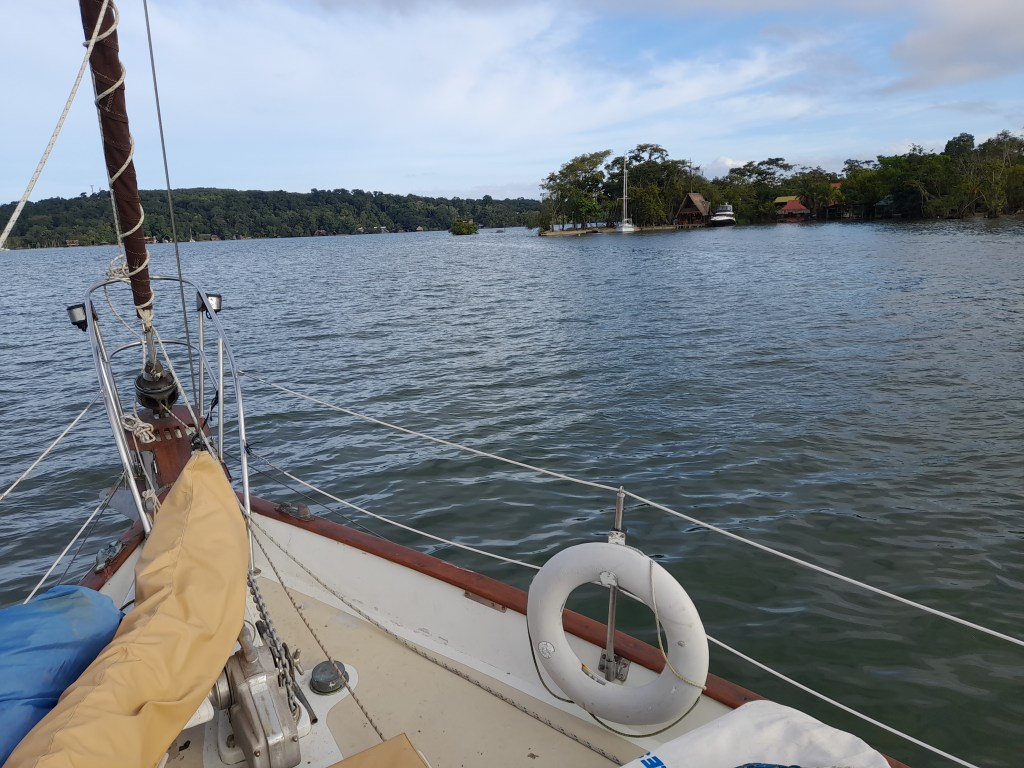
Hauling anchor to get underway.
This morning there were several fishermen in dugout canoes casting nets and we even passed a couple of long canoes with outboards. The sleek craft was full of children with backpack full of books being ferried to the schools up river. What was also notable about this lake, for cruisers anyway, is the shallow depth which according to the chart, is 4 meters or less. Or about 15 feet. To wander off towards the shore is to run the risk of getting stuck in the soft bottom mud.
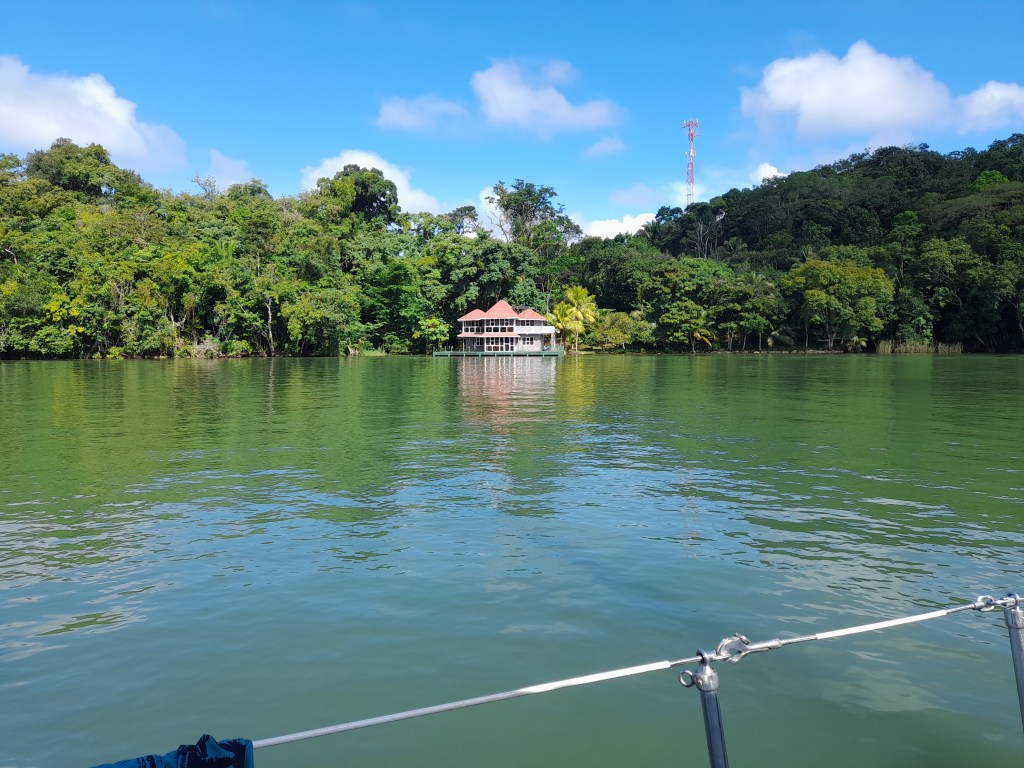
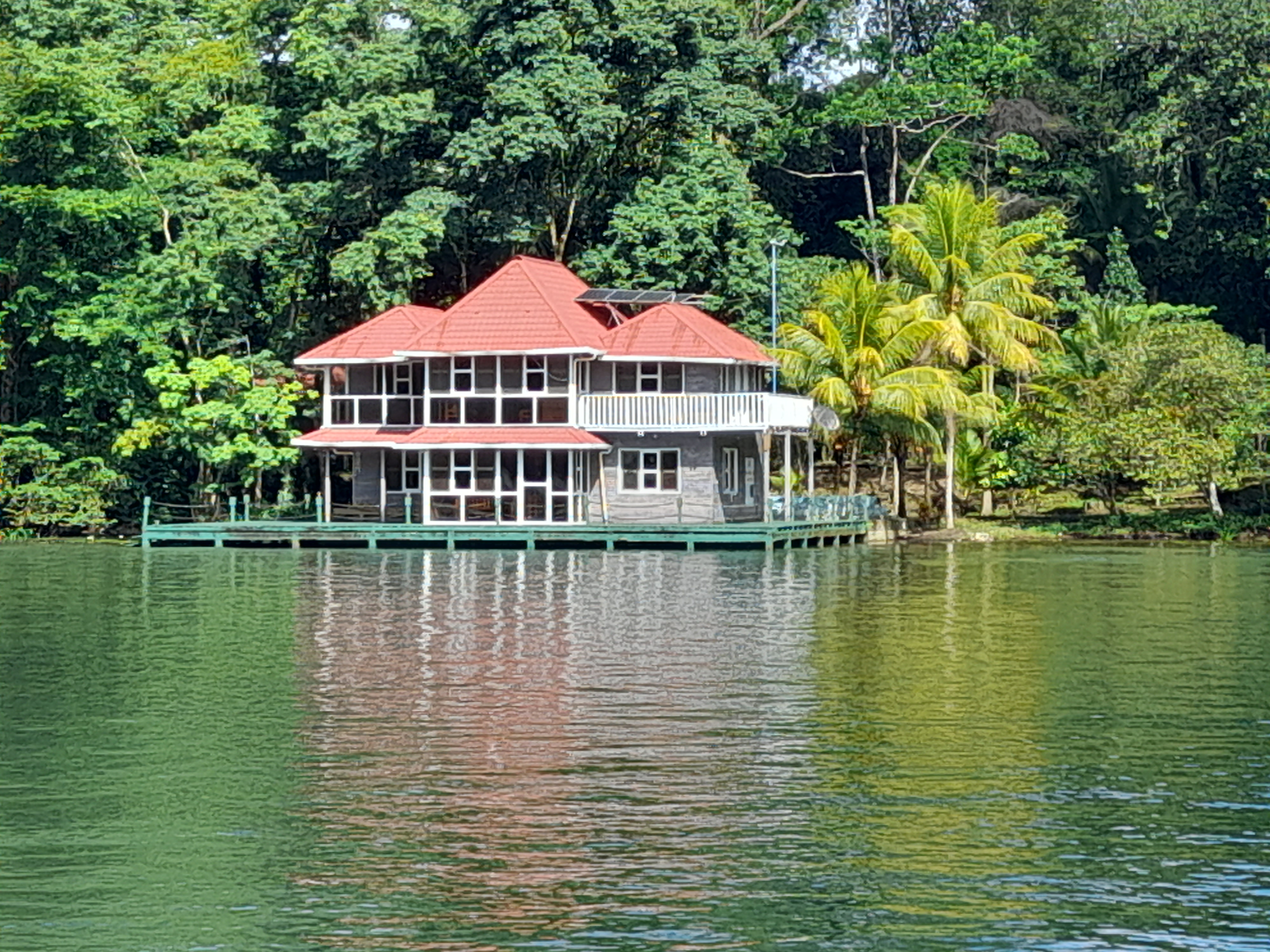
A house on the river bank in the jungle.
The lake eventually narrows back into a river which winds its way through the jungle and a little further down it cuts through a deep gorge where cliffs tower over the boat and canting trees threaten to snag your rigging of unwary sailors. There river was busy with commuter traffic moving in either directions, or again with fishermen.
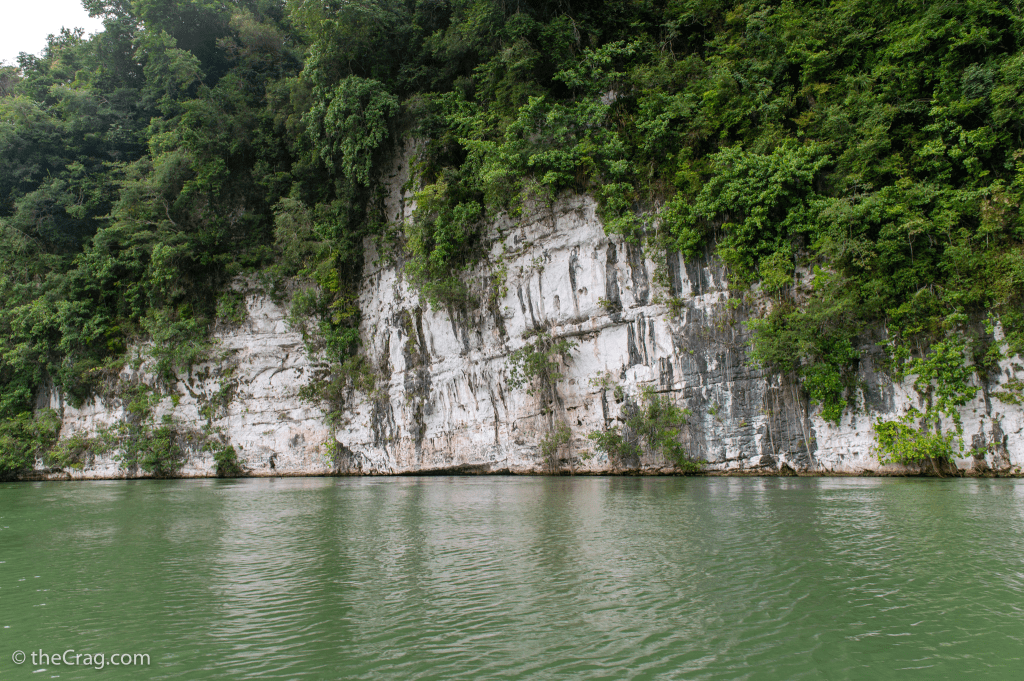
The Rio Cliff and jungle, canoe fisherman.
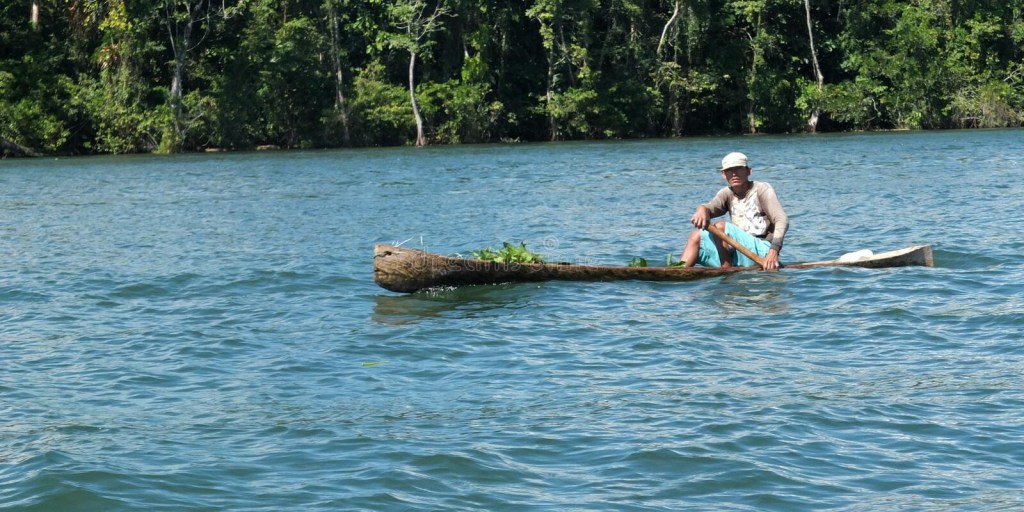
There was not much wind so it was hot and steamy but not unbearably so. The shoreline for the first mile was deserted but eventually some houses came into view, along with a few waterfront restaurants on piles. This is my second trip along the river and each time I vow to stop at one of these places, but like before, it will have to wait to my return trip.
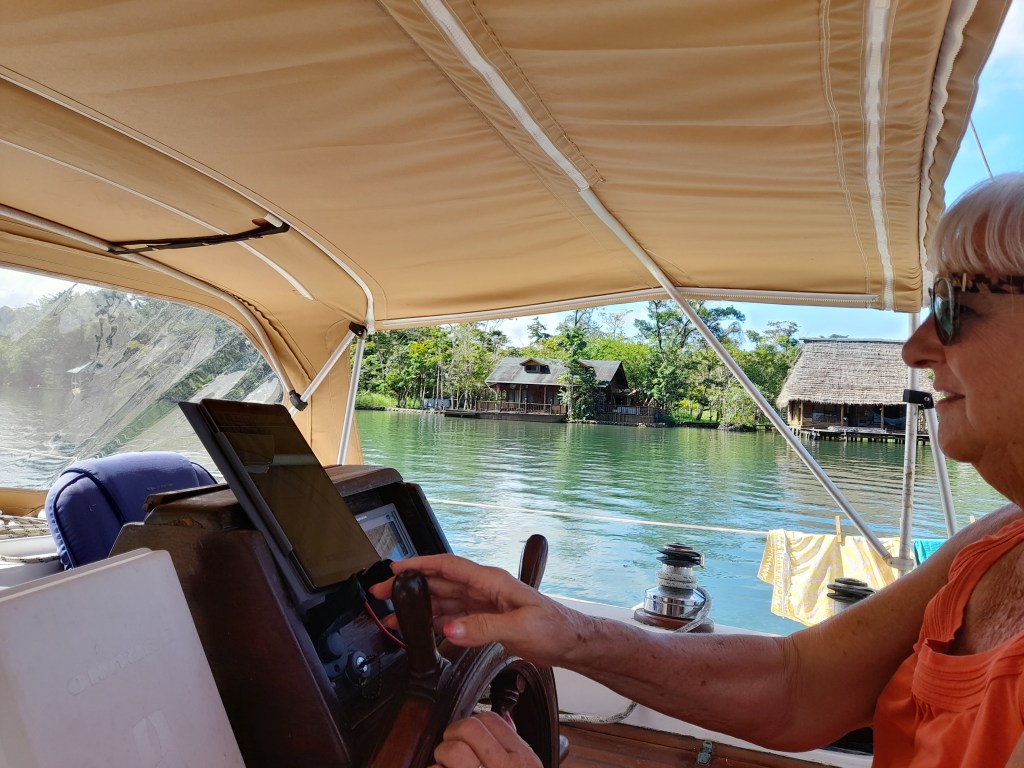
Jackie at the helm as we navigate the river.
Due to the current and a lack of attention paid to the chart, we almost ran aground on a expansive sand bank. I just happened to glace at the depth sounder and was shocked to see that the water depth under the keel was reading 0 feet. In a near panic and before consulting the chart, I called to Jackie, who was on the helm, to turn hard to starboard. Maiatla heeled away from the turn and shot back out into deeper water. It was fortunate that we had turned the correct way and not driven at full speed onto the bar.
Passing through the last of the gorge, the river widened up to reveal a shore lined with stilted homes and canteens and what looked like a boat yard. The Town of Livingston at the mouth of the Rio Dulce has a population of 18000 people and is noted for its unusual mix of Garífuna, Afro-Caribbean, Maya and Ladino people and culture. In recent decades Livingston has developed a large tourist industry. With a growing American expat community.
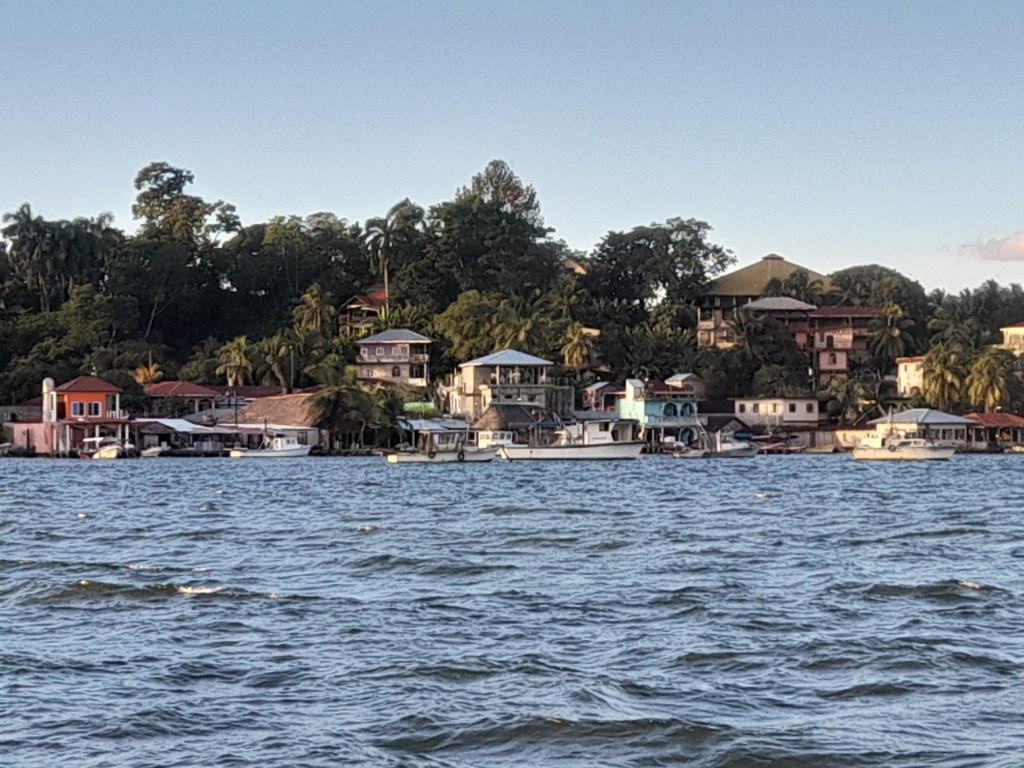
The town of Livingston comes into view.
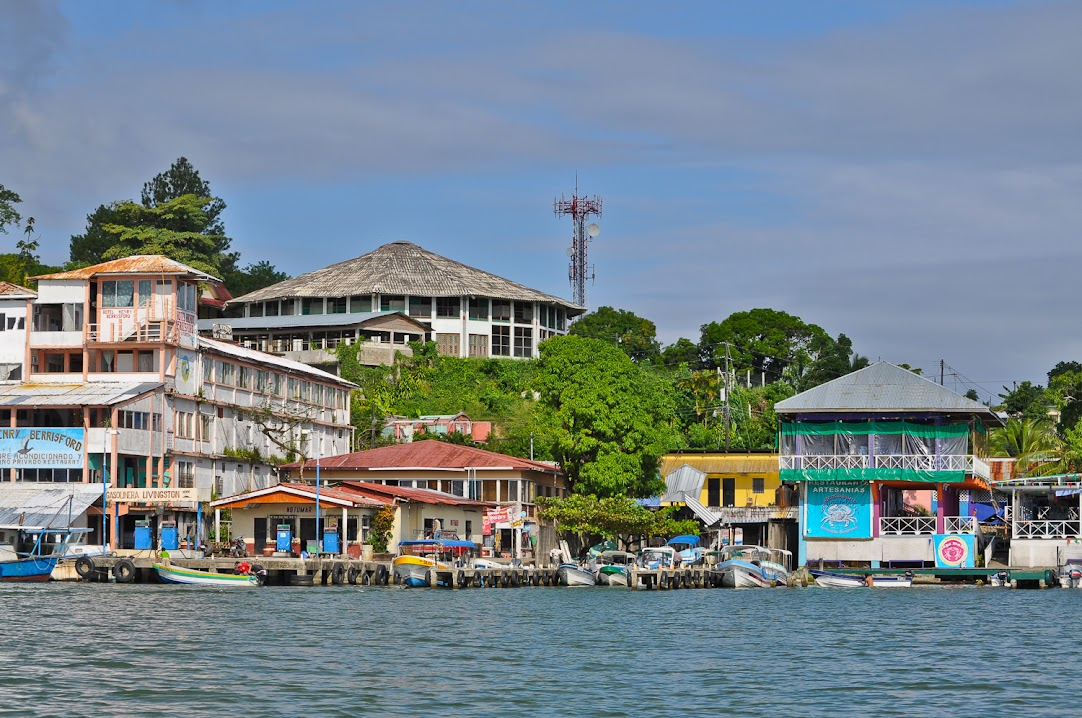
We anchored off the town and took the dink ashore to meet Raul, our agent who had processed our departure papers and who would collect the fine for our over staying our permit. All in all, it cost a little over $400 to gain the privilege of leaving the country. The streets are narrow, windy and steep in some parts of the town, but fortunately it was a short walk to our agents office. Next to Raul’s office is a cistern, a concrete tub of perhaps 30 feet square which is full of water and its here where many of the town folk come to do their laundry or as we witnessed, to bathe.
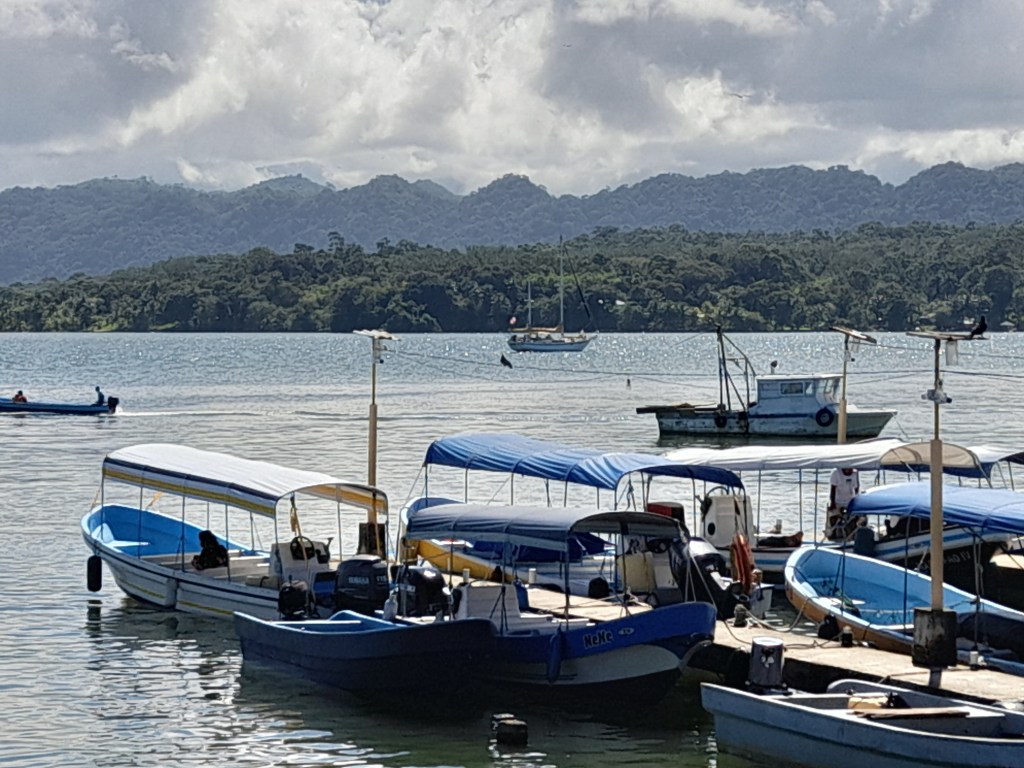
Maiatla at anchor off of Livingston and the streets of the town.
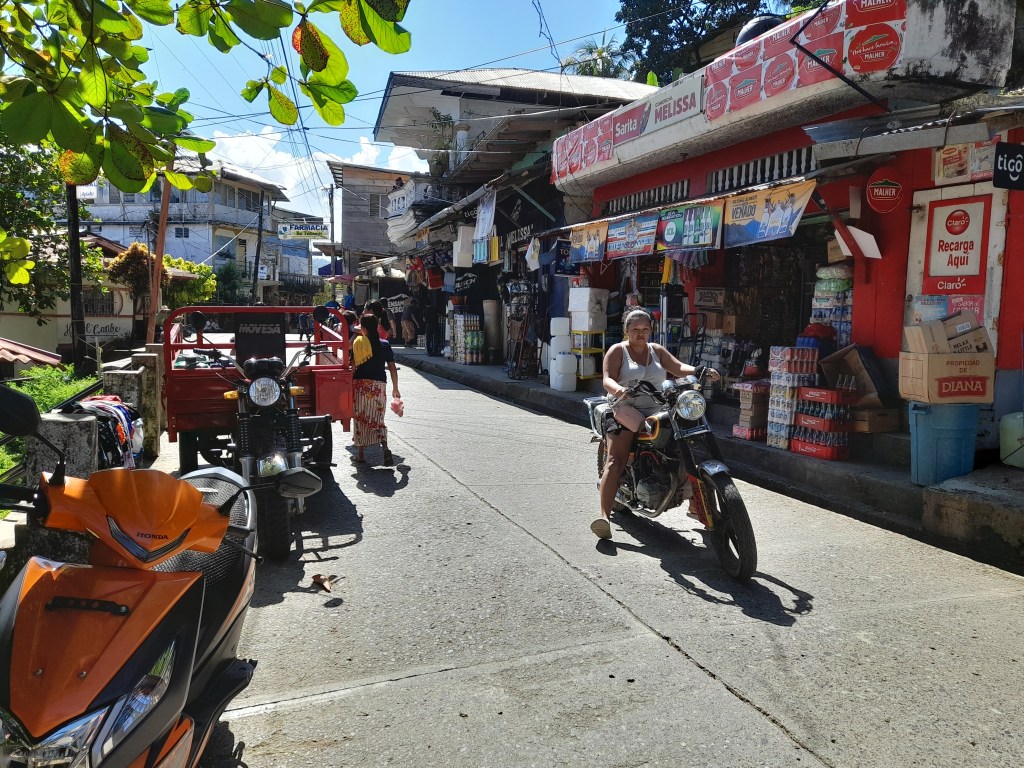
We were told to come back in an hour and all would be done so we rented a Tuk-Tuk taxi to take us on a tour of the town. Jackie and I had lunch at a water front restaurant from where we could see Maiatla anchored out.
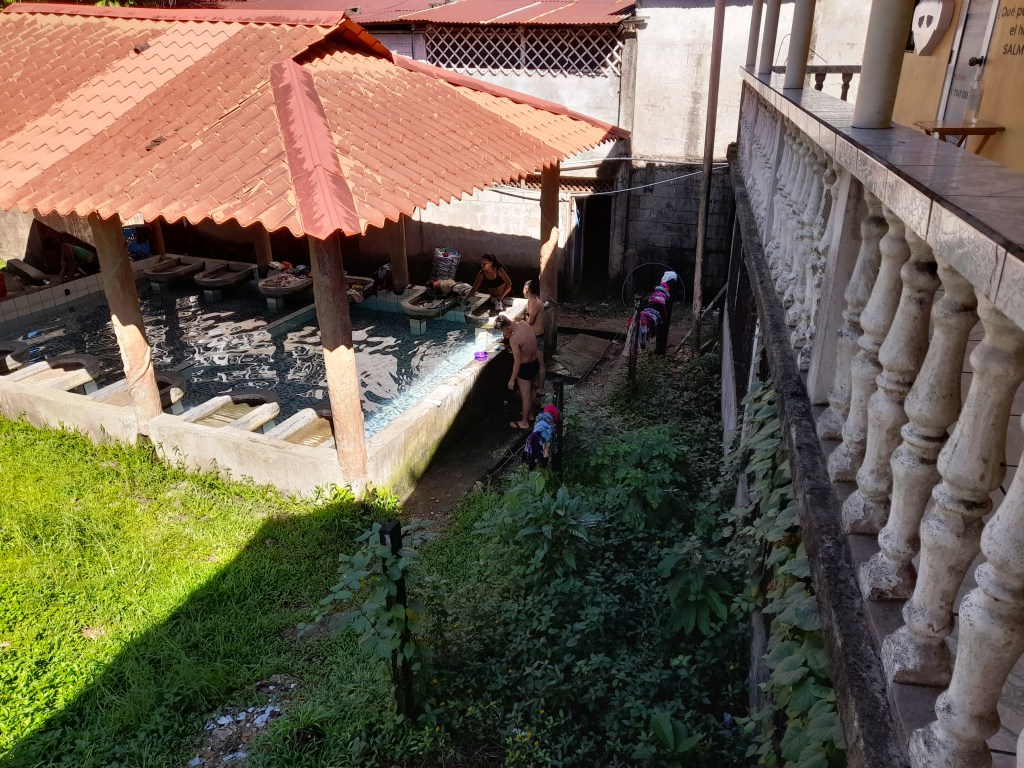
The public wash basin as seen from the balcony of our agents office.
Whenever possible, I would check on the boat to make sure it had not been boarded. It is reported that theft from boats is common here and many advise not to anchor out here at night, as its can be dangerous but we had little choice in the matter as the next high tide which would permit us from crossing the notorious sand bar was not till 1 pm the next day.
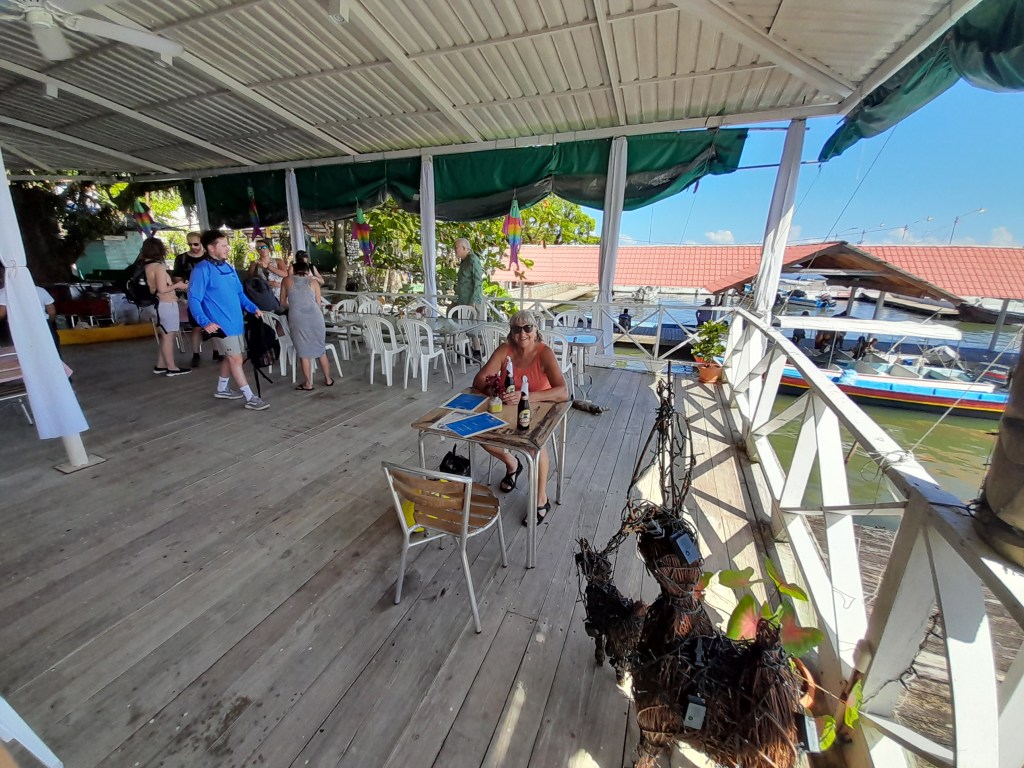
A waterfront restruant from where we could see Maiatla.
We would just have to take our chances and sleep with one eye open. With our clearance papers in hand, we were informed that we only had 24 hours to leave the country. But leaving was something we were anxious to do.

