Back to Belize and Death in Paradise.

Well I returned to Belize on May the 25th, with the intent of getting my boat out of Belize before my temporary import permit ran out. To leave the boat in Belize for up to six months I was forced to put up a bond equivalent to the import duties for my boat. If I were to overstay the six months, I would lose my $42,000 bond so I had till June the 7th, less than 2 weeks to repair Maiatla and get out of the country so the pressure was on.
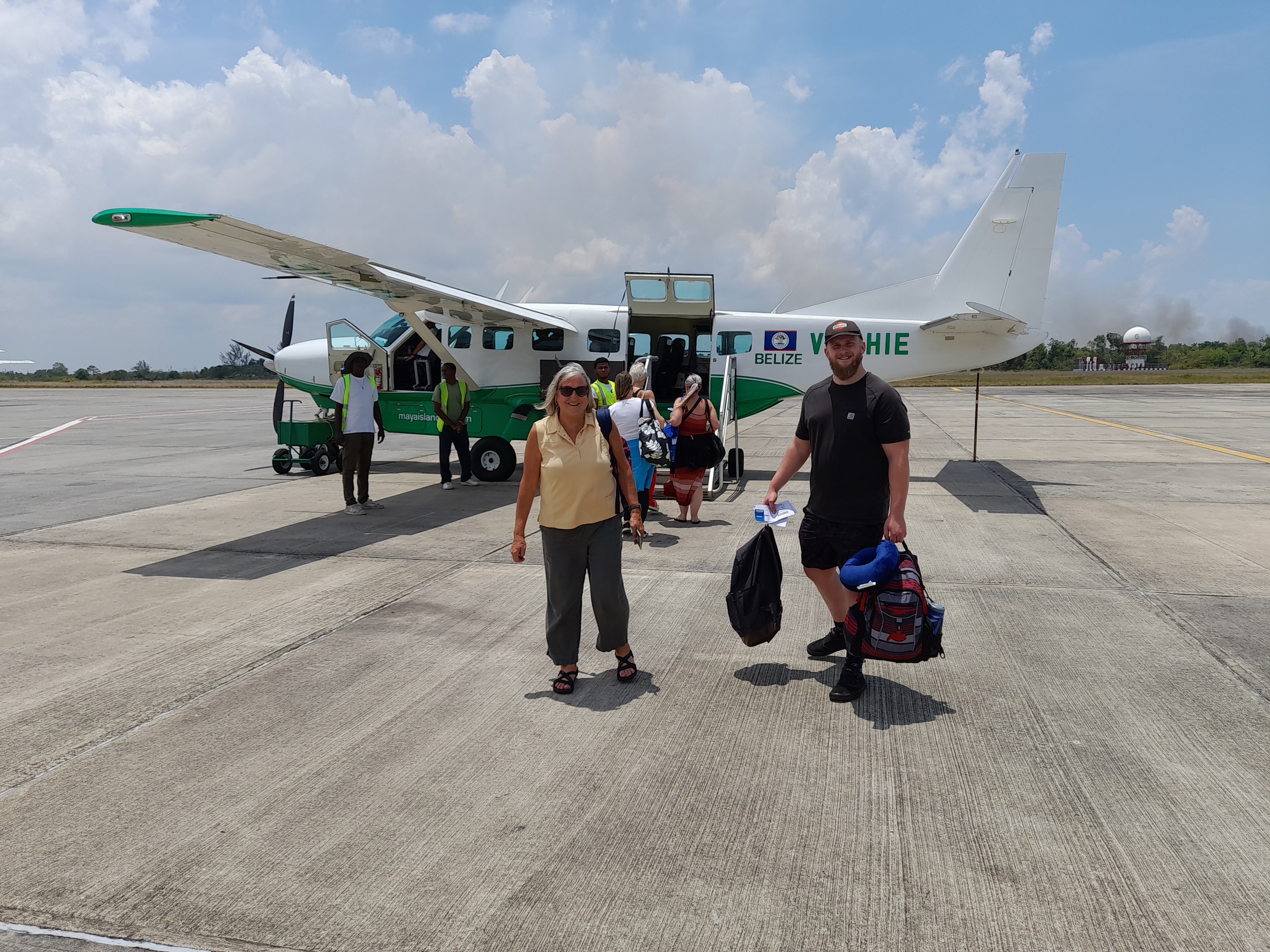
I returned with my sister Jackie and my 22 year old great nephew, Easton. We had a lot to do to get the boat ready for sea, the first order of business was to fill the drained water tanks, a chore I instructed Easton in performing.

 Next the replacement of the boats exhaust system and engine riser which rotted through and fell off as we attempt her to enter the Placentia lagoon in December. Check previous post for the engine fire and subsequent grounding and final tow into Thunderbird Marina.

Our first challenge was to get reacclimatized to the heat and humidity. Jackie and I had little trouble, but Easton seemed to be suffering greatly from the heat while looking pale and washed out while even vomiting one morning. For most of this voyage he would frequently complain of the heat and how it made him feel sick. Recognizing his difficulties I took it easy on him when it came to working on the boat.
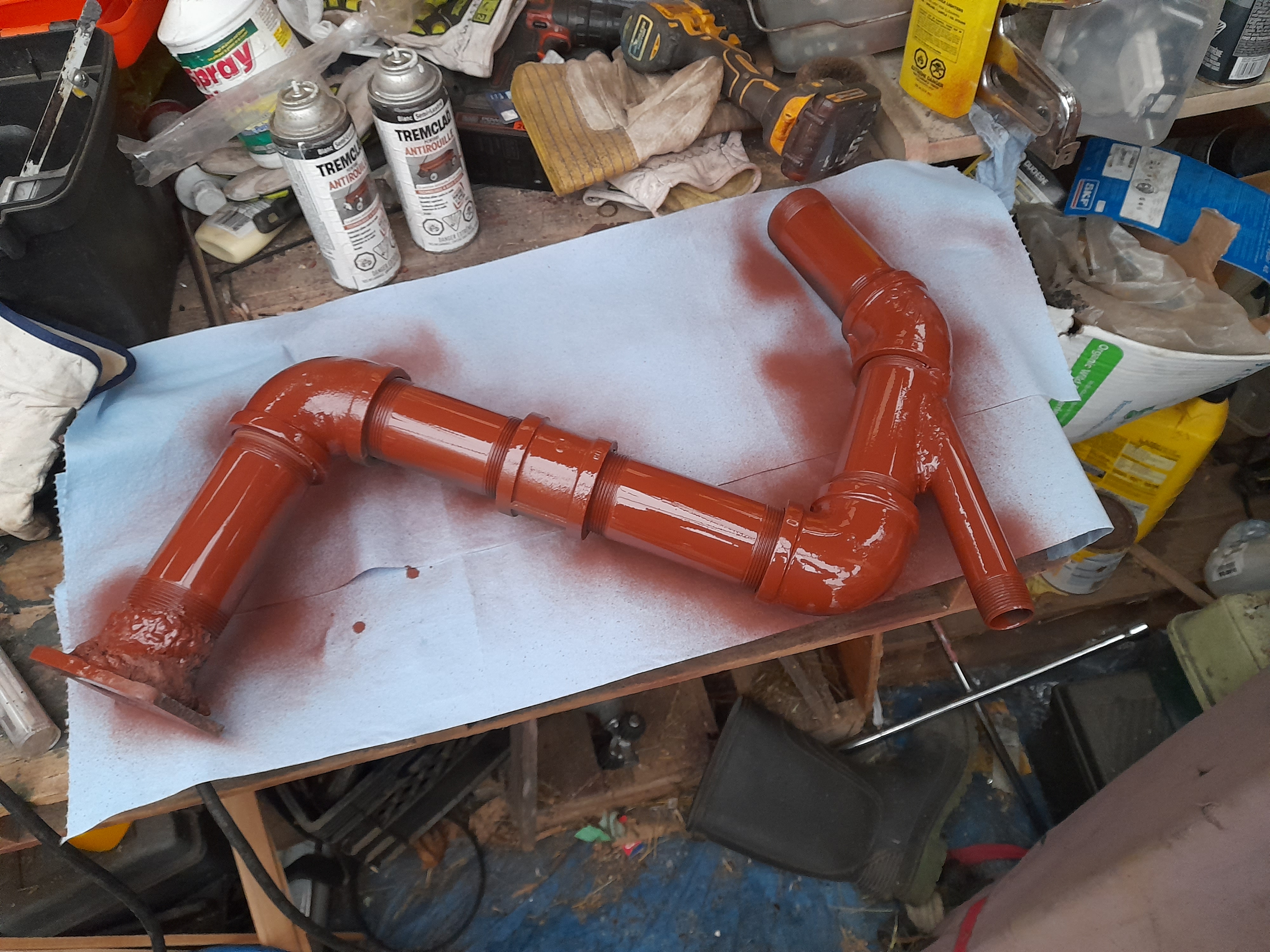
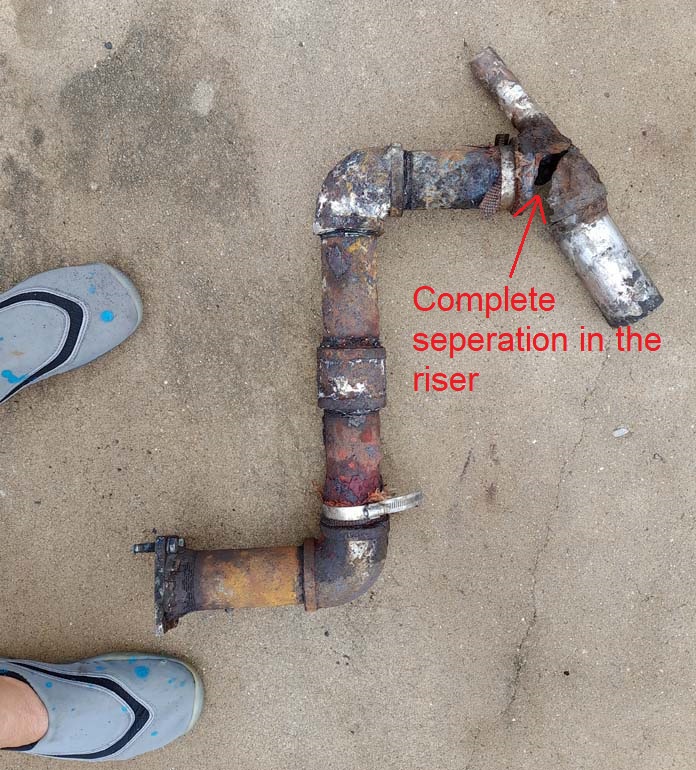
The new riser pipe I constructed at home and installed on Maiatla.

The work progressed over the following 3 days and I was finally ready to attempt to start the engine. With fingers crossed, the engine was fired up and by all accounts was running well. A small victory and a big leap towards in getting underway on time, but our good luck was about to run out.
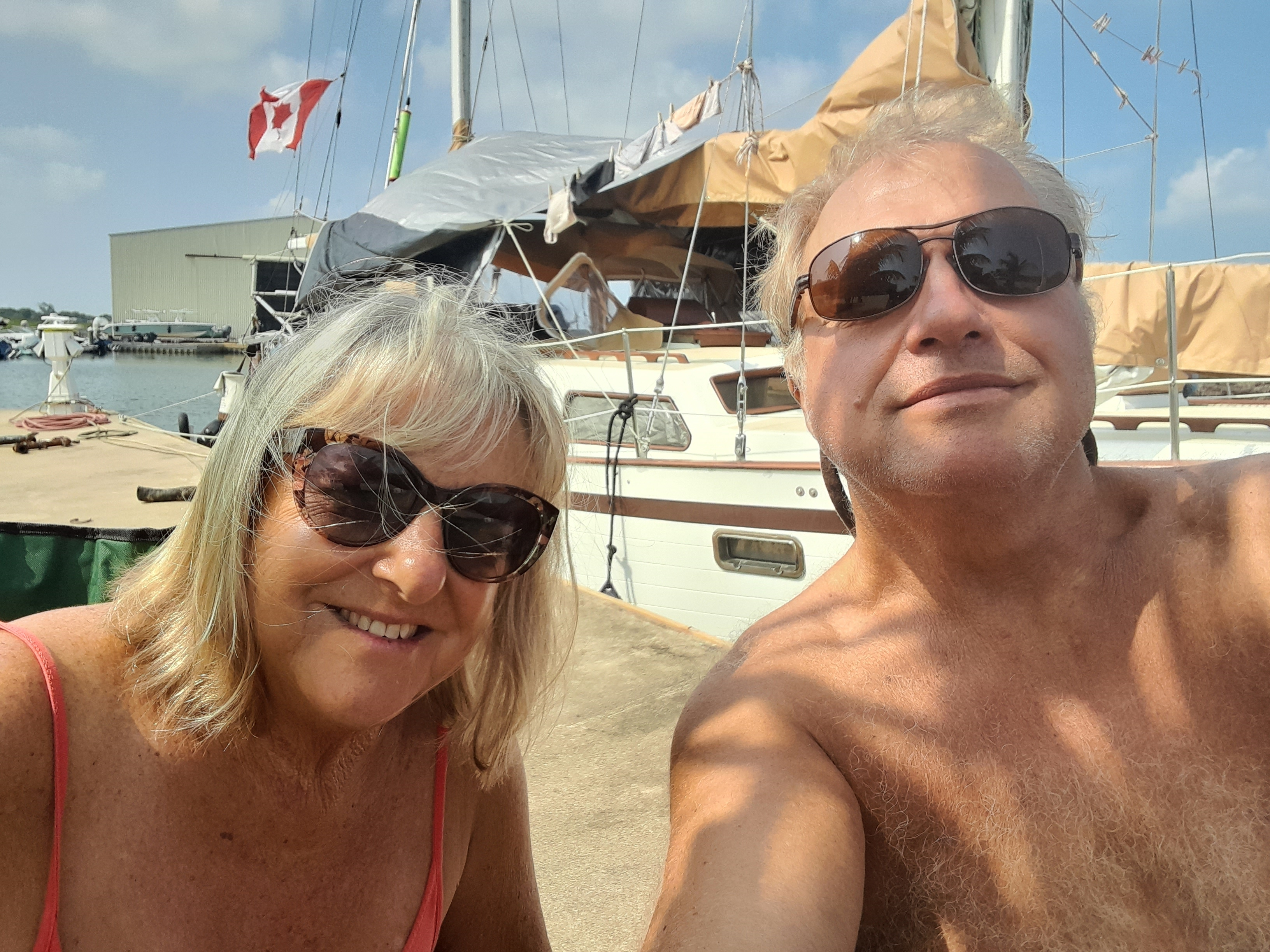
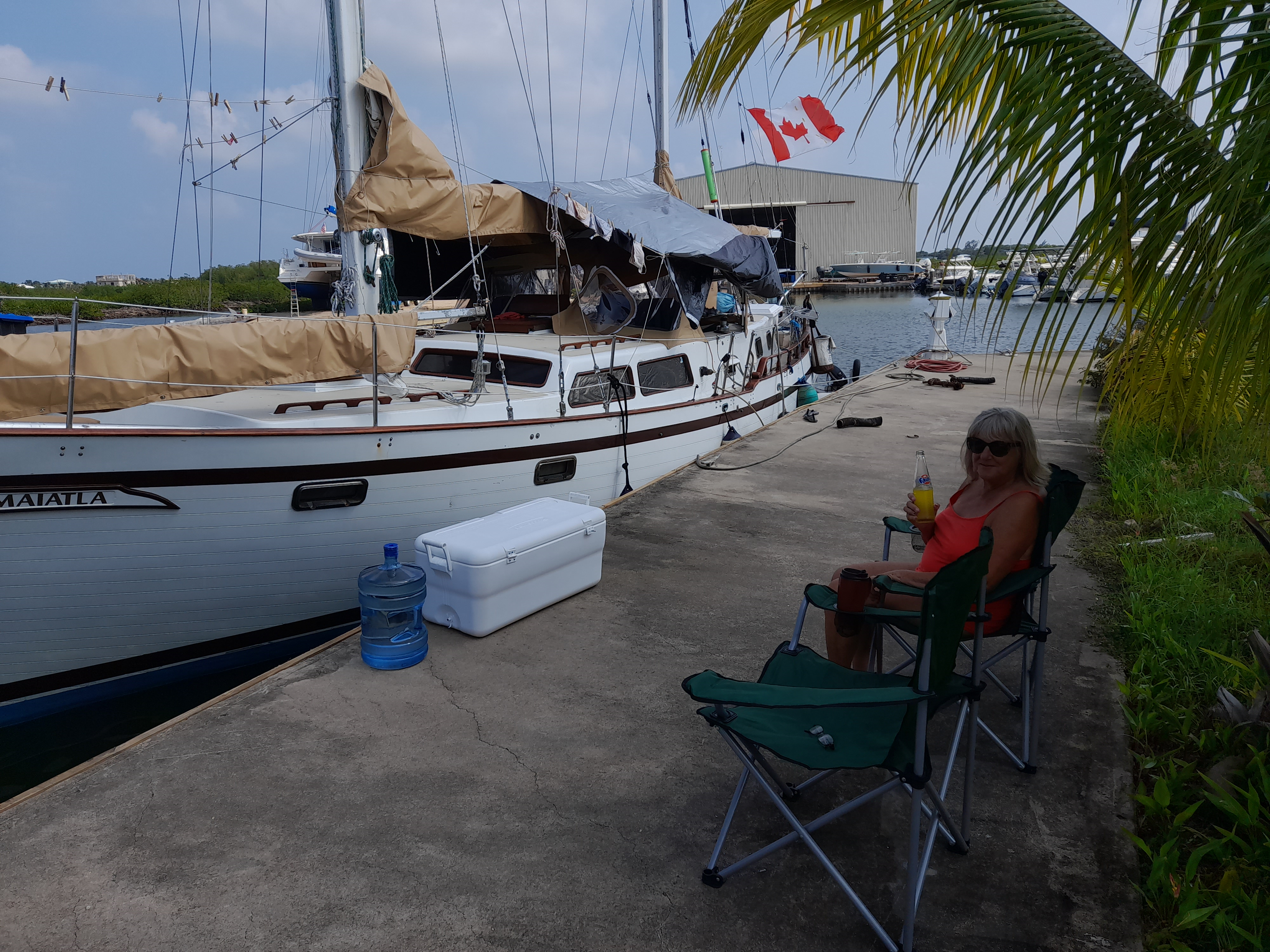
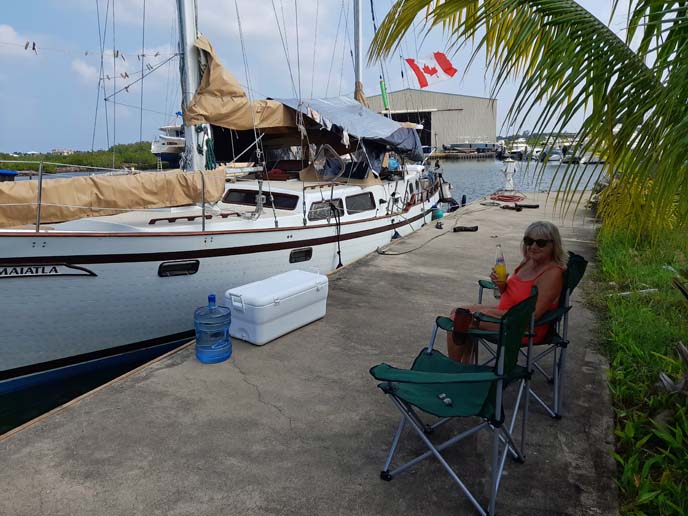
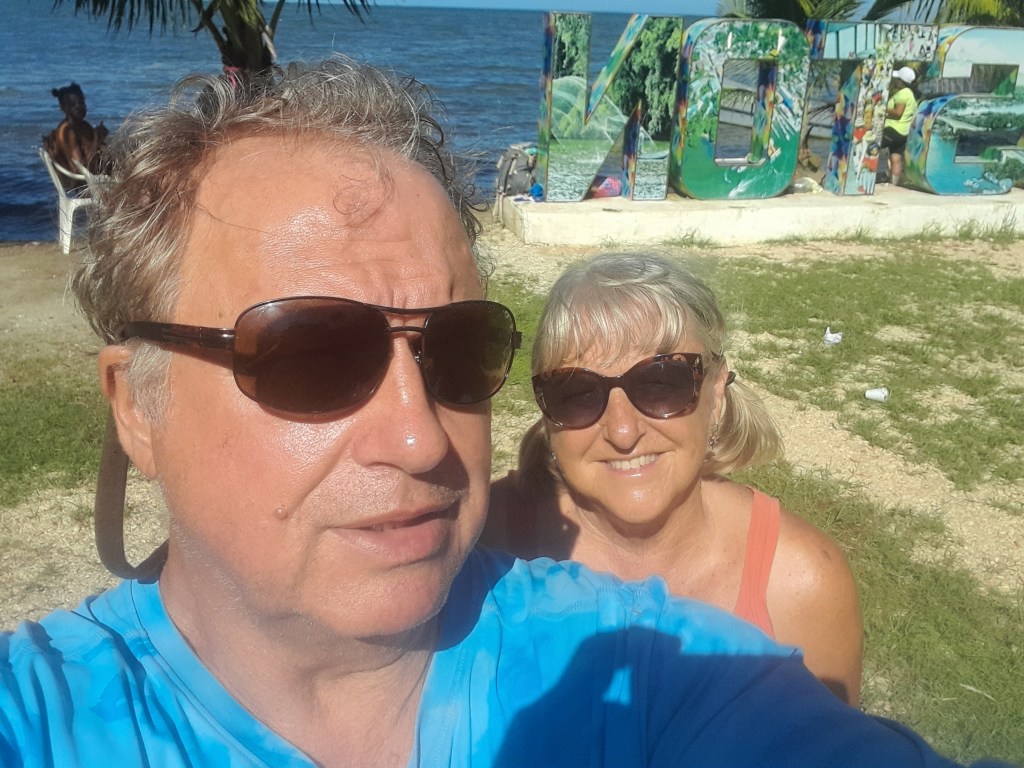
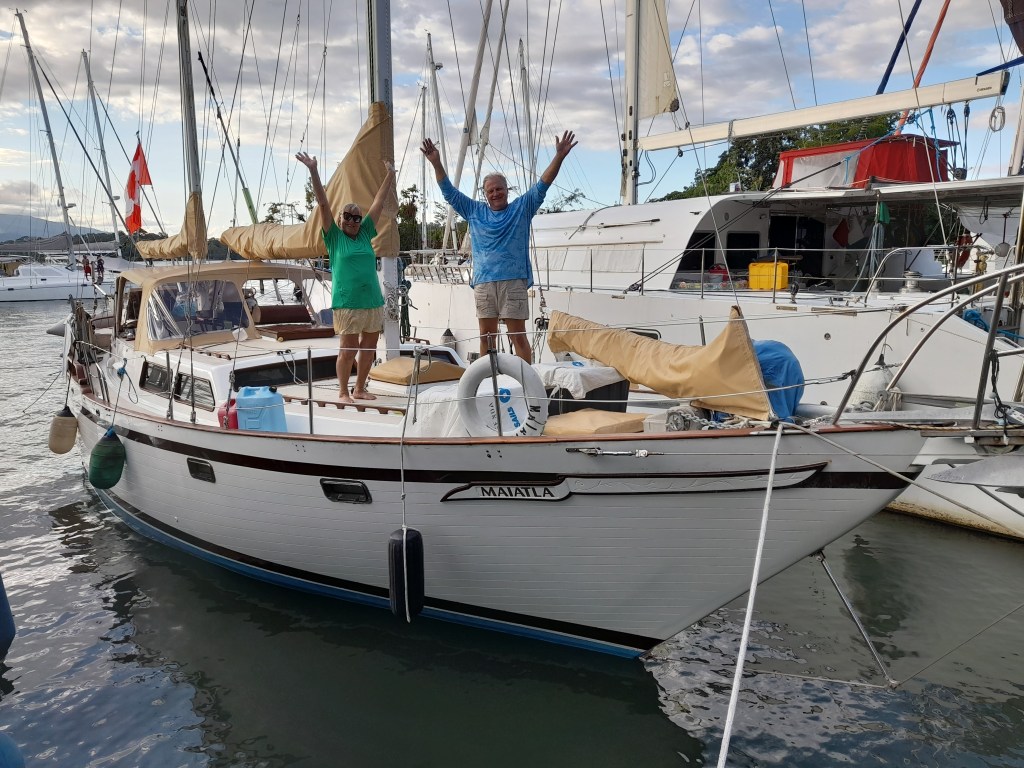
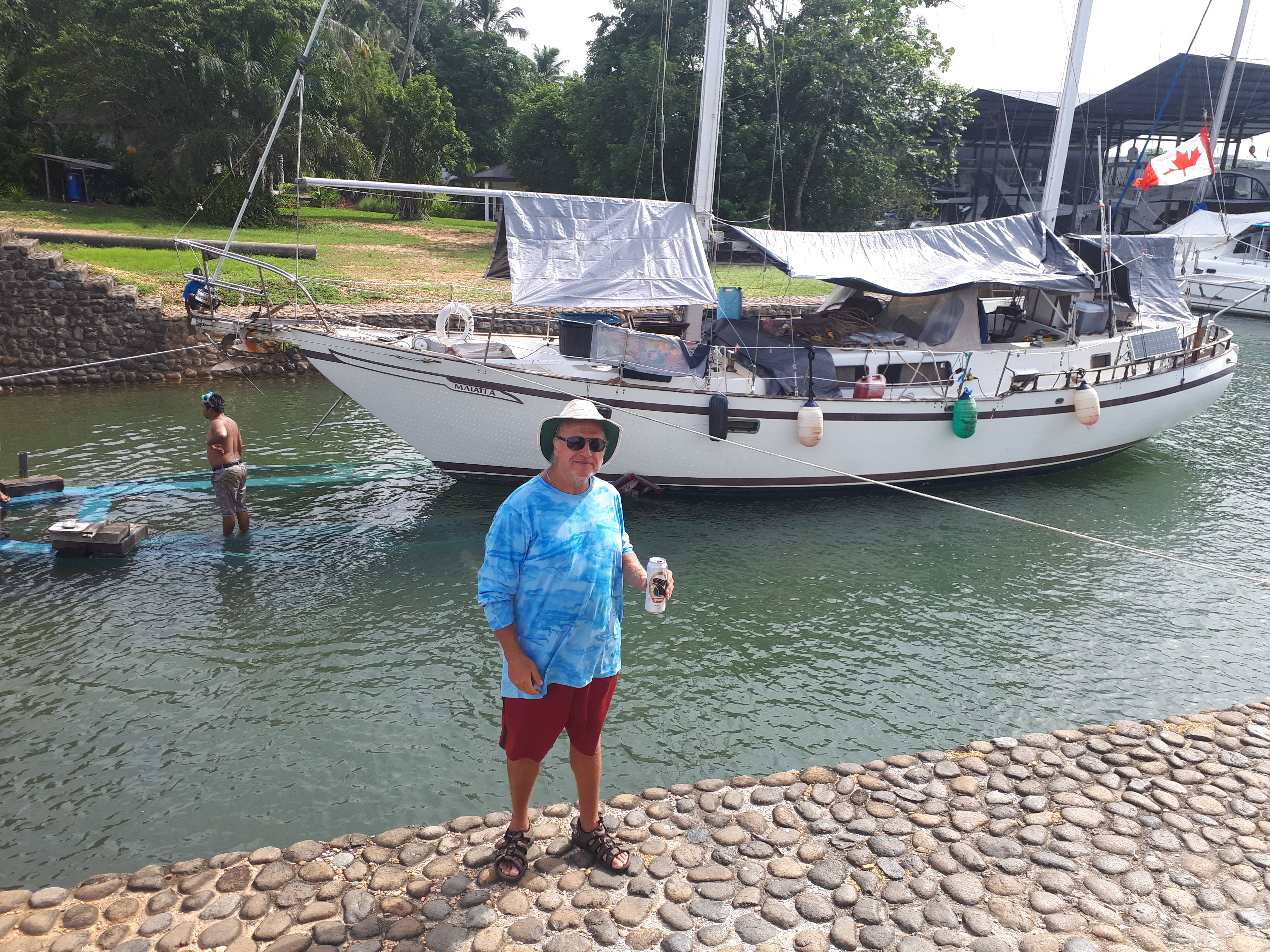
Jackie and I back at Maiatla’s side.

The first incident occurred when I asked Easton to top up the water tanks which he promptly set about doing.  Jackie and I were sitting in the cockpit discussing departure plans with Easton perched on the combing listening while waiting, for the tanks to take their fill.  Suddenly Easton swore aloud as he leapt from the cockpit to snatch the water-hose from the filling pipe.

When I checked on what was going on I discovered to my horror that he inadvertently poured what I would later determine to be approximately, 75 gallons of water into the diesel tanks and since I had left the crossover open between the fuel tanks to equalize, both 75 gallon fuel tanks were now water contaminated.

My engine hour meter suggested that I had approximately 35 gallons of fuel in each tank which would now have to be pumped out and run through a system called fuel polishing, which would remove the water. But the cost of doing so was not cheap, even if I could get it done at this marina, which I couldn’t, so the fuel would just have to be discarded. At over $4 USD a gallon that would hurt.

Fortunately my friends Chris and Shannon had an electric fuel pump that would be able to suck out all the contaminated fuel. The marina was able to provide drums for my fuel and discard it.

A rather remorseful Easton helped me set up the pump and all went well but to my surprise, we removed 75 gallons of water and perhaps a couple of gallons of dirty diesel. I knew the tanks were full when we departed Panama and with the logged engine hours, half the fuel should remain. I checked for diesel leaks and found none. After careful consideration I came to the conclusion that I had been the victim of a fuel thief. My fuel had been siphoned but when and where?

The boat was laid up and left unattended for 15 months on the island of Rotan in Honduras, then again at Marina Nana Juan on the Rio Dulce for 9 more months, and one final time for almost 6 months in Belize. In any one of these places the fuel pirate could have struck. So aside from losing an afternoon cleaning out the fuel tanks, Easton’s great mistake cost me nothing. In fact it may have been fortuitous as I was planning on leaving Belize with the half tanks I thought I possessed and wait to purchase fuel in Guatemala where the price was cheaper. I was forced to suck it up and buy the high-priced Belize diesel, but only took on half of my compacity.

Despite these initial challenges, I was happy the way things were progressing and we even managed a few nights in town with friends for dinner and Jackie and I would take evening swims in the lagoon mangroves to cool off at night.  A practice Easton declined to participate in as he was leery of lurking crocs and as I joked, amorous manatees.

We were all looking forward to getting off the dock to anchor in the Placencia harbor where it was much cooler as the Caribbean trade wind were a constant. But that would have to wait as one morning we received a panic filled phone call from Chandra, my niece and Jackie’s eldest daughter. Erica, Jackie’s middle daughter, the day before was taken to the hospital with sepsis and was not expected to survive the night. I set about trying to find a flight to get Jackie home as fast as possible but the best my travel agent could do was a flight out the next day. As our day unfolded, Eric quickly deteriorated. I held Jackie as she facetimed Chandra, who was at Erica’s side as she passed as other family members, including Eric’s two preteen children looked on. It was heart-rending to watch.

Three days after Jackie’s departure for home, Easton and I, with a level of despair clouding our minds, cast off to head out to the anchorage. As if we had not suffered enough, the little gremlins skulking below decks made it known that they were not as eager to leave the marina as we were. Not 30 minutes away from the dock the engine began to overheat which I quickly shut down. Fortunately, I resisted the urge to drop the anchor and see to the problem. We had a nice following wind so we quickly unfurled the headsail to sail the 7 miles out of the shallow lagoon much the same way we entered, engineless. But at least this time we did not require a tow.
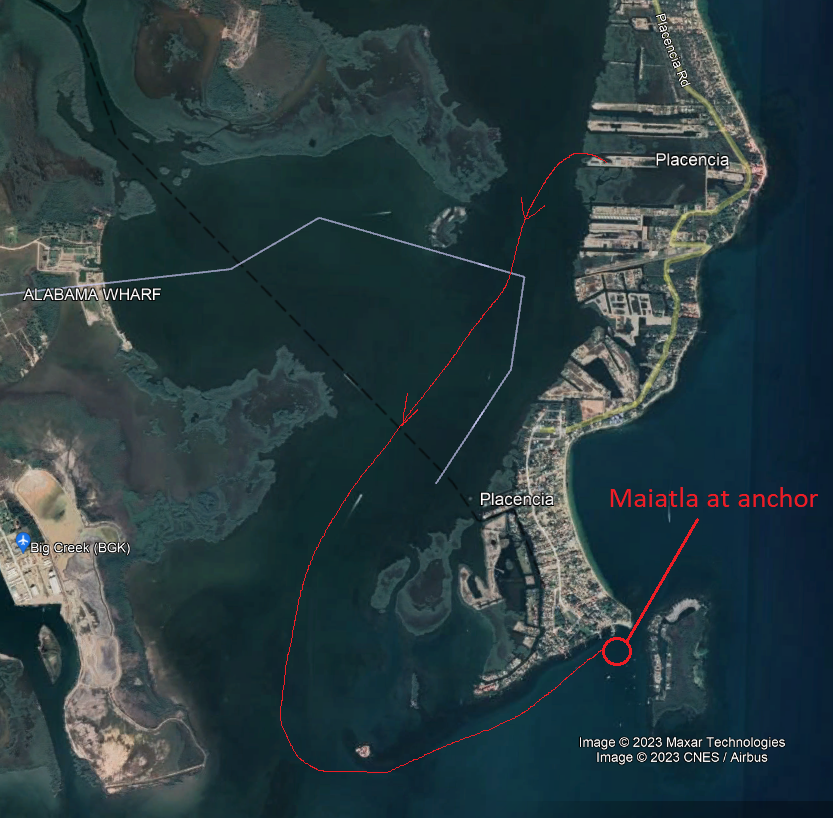
Once clear of the outer bank were tacked our way upwind to anchor off the town of Placentia as the sun began to set. Now safe I troubled shot the engine to find that the raw water pump pulley had come loose, permitting the belt to slip, greatly reducing the cold water to the engine. It was a easy but not a quick fix as I need to construct a new shaft key for the pulley, which I did by cutting down a Honduran 50 centavos coin. That done we again had a engine. But it would soon become clear that the gremlins were not done with the pump as yet, not by a long shot.
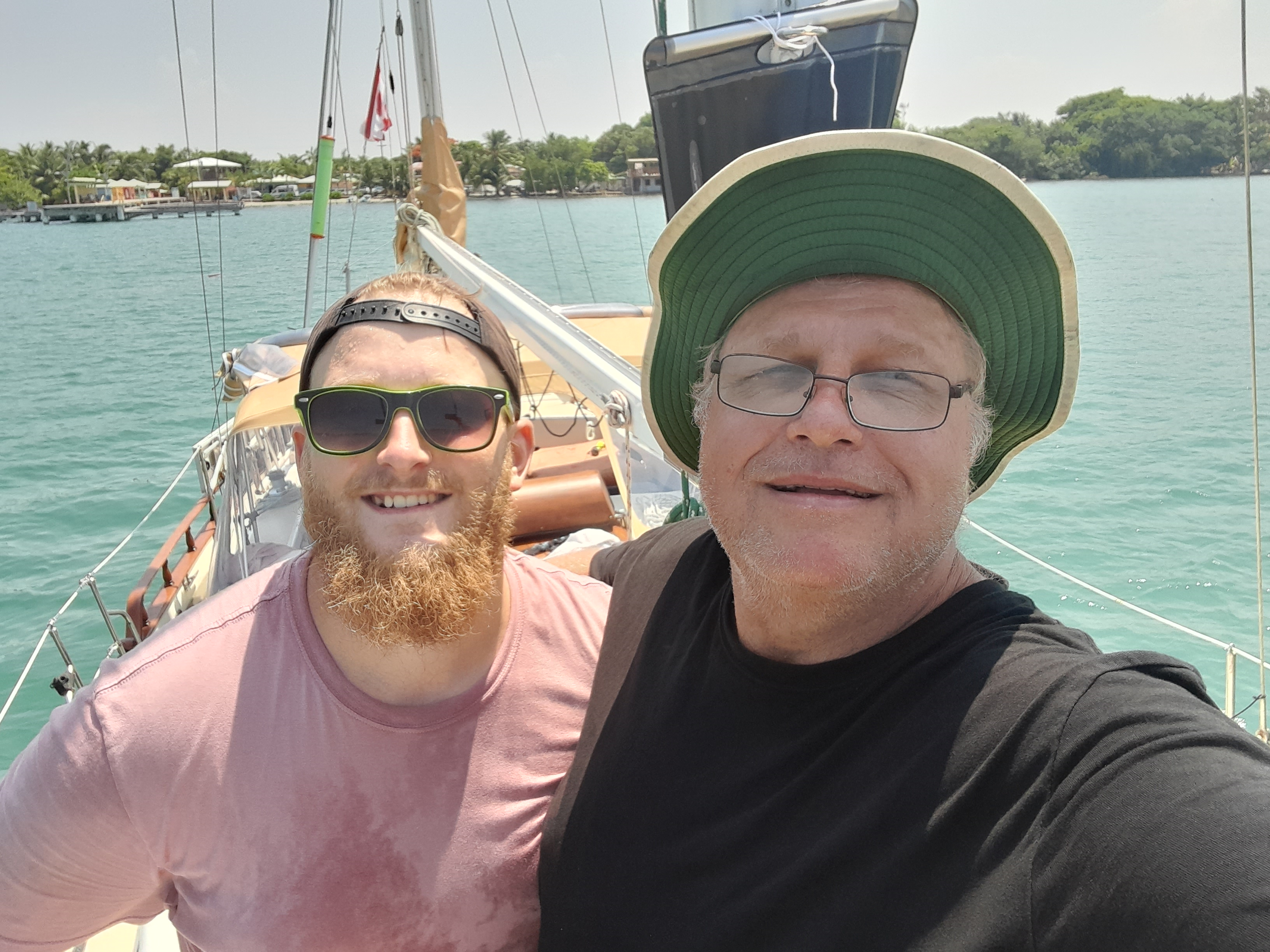
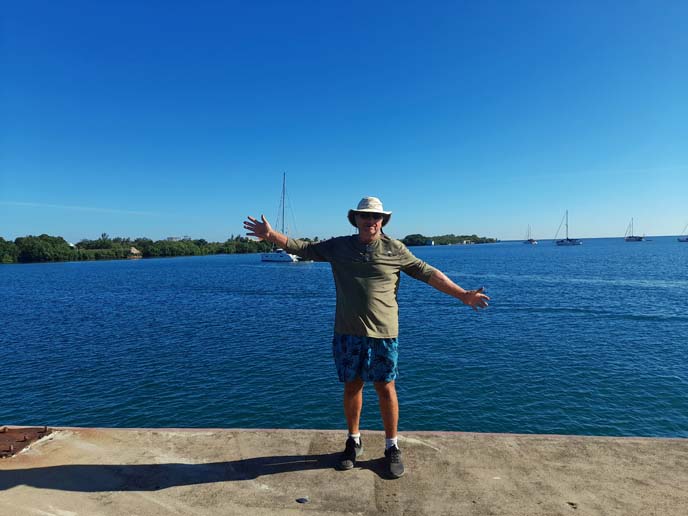
Easton and I at anchor in Placencia harbor

Safe but the Gremlins were still plotting

We had not been anchored for very long when we received a visit from a couple in a little dink. Chris and Shannon were from the opposite end of Canada in the province of Newfoundland and when they saw our big maple leaf fluttering off our stern they just had to come over and welcome us to their adopted home. They had purchased a bit of land with a dock on the island that forms the harbours eastern edge, with the intent on building. At the present they lived aboard there 38’ Bayliner secured to their dock. I explained to Chris my engine issues so he offered to return in the morning with some tools and to lend a hand if required.  We had a peaceful night at anchor and I was up early as I was eager to get the engine fixed and to find a marina in which I could leave the boat for up to 6 months.  

The harbour.

We took the dink on a tour of the harbour then headed over to Chris and Shannon’s Island to borrow some tools. I must say that at first glace I was impressed with the waterfront community and was looking forward to getting to know the town and meet some of its people.

Back aboard Maiatla I set about finishing tearing down the raw water pump and rebuilding it. Two hours later when the engine roared to life, we rejoiced then made plans to head to town. When we left Guatemala, we had planned to hit several marinas all along the coast of Belize and with the intent of sailing all the way up to Belize city where there seemed to b a suitable marina for leaving the boat. But with the steering still acting up and leaking fluid which in turn played havoc with the electronic autopilot, and with only two weeks left before flying home, I decided that if I could find a suitable place here, Placentia would be as far as we would go.

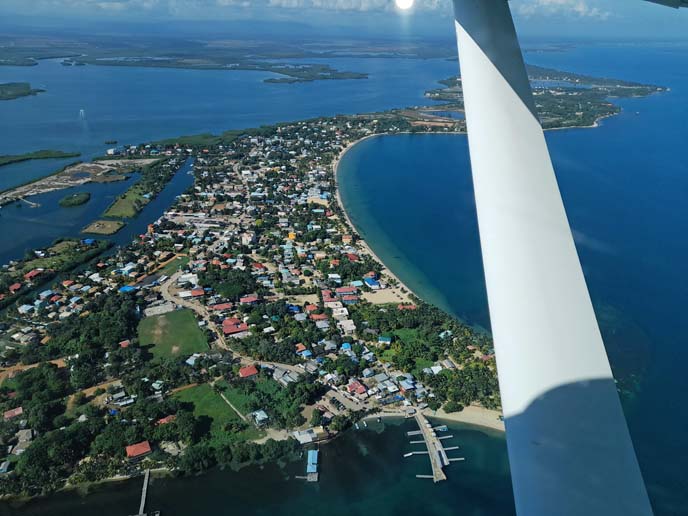
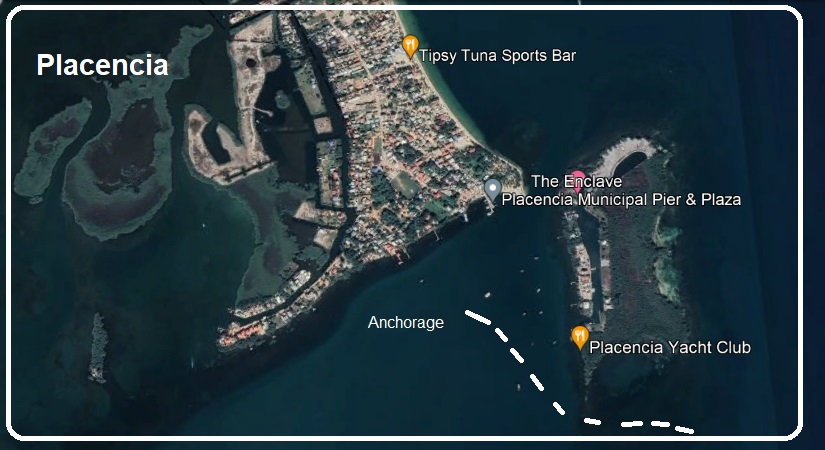
The town of Placentia from the air. Main dock is the long pier at bottom of pic. Lagoon upper left.

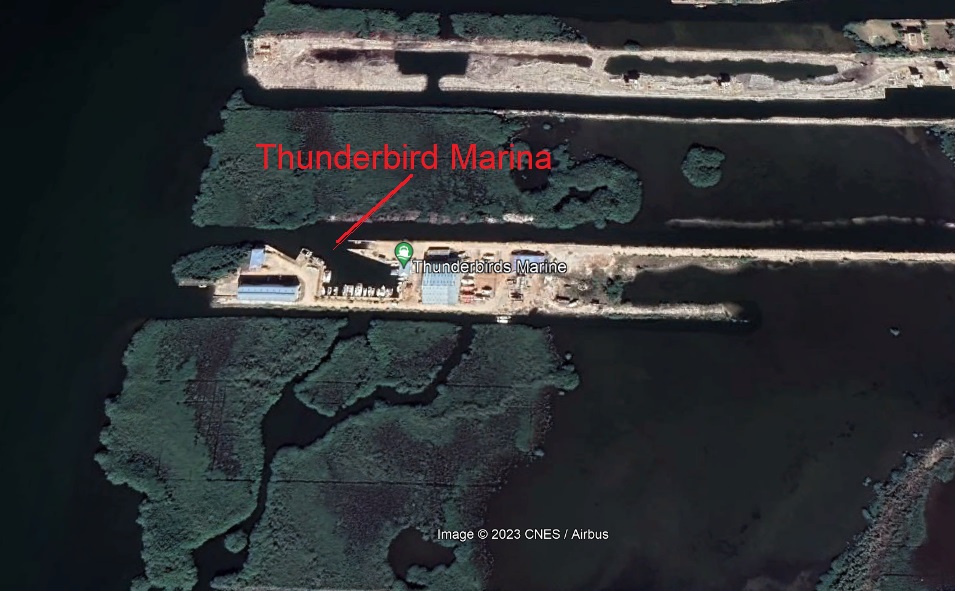
A short cab ride out of town we visited Thunderbird Marina which was run by an American expat from California by the name of Doug. The Marina is several miles up in the lagoon and then inside a channel cut deep into the mangrove swamp. It was about as protected as you can get in these parts. Not a big marina, but it had a well stocked chandlery with a large mechanical shop. A perfect place to leave Maiatla and perhaps get some engine work done on my 15 horse merc, which was still acting up.

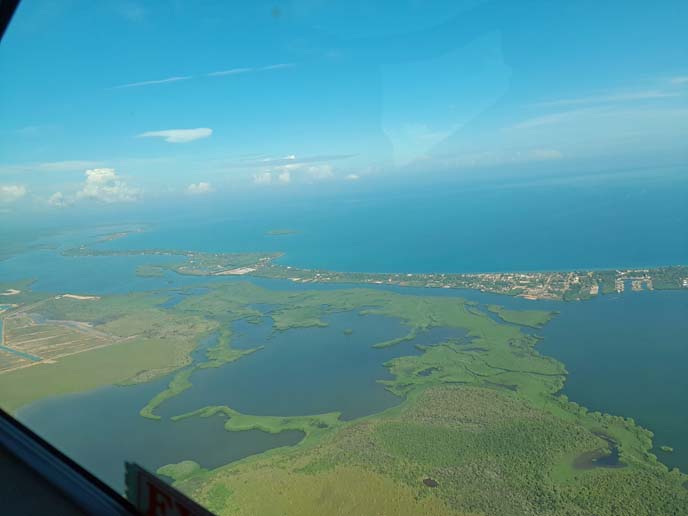
Placentia lagoon. main portion of town is to the right of pic.

 Placentia lagoon is massive with several mangrove cays dotting its perimeter and center, but it was shallow with an average depth of 7 feet. With Maiatla’s 6-foot draft that could be a problem but Doug assured me that if we stuck to the channels, we could get in. Oh, but I wished it would be that easy. So, it was decided.

In the morning, we up anchored to make our way to the deepwater entrance to the lagoon. By all accounts it should have been an easy motor into and across the lagoon, but we would not have such luck. Jackie did the driving while I nervously watched the depth sounder bounce between 9 and 6 feet as we skirted around hidden sand bars and tiny patches of mangrove trees. As anyone who has ever been to sea knows, that if something is going to go wrong, it will at the worst possible moment, and today would be no exception.

We had scarcely travelled a mile into the lagoon when I noticed a trickle of black smoke wafting up through the steering column. My first thought was that there was a fire in the engine room so in an instant I had opened the engine room doors and was instantly engulfed in a cloud of dense black smoke. It took a few moments for the smoke to thin out for me to see the engine. To my relief, the engine was not on fire but there was a nice thumb size hole in the exhaust pipe where it attaches to the engine. Shit!

Not a show stopper but definitely annoying. We still had a few miles to go to the marina so I just decide shut the doors and carry on.  Back on deck I resumed giving Jackie directions as we wove our way through the maze of bars and trees. Remember that thing about things happening at the worst possible moment, well this was this time.

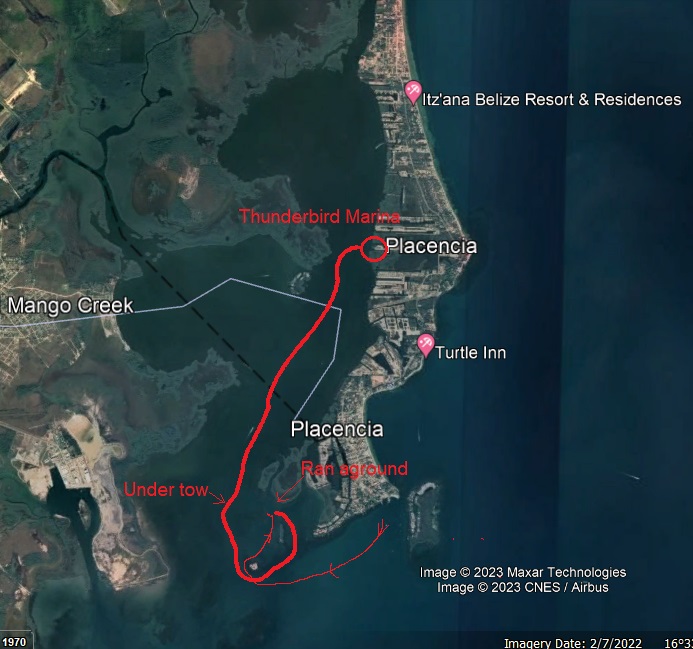
Our route from the anchorage to the marina.

Just as we reached the center of a narrow and particularly shallow channel, there was a loud bang followed by the ear deafening engine roar, then seconds later the boat and cockpit was full of eye burning diesel smoke. Back in the engine room I realized that I did not have to worry about the tiny hole in the exhaust any longer, because it was no longer there, and neither was my exhaust riser. The entire pipe had sheared off allowing raw exhaust to billow into the boat.

 Instantly I killed the engine and ran back topside to fill in a confused Jackie, but before I could even begin to explain, Jackie pointed over the side while saying “Andy I can see the bottom”. Well in all the excitement we had missed our tern and had run solidly around. And without an engine we were stuck. I quick check of the sounder indicated that we were in less than 4 feet of water. Thankfully it was a soft mud bottom.

A cruiser in a little dink with a 5-horse outboard came along, took pity of us and offered to try and tow us off the bank, but his little dink was no match for Maiatla’s tonnage, I even tried hoisting the sail in an effort to try and “sail” off but to no affect, in fact I think we actually drove the boat another few dozen feet further onto the bank. I made a phone call to Doug who said he would try and arrange a tow; we would just have to sit tight and he would get back to us.

Our dock at Thunderbird Marina.

After about an hour of fruitless effort, I manage to flag down a passing panga fisherman who was gracious enough to pull us off the bank and tow us the remaining way to the Marina. When I ask the fellow how much do I own him for the tow, after a ponderous thought, he finally said $100 USD.  A gift at twice the price. Secured to a safe dock, I began to prepare Maiatla for leaving her here. After making a carful list of required boat parts and dismantling the helm pump and packing it up to take home for repairs, we were finally free to relax and enjoy the sights.

Safe at the dock at Thunderbird.

Marina

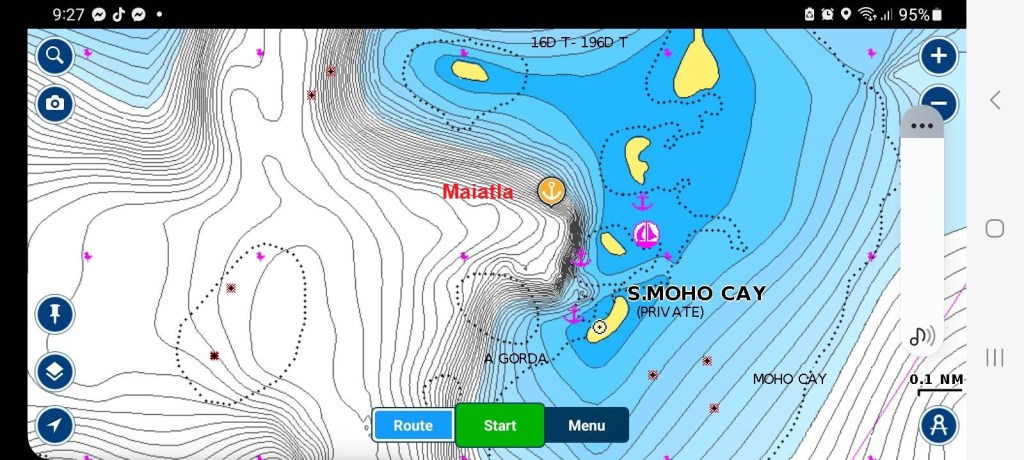
South Moho Cay to Placentia- The Hard Way!

We had a peaceful night at Moho Cay, in the morning we were slow to rise so it was almost 10 am before we completed breakfast and prepare to get underway. The sky was over cast with thick, guncotton clouds. Off in the distance there were two other vessels that had anchored on the far side of the island.  They were already underway and heading for open water. I twisted to look at our exit route out from between the tiny island that we had anchor amongst and when I turned back to see which way the other boats were heading, I was stunned. The boats as well as the other nearby islands had all disappeared. The sea in that direction appeared to be boiling as a dense line of rain swept over our anchorage and within seconds, the deluge and wind struck Maiatla with a great force causing the boat to take on a decided heel while forcing me to flee back below.

The squall only lasted 20 minutes or so and all we could do was listen the drumming of the rain upon the deck. It was fortunate we were late getting underway, unlike our neighbours who were now caught out in the open while being functionally blind while surrounded by hidden reefs.

The sky broke into streaks of blue as the rain and wind departed. Our plan was to sail direct to Placentia which lay some 30 miles to the north but out route would have us weaving between reefs and cays in water depth ranging from 70 to 10 feet, which would make for a nerve-wracking day of sailing. To add to out troubles, the gale that struck at our departure was not alone. Throughout the day every hour or so, a gale of similar intensity struck forcing us to reef frequently while taxing my skills as a navigator as we struggled to keep the boat on a heading that would keep us from grounding hard or plowing a corridor into the interior of a mangrove fringed cay. By 2pm Jackie and I were exhausted and wet, so it was decided to start looking for a place to anchor for the night and fortunately, Great monkey Cay, a few miles a way looked ideal.

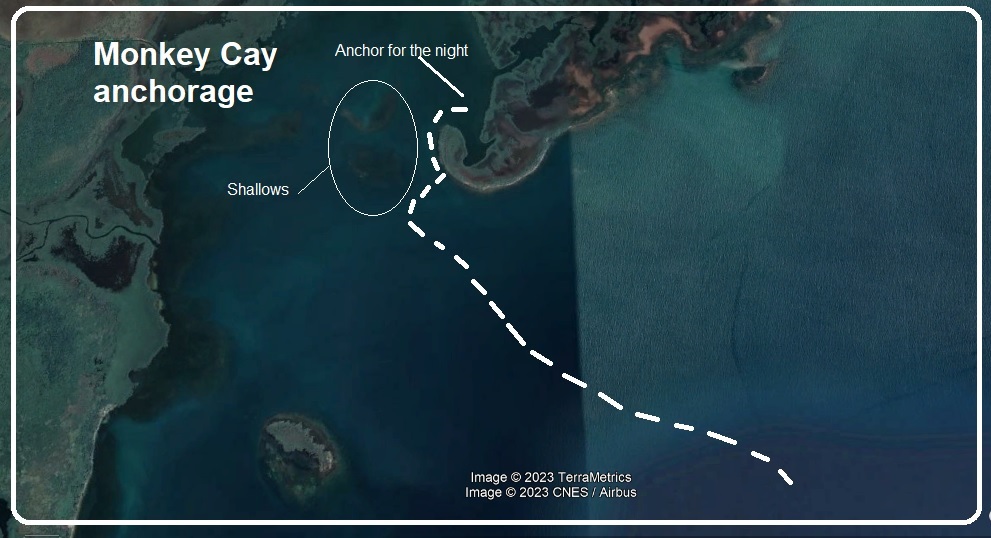
The Cay and the point of land from the mainland formed a perfectly sheltered bay with depths of 10 to 15 feet with a reported good holding, I was sold. The entrance looked easy enough, I plotted a heading between a breaking shallows on the north side and the mainland point where the Navionics indicated there was a deep channel.  As we entered what I thought was the channel, the water became unnervingly shallow. Checking the chart and our plotted position put us in the channel, but the depth readings were all wrong. Taking a closer look at the chart, I noticed a little note written near the entrance which shocked me as I read. “THE CHANNEL IS CLOSER TO THE SHORE THAN SHOWN. HUG THE SHARE TO AVOID THE SHOAL!”

Ah shit! I said aloud, startling Jackie who was driving at the time. “Hard a starboard and head for the point!” I ordered. We were only 40 or 50 meters from the shore so it only took a few moments for the water depth to begin to drop to deeper water until finally leveling off at 20 feet. The depth held until we were almost on the beach where it began to raise sharply so we turned inward once again. I could have tossed a beer can to the shore as we entered the tranquil lagoon where we dropped the hook in 9 feet of water.

It was a mill pond surrounded my mangroves and sea birds. It was beautiful but warm in the lee of the Cay which protected us from the cooling sea breeze. After dinner we went for a swim, but instead of diving off of the boat, we cautiously climbed down the ladder while being carful to avoid making any “croc-attracting” splashes.

In the morning what should have been a easy 10 mile sail to Placentia would turn into a grueling day full of surprises.

By 8 am we had the anchor up and were motoring out of the lagoon. The sea beyond at the time was as calm and as breathless as the lagoon, so I anticipated having to motor for part of the morning until the wind filled in.  As we were retracing our rout into the lagoon and passing the breaking  shallows, an alarm screamed a warning. A quick check revealed that it was the overheat alarm. The engine was cut and after telling Jackie to keep the boat coasting out towards the open water, I dropped down to the engine to see what was up.

It didn’t take long to discover that the raw water pump pulley was simply turning on the shaft, I suspected that the key had broken and if so, it would be an easy fix. I returned to the deck to fill Jackie in.

Glancing about I realized that the current was setting us back towards the lagoon’s southern point. With no wind we would ground out in short order so I decided to drop the anchor which would afford me the time to repair the water pump. The anchor set itself and satisfied that we staying put I dropped below to commence removing the water pump. With the pump removed from the engine I set it upon the galley table and began to disassemble the pump.

Once opened, the remnants of the key, all bent and twisted fell out. I did not have a replacement key so I took a pair of coins, epoxied them together and using a hand file, constructed a new key. To install the new key I would have to remove the pully off of the shaft, but the nut was seized and no matter how hard I tried the nut refused to budge. I tried heating the nut as well as soaking in penetrating oil with no luck. It had been close to an hour since I started my repair and I was starting to get frustrated and while I sat there contemplating my next move, I noticed that the Maiatla’s bow had begun raising and falling with a building swell.

I head topside to have a look about and there to the east was a big black cloud and it was coming our way and from the speed of which the waves were building I suspected that the cloud bore a lot of wind.  Back at the galley table I renewed my efforts to get the pump apart but within a few minutes I new I had to give up as Maiatla began to buck deeply with the waves now threatening to board the bow. We had to go and now.

Quickly I recovered the anchor and with the wind whistling through the rigging at better that 25 knots we unfurled the headsail and put the boat on a course bout for open water. I thought of turning around and heading back into the lagoon, but with being engineless and the narrow channel leading back in I didn’t want to risk it, one miscalculation we would be on the beach, an there was no one around to help. Better to be offshore.

With a full main and headsail Maiatla beat into the building waves with great authority. The clouds brought with it gusty gale force winds in the upper 30s and low 40s. In the gusts I would round Maiatla up to dump the excess wind out of the sails, then lay off again as the gust subsided.   We would spend the better part of the day threading our way between reefs and cays while beating up wind as gale after gale blew in, dump an ocean full of rain before blowing its self out.

It took us 5 hours to cover the 10 miles to Placentia and it was late in the afternoon when we approached the anchorage. We received many a hard look from the crews of some of the anchored vessels as we charged in under sail, weaving between anchored boats to find a vacant spot on the west side of the harbour. Jackie rounded Maiatla up into the wind as I furled the big headsail. As the boat lost her forward motion, I dropped the anchor and paid out 300 feet of chain. The stiff breeze drove us back on the ground tackle, stretching out the chain with the anchor final bighting in to arrest our drift.

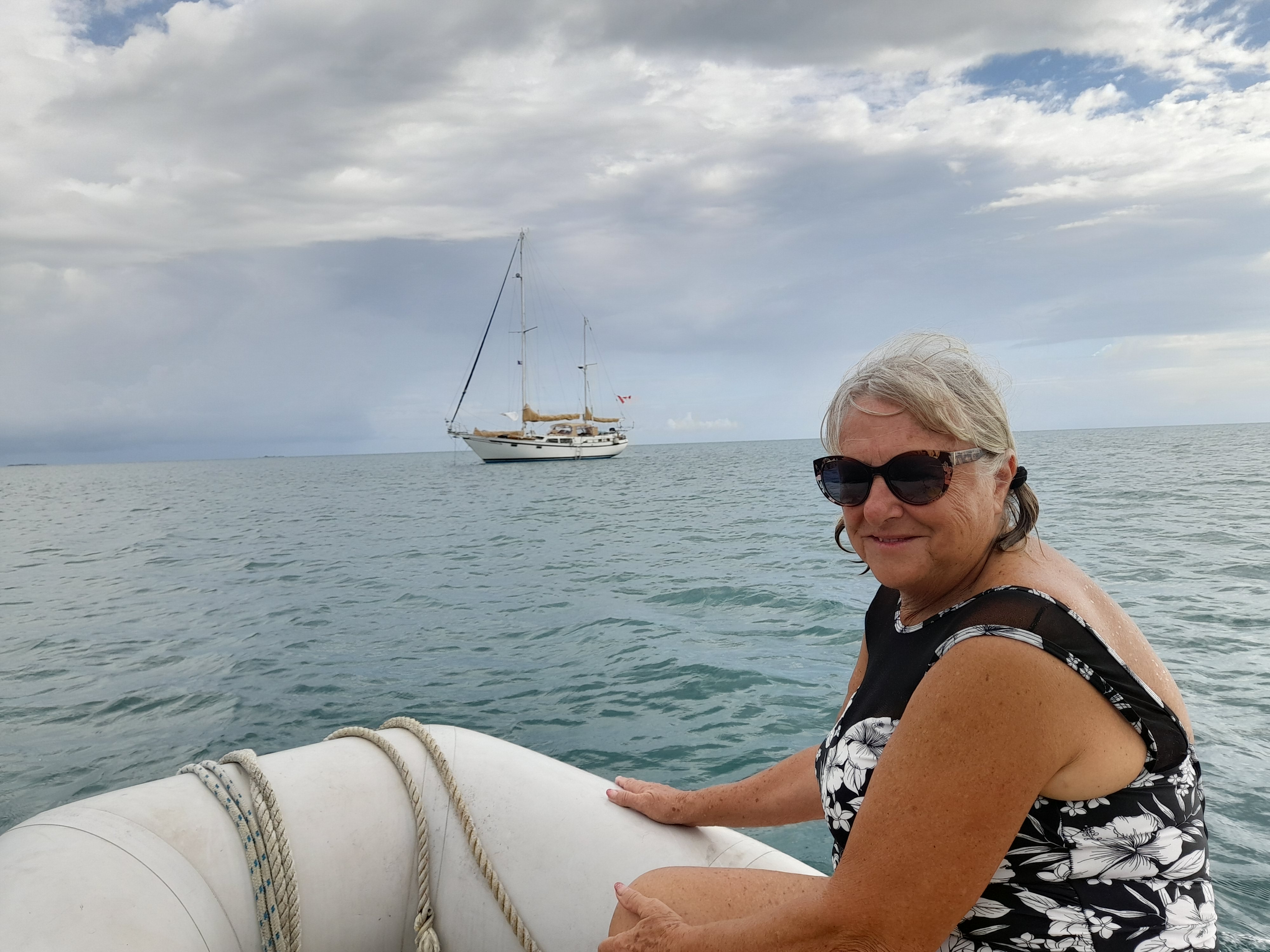
Jackie and Maiatla at anchor at Placentia.

We had made it safely to Placentia but not unscathed. Apparently in our haste to get underway out of Monkey Cay Lagoon, I had forgotten to close the porthole on the starboard side. Well apparently, with each roll to starboard, gallons of water rushed in, soaking the Pilot birth and settee cushions.  Everything below in the main salon was soaked, including all of Jackie’s clothes and suitcase. Oops! Good thing the bilge pumps were working.

Punta Gorda Belize

Punta Gorda

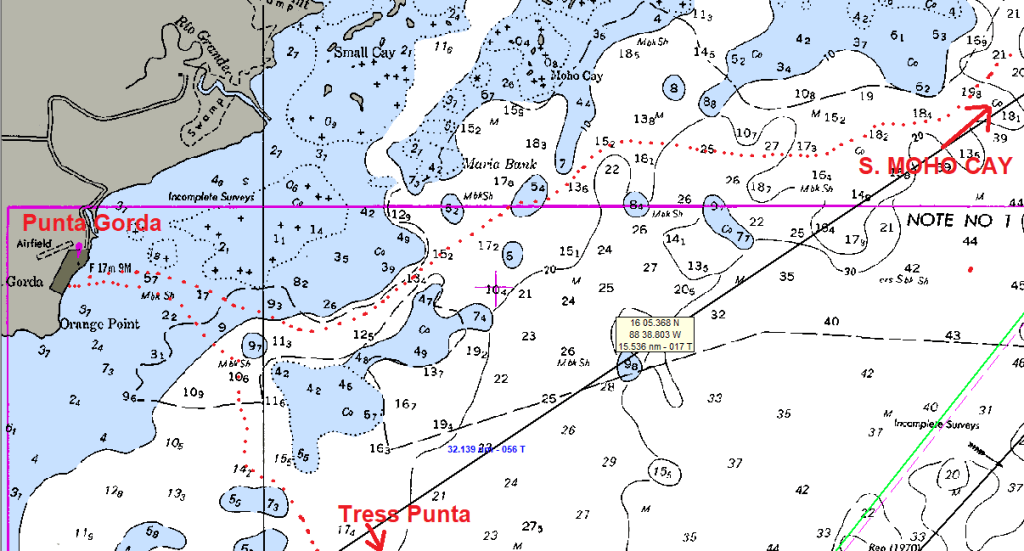
The shallow reefs surrounding Punta Gorda

We had a peaceful night at anchor and by 10 a.m. we had hauled the ground tackle and got underway powered by the big headsail.  At first, the day was looking promising as the sun was peaking out of the clouds and a 10-knot breeze filled in putting us on a nice broad reach.  But my optimism soon faded as we cleared Tress Punta. With the wind came a steep, 4-foot chop making for an uncomfortable ride and to make maters worse, off to the northeast, a black cloud bank was charging down upon us. We only had 15 miles to go to Punt Gorda, Belize where we intended to clear in but it would prove to be anything but a pleasant Caribbean sail. 

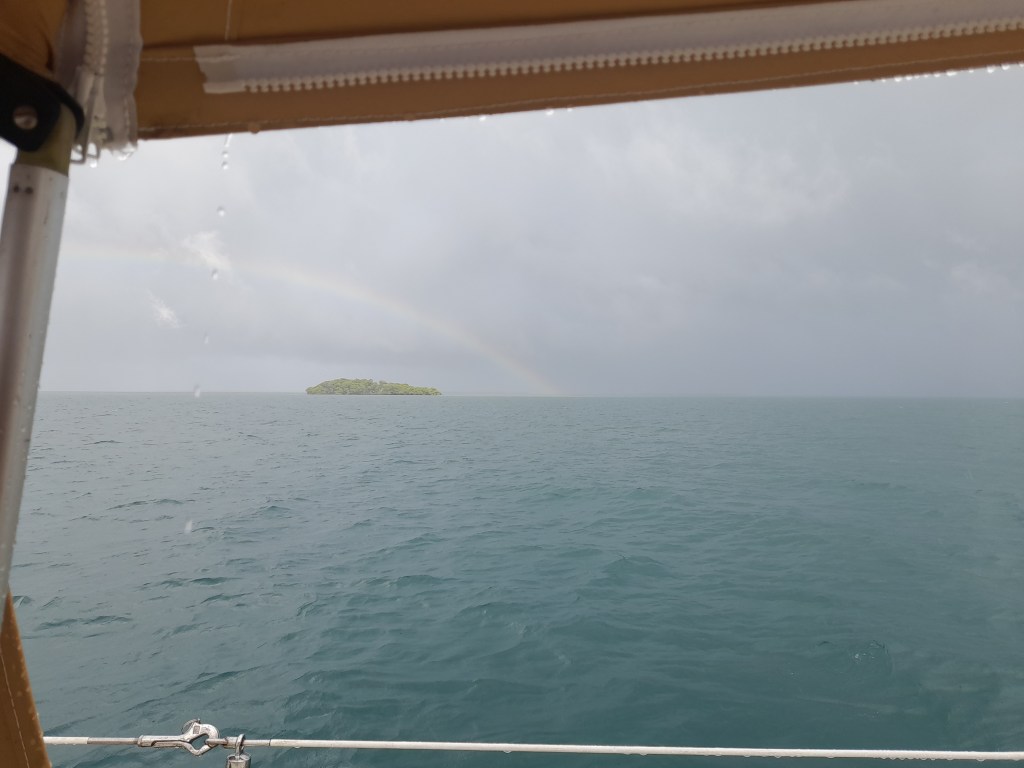
The first of many squalls pass leaving a rainbow over a Cay.

The first of several rain and thunder squalls would strike shortly after clearing the point.  The rains came heavy with each squall striking with stiff winds from between 20 and 40 knots. We were thankful that the squalls usually only lasted from 10 to 30 minutes before quickly petering out.

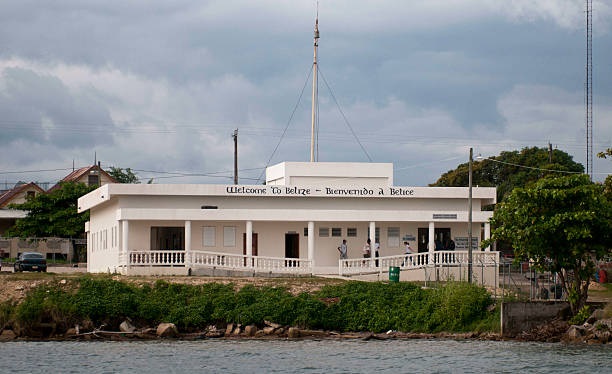
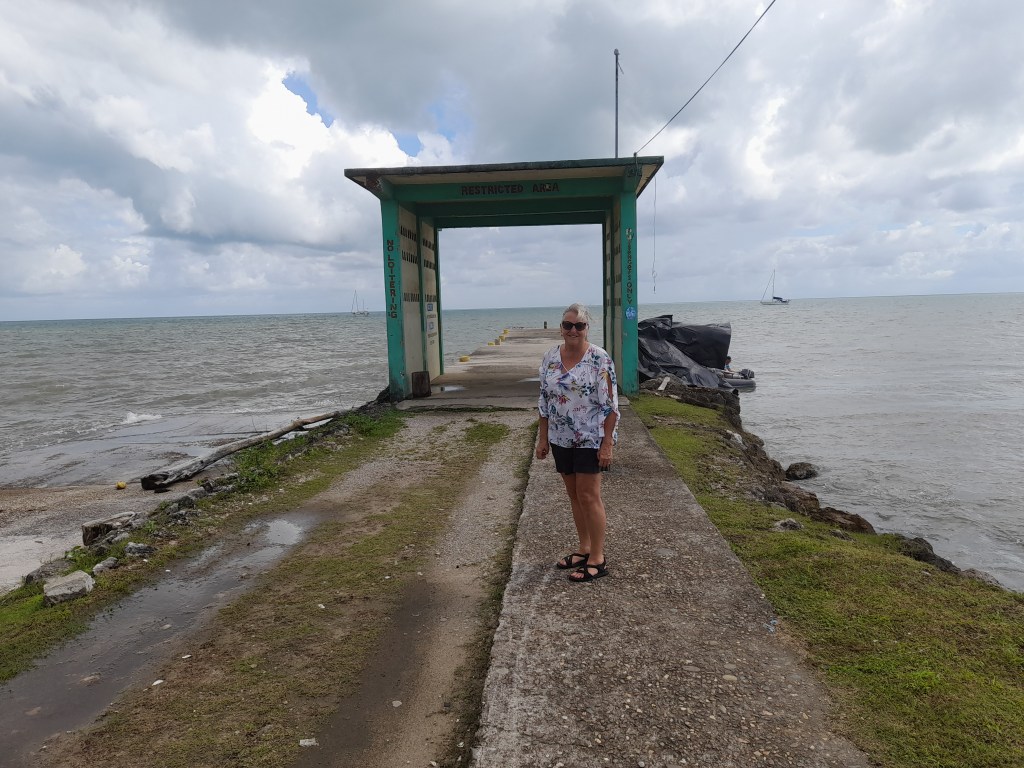
The town of Punta Gorda was reported to be the best place to clear in as they had a long dock and all officialdom was contained in one building at the head of the dock on which you could tie your dink. We had also heard that corruption in the Customs and Immigration office was minimal. Here we would also have to check in with the parks service and pay a fee as well as we would have to visit health department nurse to answer a covid questionnaire.

The drawback with Punta Gorda was that the approach from seaward was fraught with shallows and reefs, it was an open roadstead so there was no protection from the open sea and the easterly squalls. That is how we arrived, during a nasty thunder squall with 2-meter waves lashing the shore and dock. It was noon and we were anxious to get to shore and clear in so with some trepidation, we anchored a hundred meters or so off the dock, next to another cruising boat, some friends from the Rio, then launched the dink.  

All officialdom, was contained in one building at the head of the dock In Punta Gorda

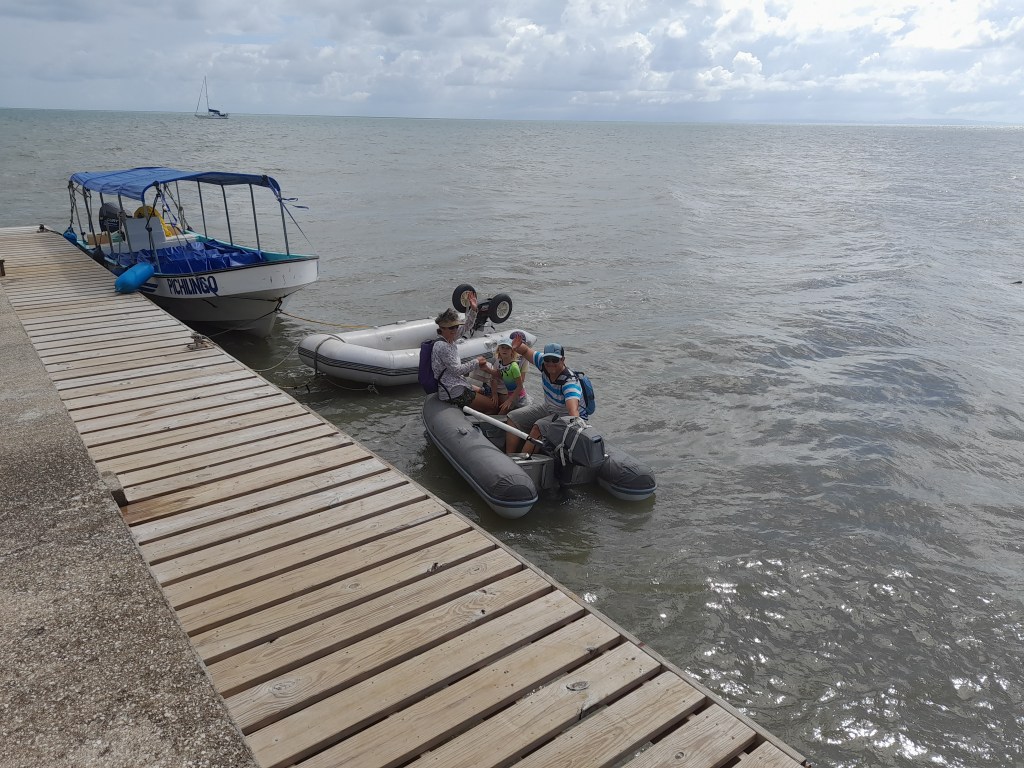
The boarding ladder was useless because when I mounted it on the side, the boat rolled so deeply that the rail almost disappeared underwater, the force of which dislodge the ladder. We had to just sit on the rail and time our jump into the dink.

If we weren’t already soaked to the skin from the rain, waterspouts shot up between Maiatla and the dink, showering us from beneath.  Thankfully the wind died before we hit shore so our landing on the dock we faired better.  On the dock we met the other cruisers who briefed us on the prosses, but they didn’t want to hang around for a chat because at the moment of our landing, the squall blew itself out and sea began to calm. They wanted to get back to their boat before the next squall hit.

Jackie On the custom dock, you can just see Maiatla off in the left side of the pic and our friend boat to the right.

Our friend quickly depart between squalls

As predicted our clearing in was quick and very painless and only cost me $380 US. $50, as I would later learn was an “unofficial” fee the health nurse charged me and I assume, pocketed.

By 2 p.m., we were officially cleared into Belize and since the sky was breaking blue, we took the opportunity to go into town to buy a chip for my phone so I could send an email to let everyone know that we arrived safely. That done, we found a restaurant for an early dinner, which would prove to be a mistake.

We were told in no uncertain terms that we were not to sail at night in Belize, and that we had to be anchored for the nigh at least 1 hour before sunset. After eating we made a beeline back to the customs dock. As we looked seaward, it became apparent that a new squall was about to strike. The rain began to pelt as we bolted towards the dink, As we ran, Jackie spotted a duty-free liqueur store so she just had to stop. Apparently it was my birthday and she wanted to buy a bottle of wine to celebrate. Who was I to argue?

Our trip back out to Maiatla was as wet and wild as our trip in, but getting back aboard Maiatla proved much more difficult. Between bouts of laughter and grunting, with a scraped knee on my part, we finally clambered back aboard.

The nearest protect anchorage was about 7 miles away at South Moho Cay, and of course it was all upwind. And again, our course would have us weaving through reefs and shallows where there was less that 15 feet of water. To see 70 feet of water would be infrequent but anxiety relieving. It was after 3 p.m. before we got underway and I was now regretting stopping to eat. We would be lucky to reach the anchorage before dark.

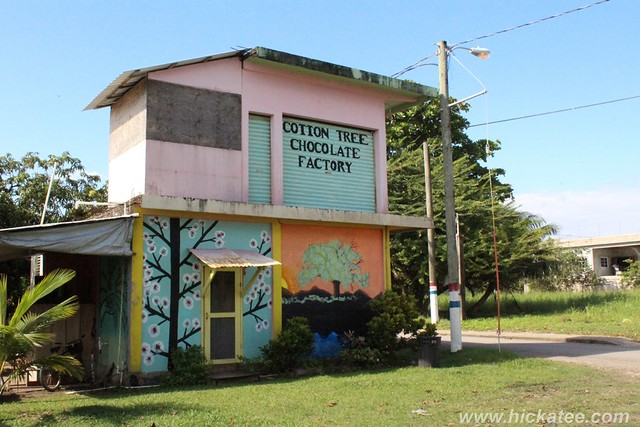
The Punta Gorda Chocolate Factory.

Our latest squall blew itself out before long and we managed to stay off the reefs but we lost all daylight about a half mile from the cay. It would be navigation by chart and radar to get us in. I chose the nearest spot, a tiny, mangrove encased bay on the south side of the uninhabited island. The only visible reference point came from a pair of masthead lights of boats, I presumed to be anchored on the far side of the island a couple of miles away.

Our anchorage at South MOHO CAY

At a crawl, Jackie drove as I stood on the bow ready to drop the hook. I knew instantly that we were inside as the water suddenly grew calm. The bottom came up fast to 40 feet. I called back to Jackie to let me know when we hit 30 feet, its there I would drop the hook. Moments late she gave the word and down went the anchor. I wanted to put out 3 to 1, so about 90 feet of chain but before that could happen Jackie yelled, “8 feet!”

  In the dusk, less than two boat lengths ahead, I could faintly make out the shadow that was a line of mangrove trees. “Reverse!” I yelled back. We would retrace out path and try again, but this time, 40 feet of water would have to do.

Down the River We go

My sister Jackie and I prepare to leave the Rio.

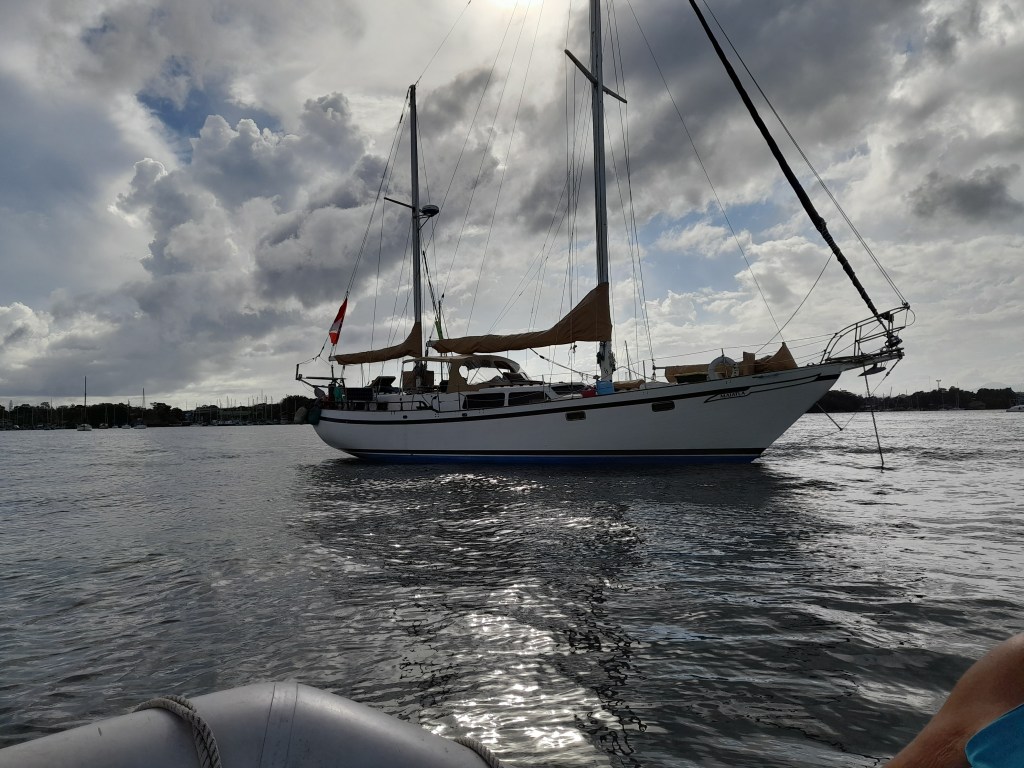
Maiatla at anchor off of Marina Nana Juana the day of our departure.

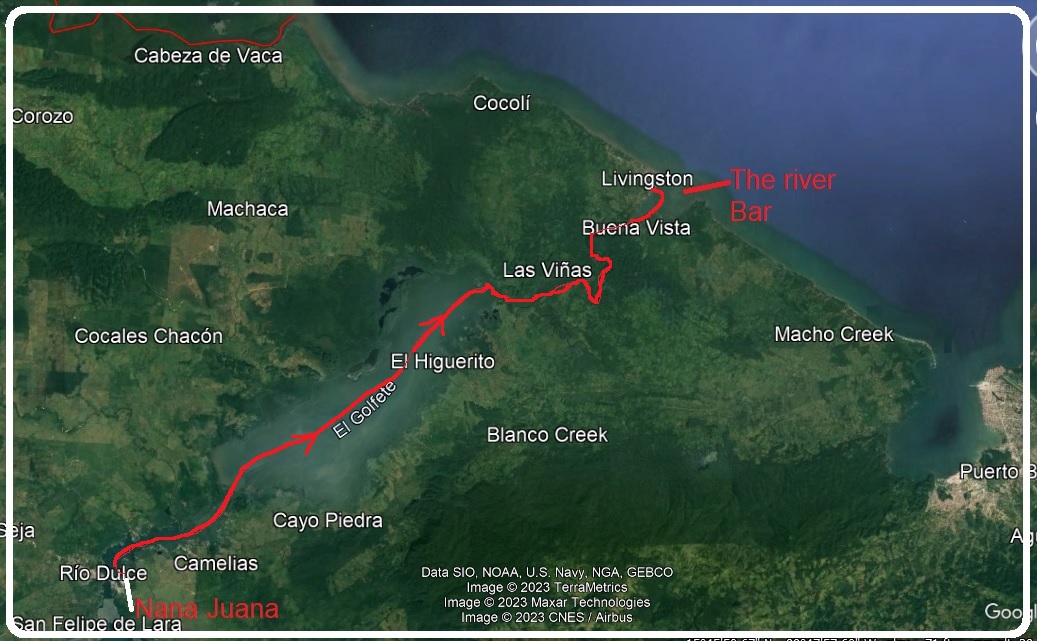
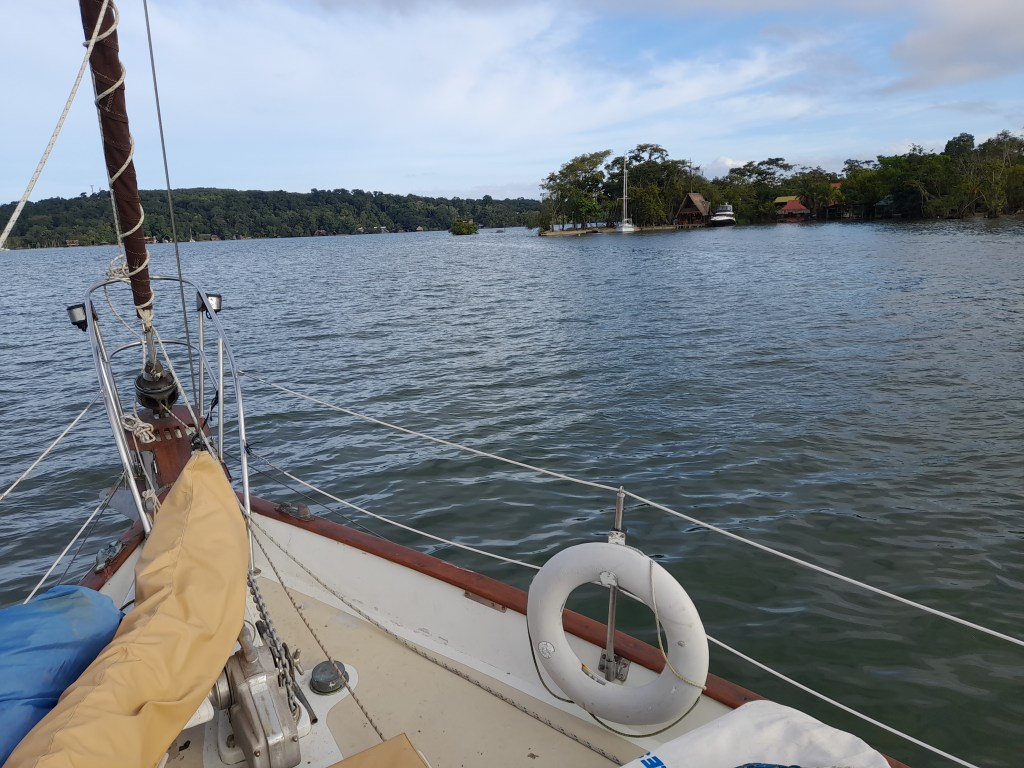
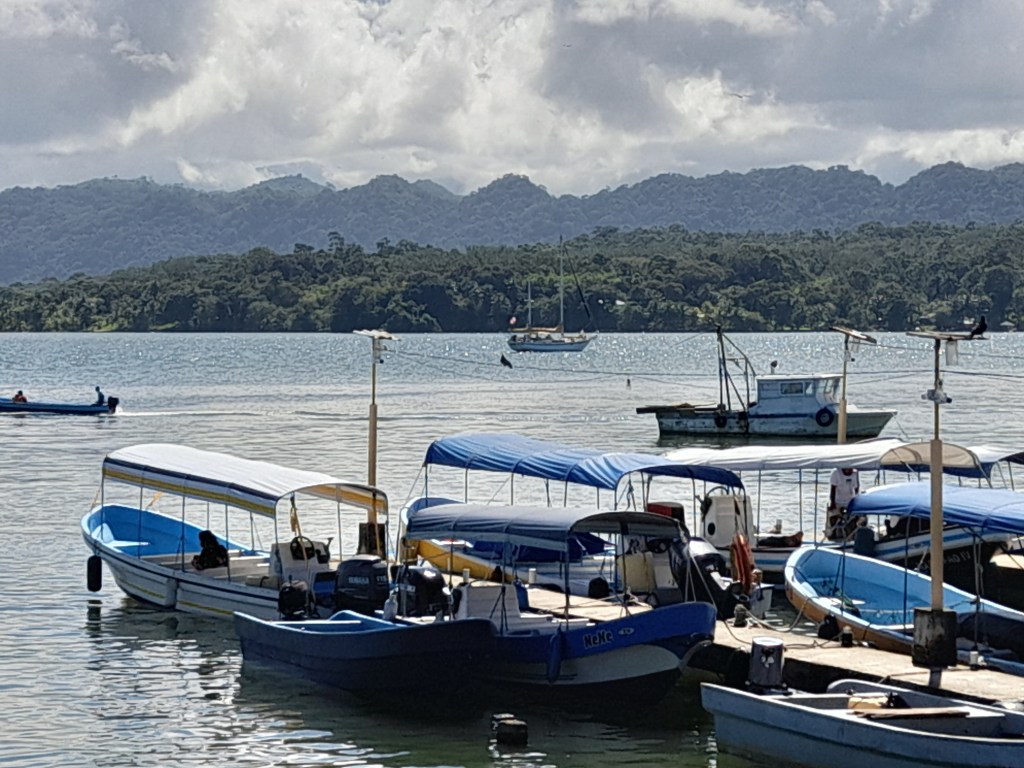
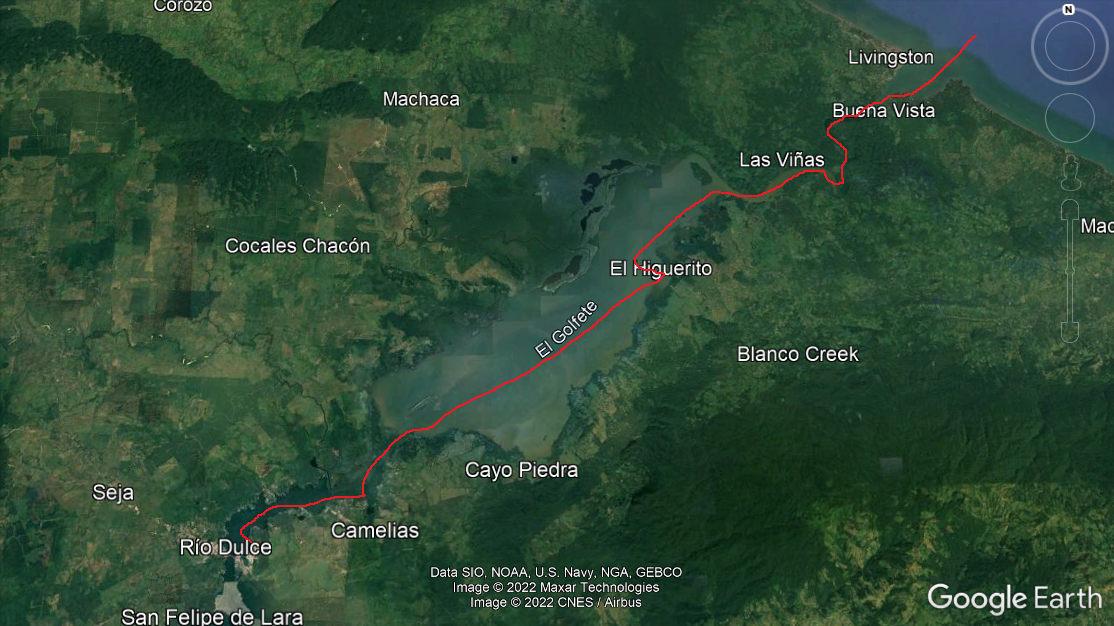
 Jackie and I were up at the crack of dawn which broke clear with the morning heat building quickly. We had a pleasant motor down the river while passing the other half dozen of so marinas which are mostly concealed by the jungle. After a few miles the river opens up into a small lake called, El Golfete. The lake is approximately 9 miles long and 2.7 miles at its widest surrounded by a dense jungle and thick mangroves. The jungle hides several villages but the channels give the villagers access to the lake which is the locals’ principal mode of transportation.

Hauling anchor to get underway.

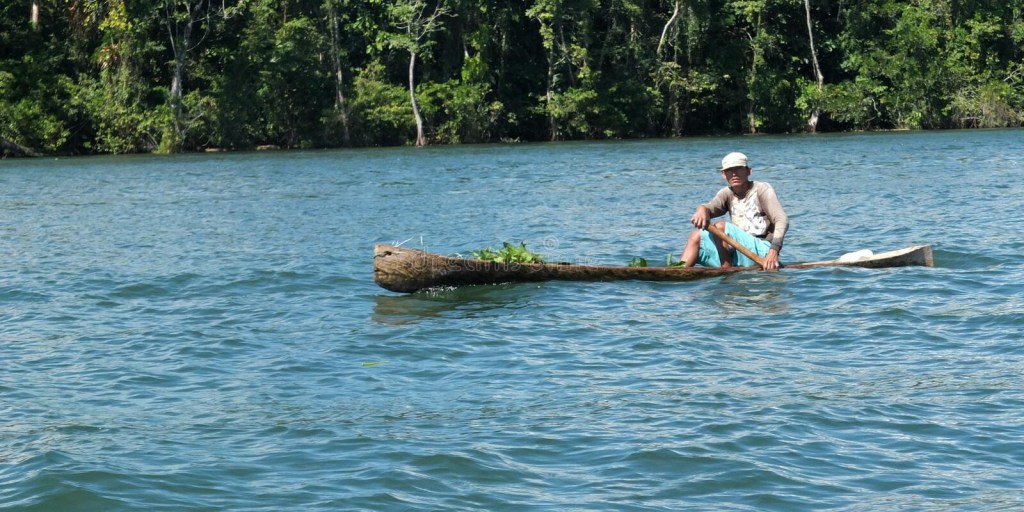
This morning there were several fishermen in dugout canoes casting nets and we even passed a couple of long canoes with outboards. The sleek craft was full of children with backpack full of books being ferried to the schools up river. What was also notable about this lake, for cruisers anyway, is the shallow depth which according to the chart, is 4 meters or less.  Or about 15 feet. To wander off towards the shore is to run the risk of getting stuck in the soft bottom mud.

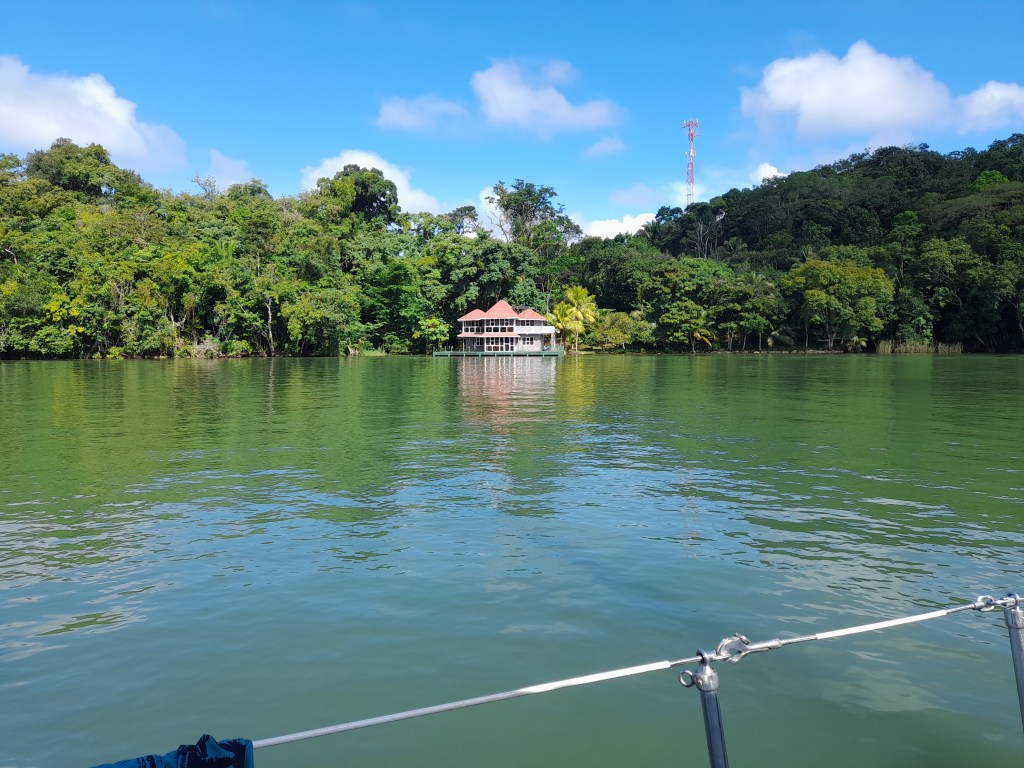
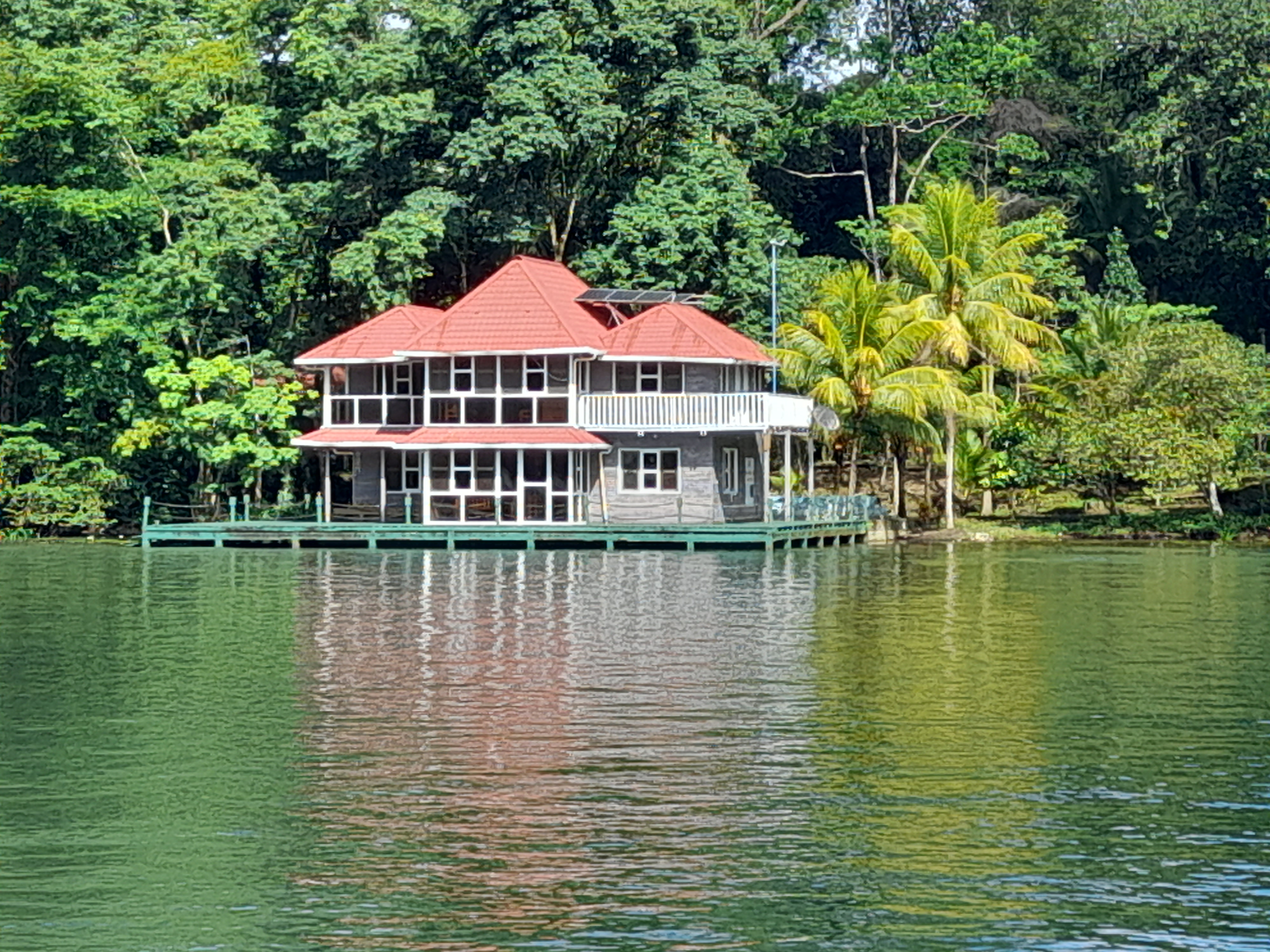
A house on the river bank in the jungle.

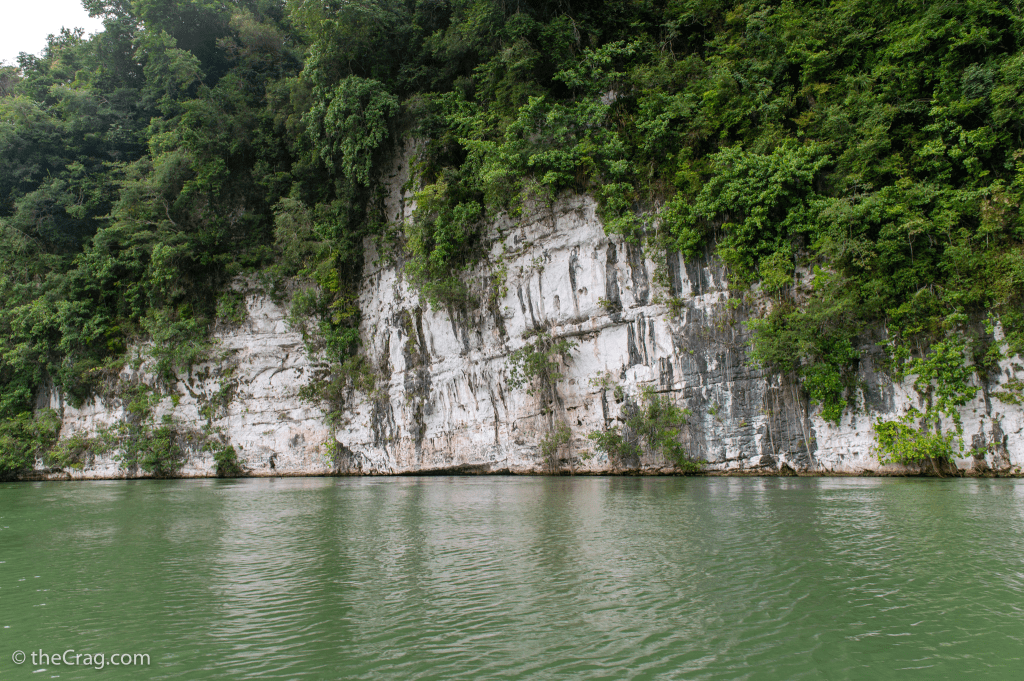
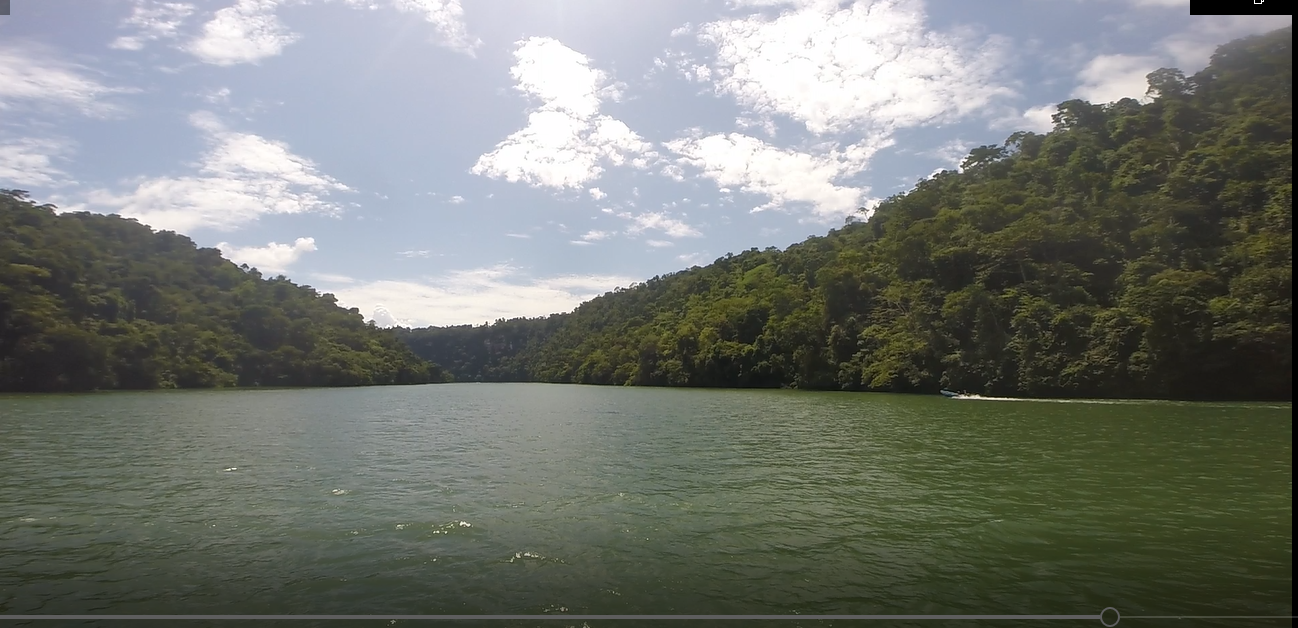
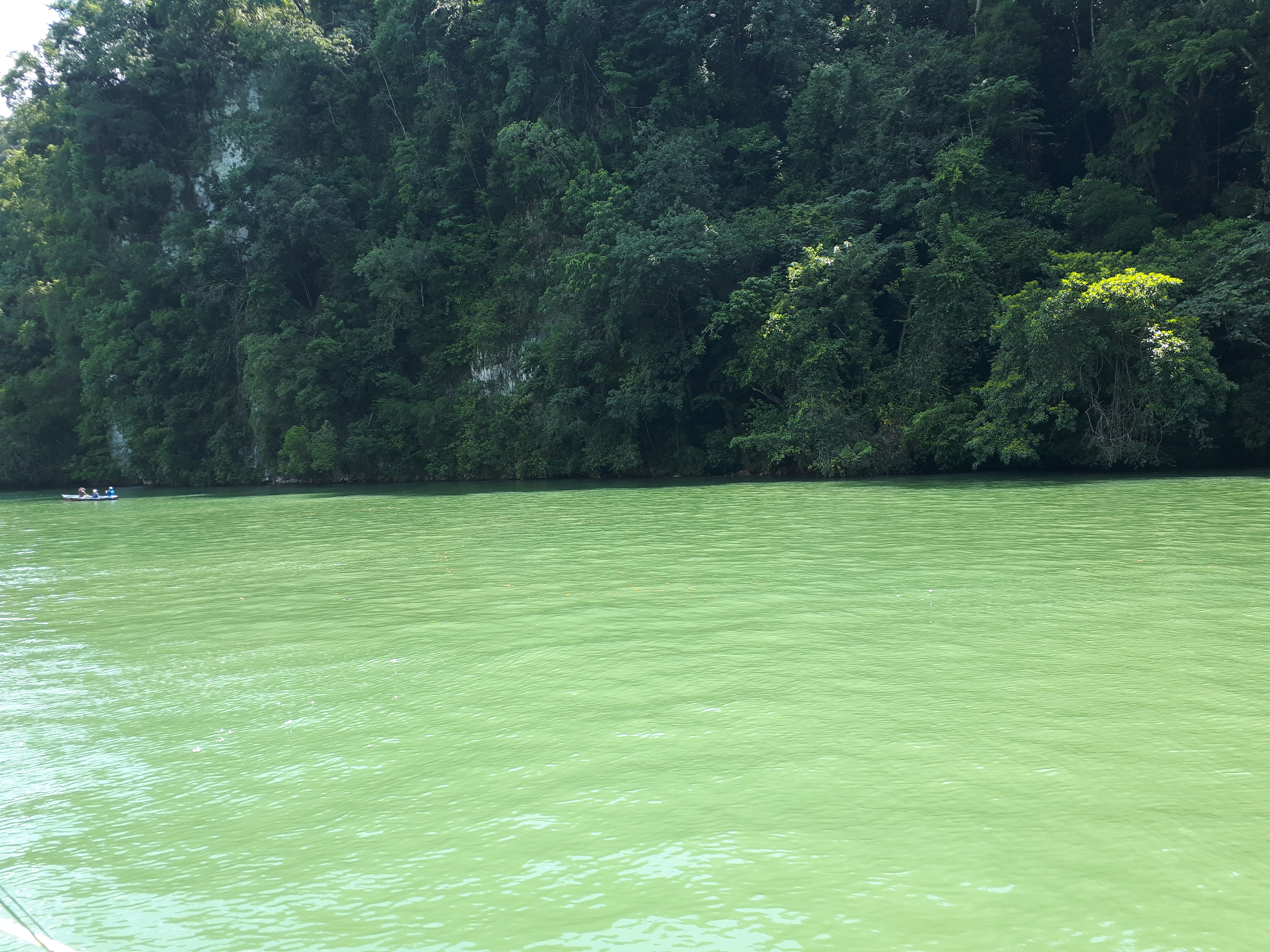
The lake eventually narrows back into a river which winds its way through the jungle and a little further down it cuts through a deep gorge where cliffs tower over the boat and canting trees threaten to snag your rigging of unwary sailors.  There river was busy with commuter traffic moving in either directions, or again with fishermen.

The Rio Cliff and jungle, canoe fisherman.

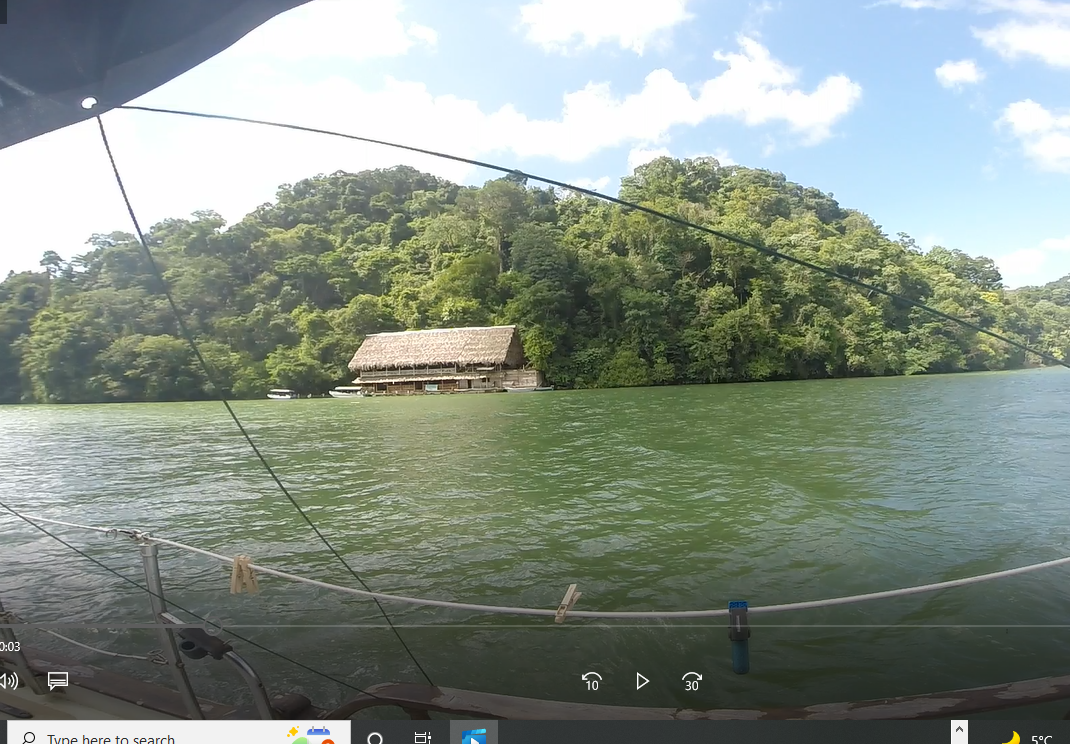
There was not much wind so it was hot and steamy but not unbearably so.  The shoreline for the first mile was deserted but eventually some houses came into view, along with a few waterfront restaurants on piles. This is my second trip along the river and each time I vow to stop at one of these places, but like before, it will have to wait to my return trip.

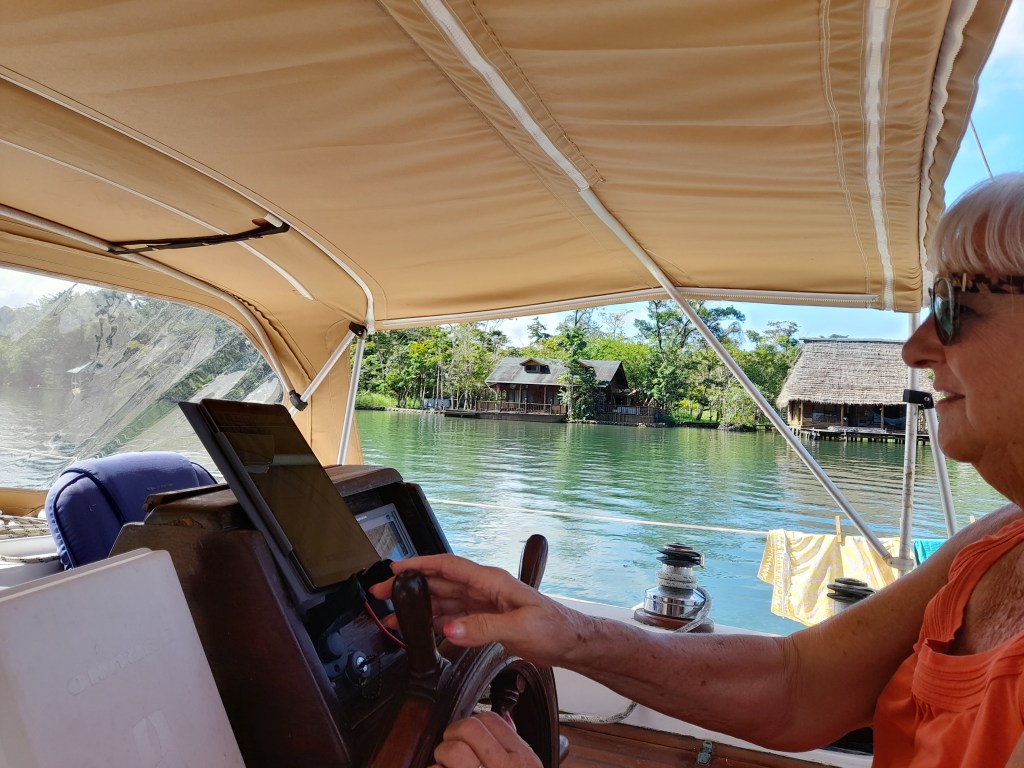
Jackie at the helm as we navigate the river.

 Due to the current and a lack of attention paid to the chart, we almost ran aground on a expansive sand bank. I just happened to glace at the depth sounder and was shocked to see that the water depth under the keel was reading 0 feet. In a near panic and before consulting the chart, I called to Jackie, who was on the helm, to turn hard to starboard. Maiatla heeled away from the turn and shot back out into deeper water.  It was fortunate that we had turned the correct way and not driven at full speed onto the bar.

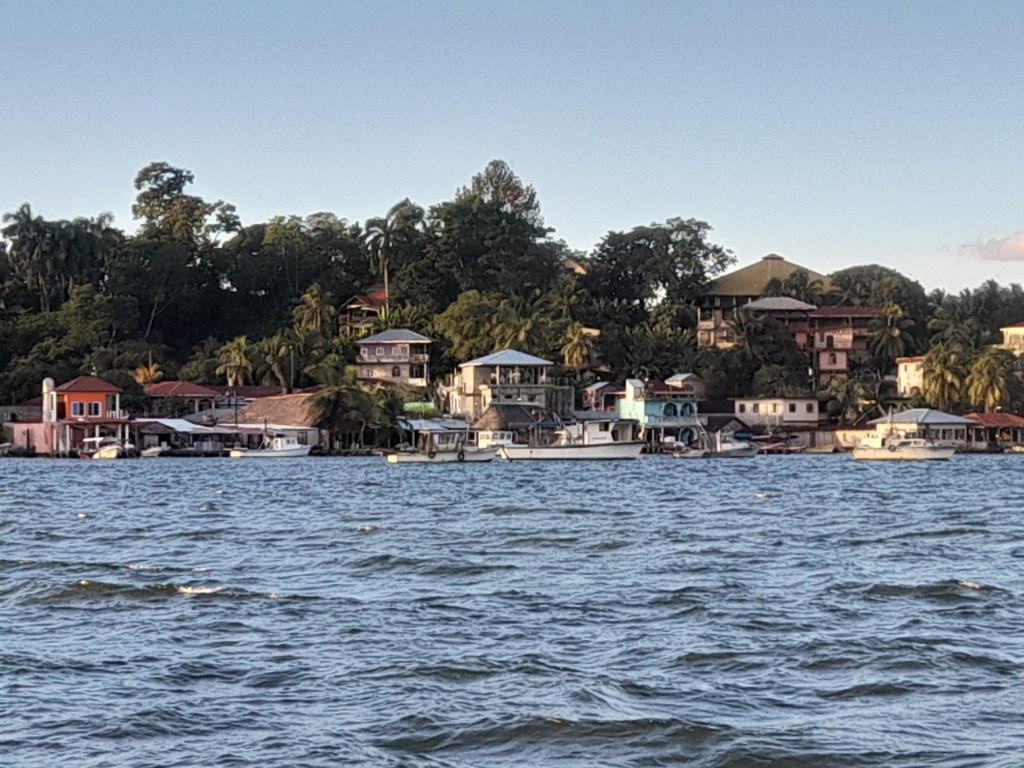
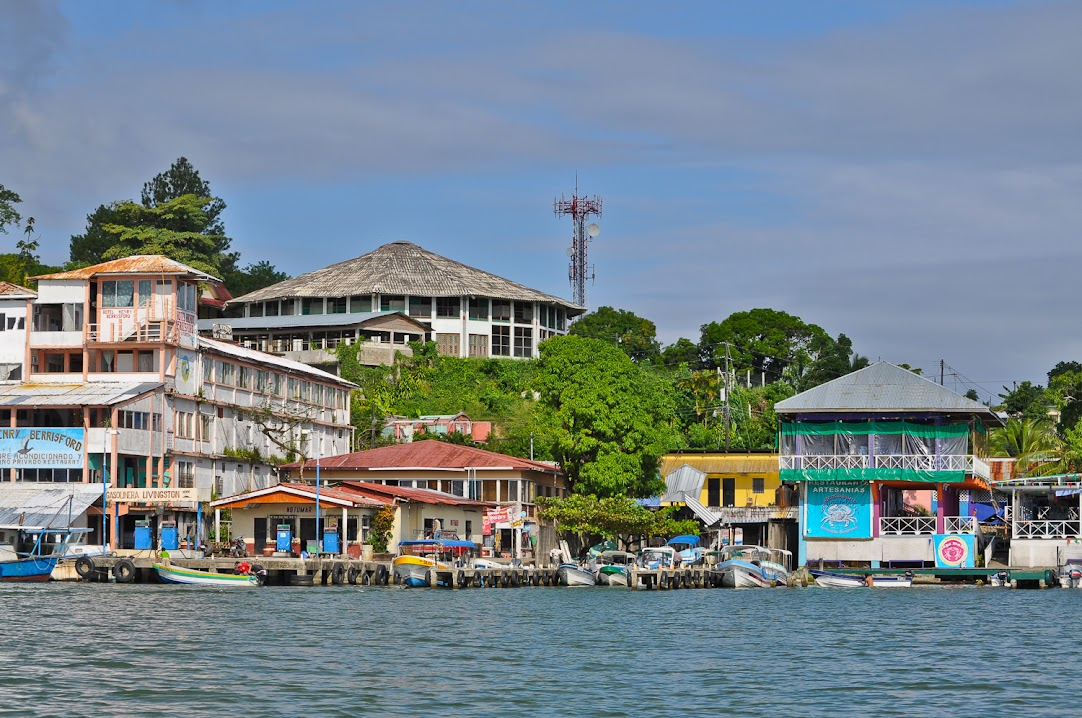
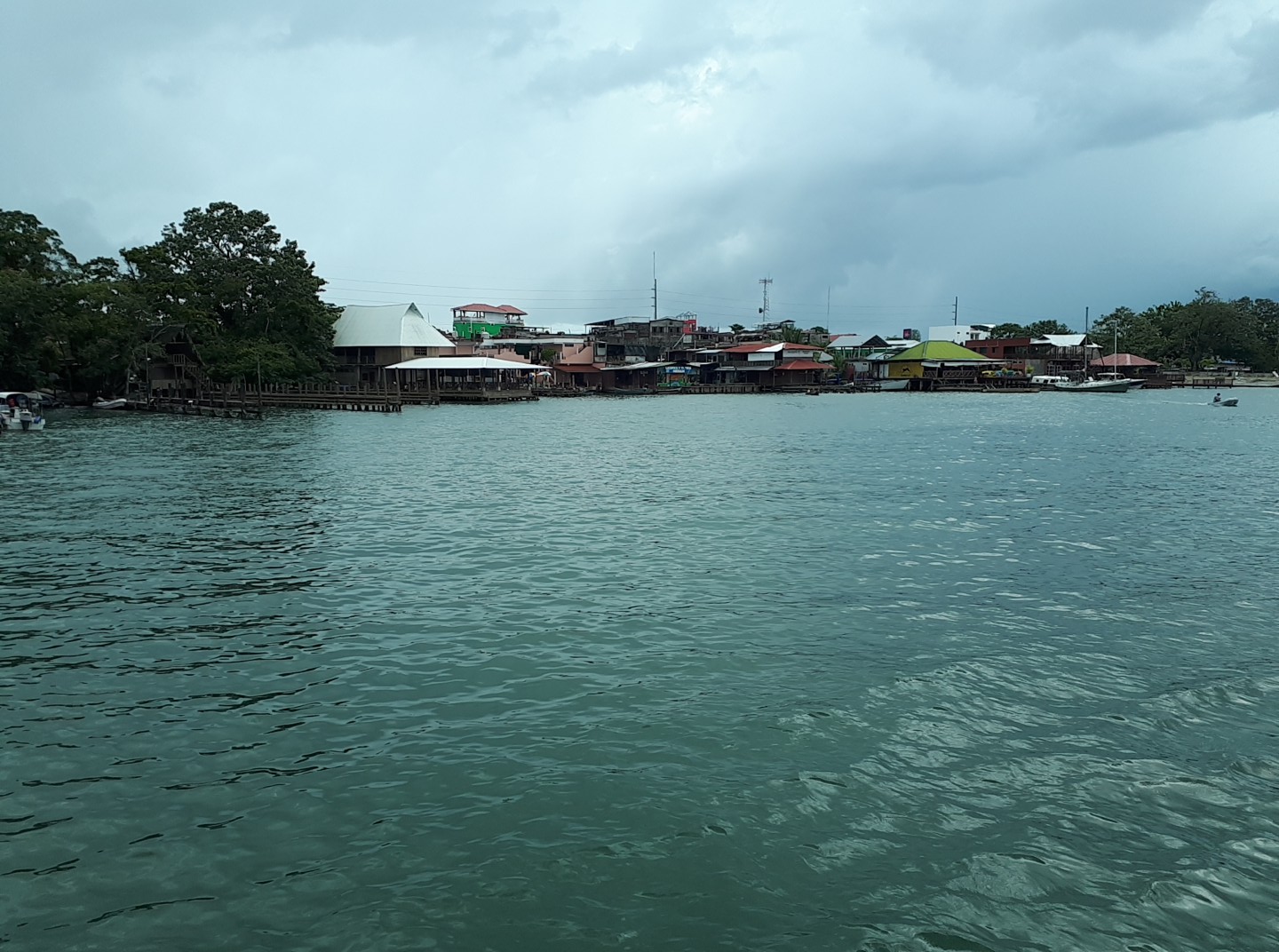
Passing through the last of the gorge, the river widened up to reveal a shore lined with stilted homes and canteens and what looked like a boat yard. The Town of Livingston at the mouth of the Rio Dulce has a population of 18000 people and is noted for its unusual mix of Garífuna, Afro-Caribbean, Maya and Ladino people and culture. In recent decades Livingston has developed a large tourist industry. With a growing American expat community.

The town of Livingston comes into view.

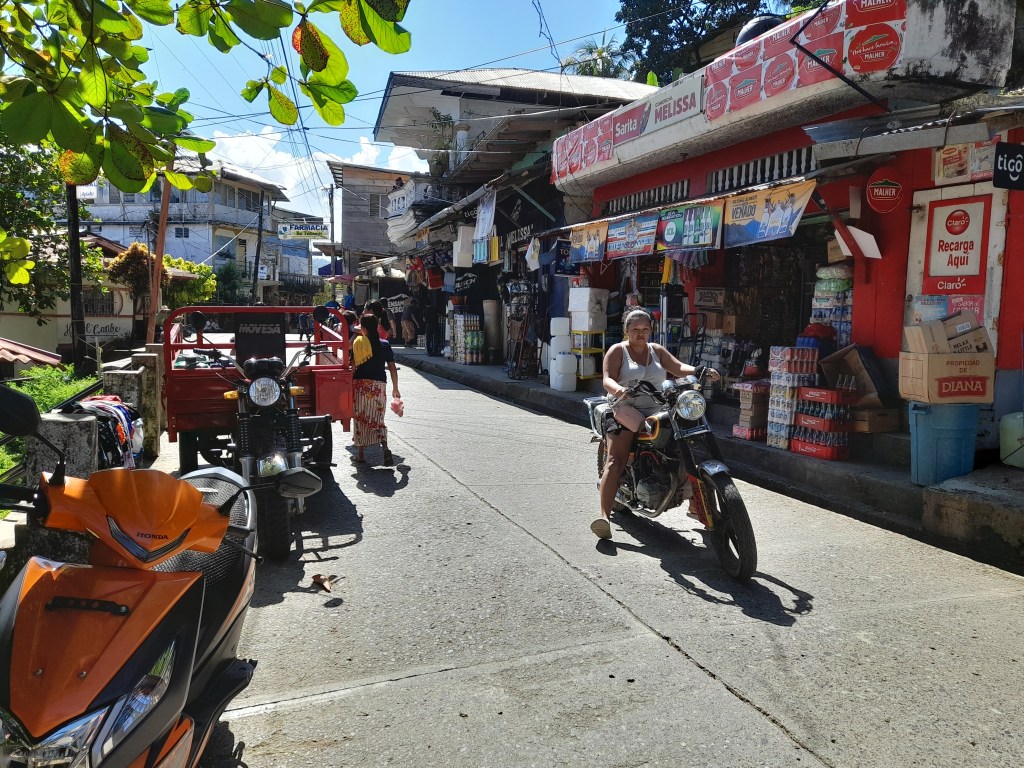
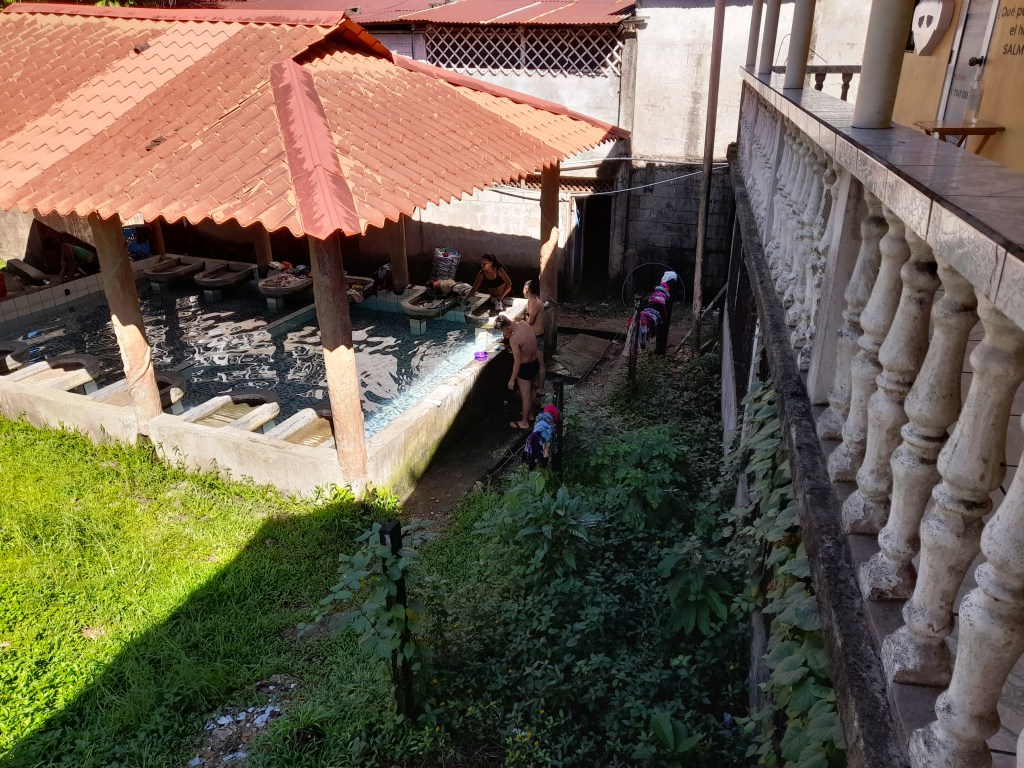
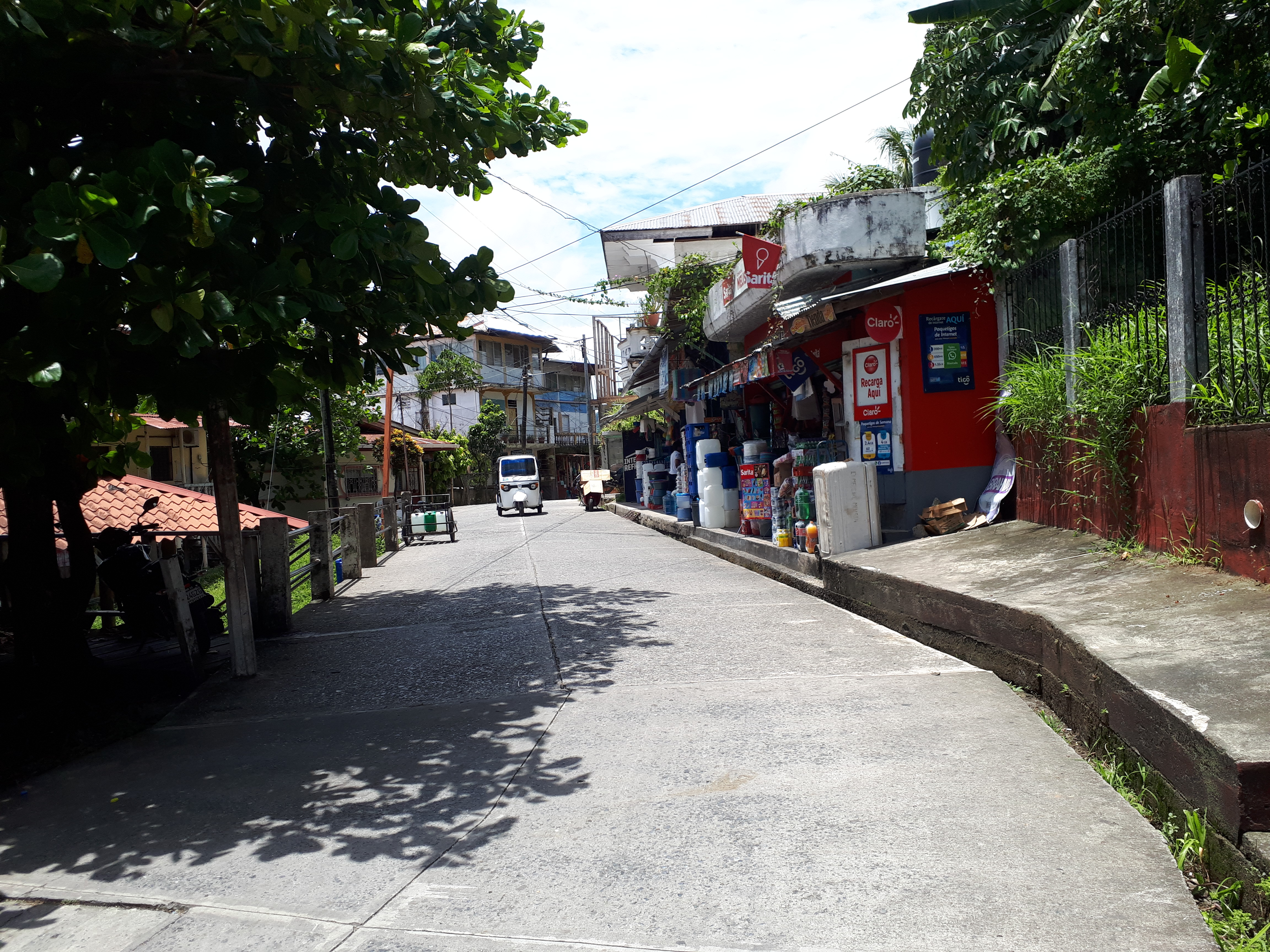
We anchored off the town and took the dink ashore to meet Raul, our agent who had processed our departure papers and who would collect the fine for our over staying our permit. All in all, it cost a little over $400 to gain the privilege of leaving the country. The streets are narrow, windy and steep in some parts of the town, but fortunately it was a short walk to our agents office. Next to Raul’s office is a cistern, a concrete tub of perhaps 30 feet square which is full of water and its here where many of the town folk come to do their laundry or as we witnessed, to bathe. 

Maiatla at anchor off of Livingston and the streets of the town.

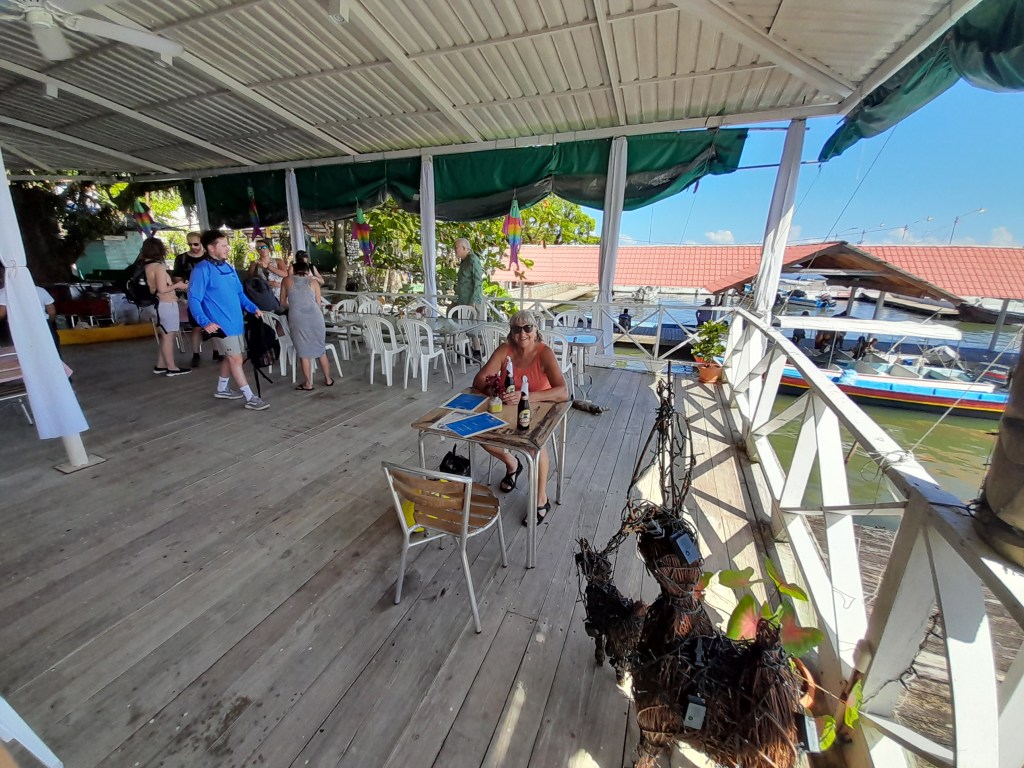
We were told to come back in an hour and all would be done so we rented a Tuk-Tuk taxi to take us on a tour of the town. Jackie and I had lunch at a water front restaurant from where we could see Maiatla anchored out.

The public wash basin as seen from the balcony of our agents office.

Whenever possible, I would check on the boat to make sure it had not been boarded.  It is reported that theft from boats is common here and many advise not to anchor out here at night, as its can be dangerous but we had little choice in the matter as the next high tide which would permit us from crossing the notorious sand bar was not till 1 pm the next day.

A waterfront restruant from where we could see Maiatla.

We would just have to take our chances and sleep with one eye open. With our clearance papers in hand, we were informed that we only had 24 hours to leave the country. But leaving was something we were anxious to do.

Shakedown cruise into the heart of Guatemala.

With the majority of the work aboard Maiatla completed, we prepared to head up into lake Izabal for a few days for a shakedown cruise. All seemed to be going well with the exception of the boats steering. After replacing two long runs of coper hydraulic lines, I topped the fluid up only to discover a leak at the seal around the helm shaft.  Without new seals we would have to tolerate a constant drip of oil down the steering column. I would later learn that the steering pump, devoid of oil for probably over a year, baked in the tropical heat frying all the seals.

It was late afternoon by the time we got underway and to sail under the bridge and past the busy town of Fronteras. We had approximately 15 miles to go to our indented anchorage in Lake Izabal. The river that flows past the town of Fronteras was busy as usual with panga traffic. Typically, with people and goods being shipped up and down the river. There were even a few dugout canons with lone fisherman casting nets and lines into the turbid waters.

We had several thundershowers pass through the area in the morning but as we sailed under the bridge the clouds and the sun broke out and the wind filled in. By the time were passed the old fort, Castillo San Felipe, I had unfurled the headsail putting us onto a nice run. Some friends who saw us depart motored out in their dinghy to say their final farewells, it was a great send off as the sun began to set to the west.

My sister Jackie at marina Nana Juana with the bridge and waterway leading to Lake Izabal.

The town of Frontera as seen from the top of the bridge.

Passing under the bridge with the Hotel Backpackers center.

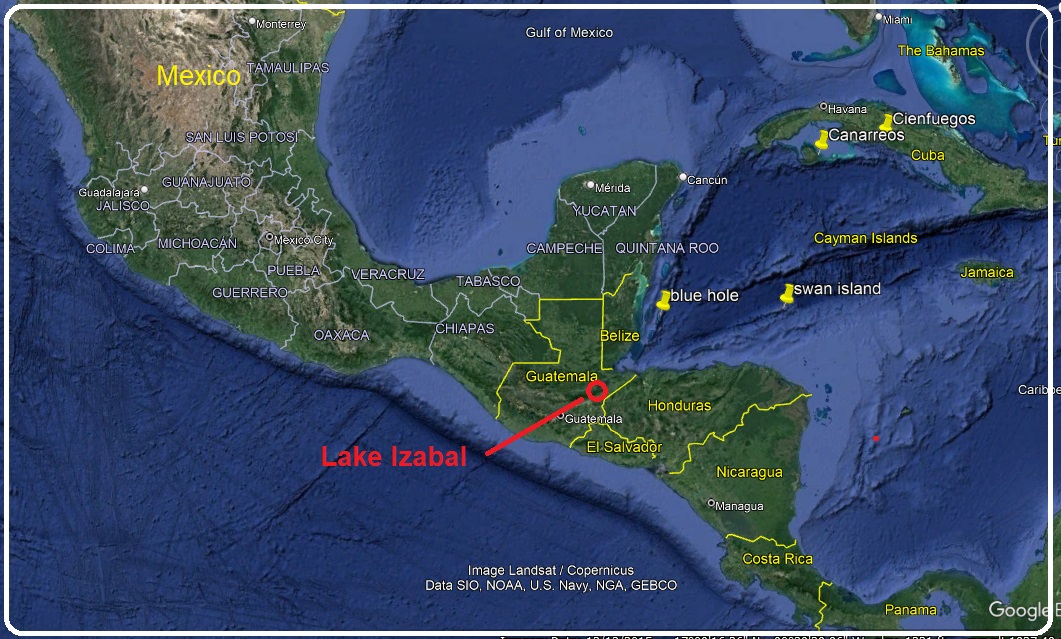
Lake Izabal id the largest lake in Guatemala coving almost 600 sq/kilometers. The lake is 24 nautical miles long and 10 or 12 miles at its widest. It’s a shallow lake with an official  with much of it less than 40 feet deep. Its reported that the deepest section is only 60 feet but we would cross over a section that was over 70 feet.

What we would find surprising was just how deserted the lake and shoreline was. The jungle-lined fringes were mostly deserted, dotted with few homes and scattered cantinas and hotels. The jungle beyond is reported to host a variety of wildlife. including Jaguar, Spider Monkey, Blue-eye cichlids, and Howler Monkeys.

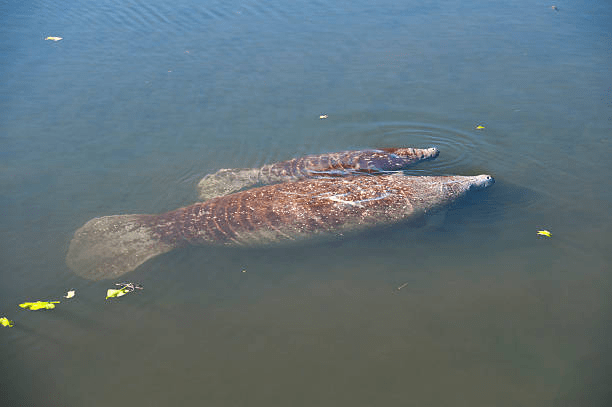
Manatees on the surface.

The lake itself, was also home to manatees that thrive in the mangroves at the nature reserve at the top of the lake. We would see some Manatees next to the boat.  The water was incredibly clean and warm, blood warm. At first I though my instruments were malfunctioning as it was telling me that the water temperatures was 32 degrees Celsius. (89.6 F) which we would soon confirm when we dove in for a swim.

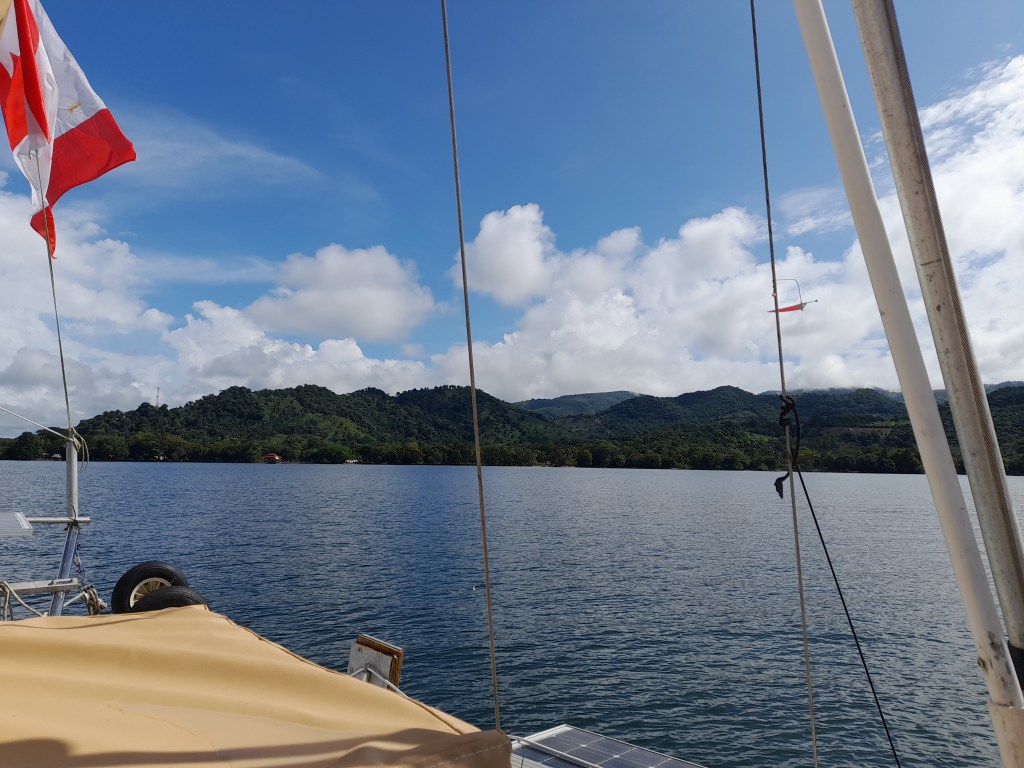
The jungle shoreline of Lake Izabal.

It was dark by the time we arrived at our destination, A little cove off the tiny community of Finca Paraiso. After anchoring and panning a spotlight across the dark waters looking for the glowing eyes of lurking crocs, we dove in for a swim before bed.

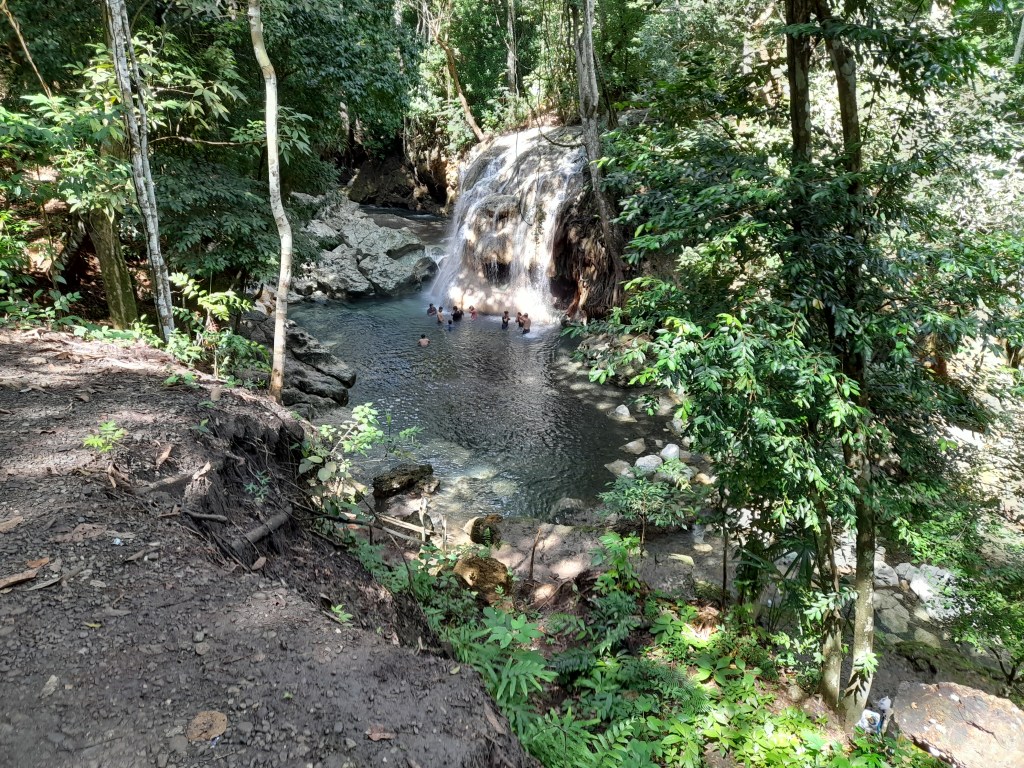
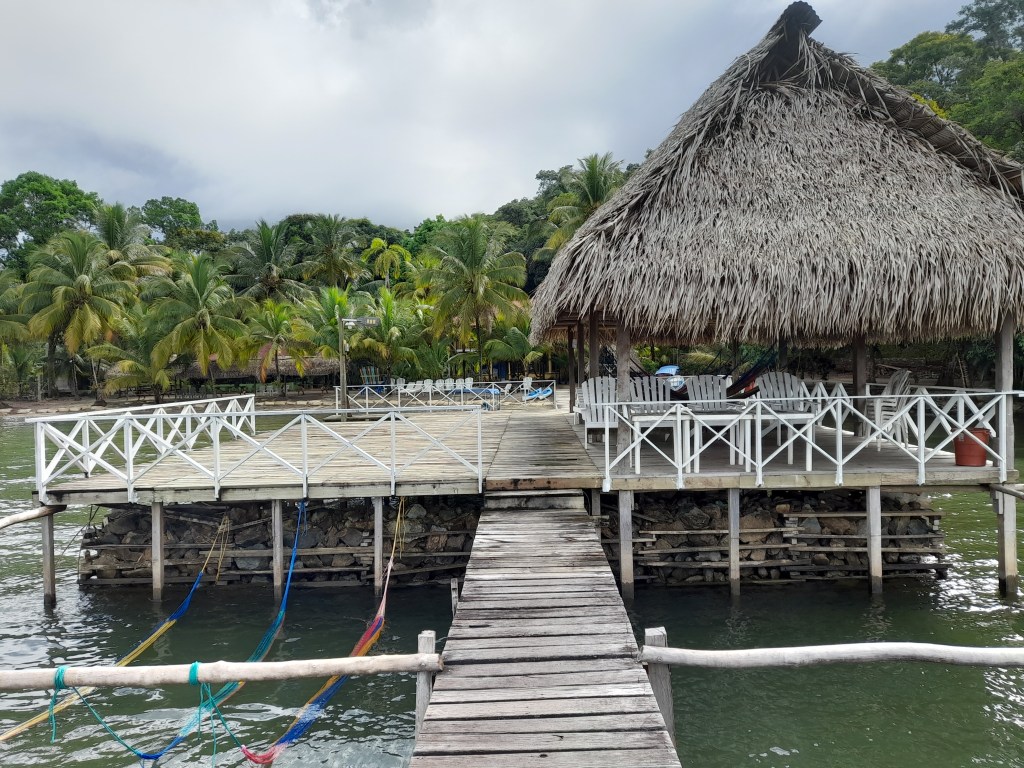
In the morning we took the dink ashore to land on a dock at a small, rustic hotel where we were greeted warmly by the owners. After a brief talk and a negotiation, their son agreed to drive us the two miles or so into the jungle to the “The Cascadas at Finca El Paraíso” and national park a waterfall comprised of a hot spring.

Our driver stopped at a tiny hut marking the park entrances where a cheery fellow charge us a couple of bucks to enter. We were dropped off at the head of the trail where two Mayan women and a herd of young and persistent children pleaded with us to buy drinking coconuts. They let us pass after I promised to buy some on the way back.

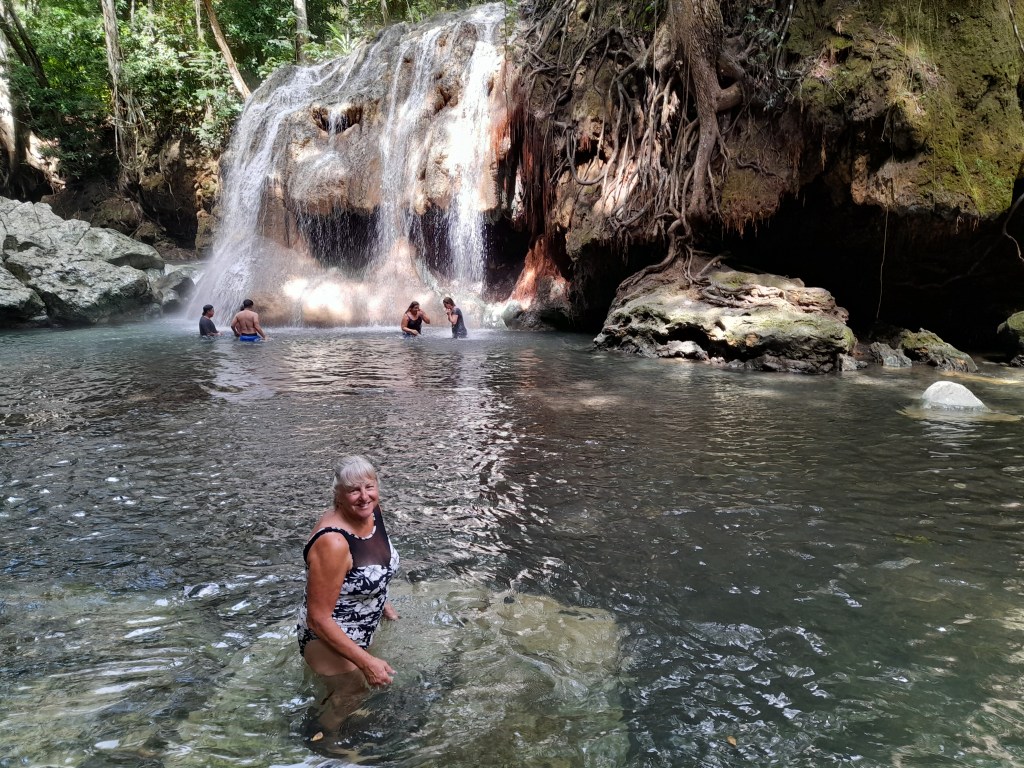
It was a short hike up a muddy trail that followed the meandering river to the falls. The sight from the bank was incredible. At a choke point, strewn with boulders  in the tiny river, there was a cliff of perhaps 30 feet tall with a cascading stream of steaming water. There were perhaps 15 or so other bathers enjoying the spot but there was plenty of room for all. We were told to come on a week day as we would probably have the place to our selves but this was a Sunday and a national holiday so we would have to share, but we did mind. The locals all smiled and waved a welcome.

The waist deep water in the swiftly flowing river was cool compared to the humid, 30C surrounding jungle, but the waters flowing over the falls was hot, so much so that a few degrees warmers it would have burned the skin.

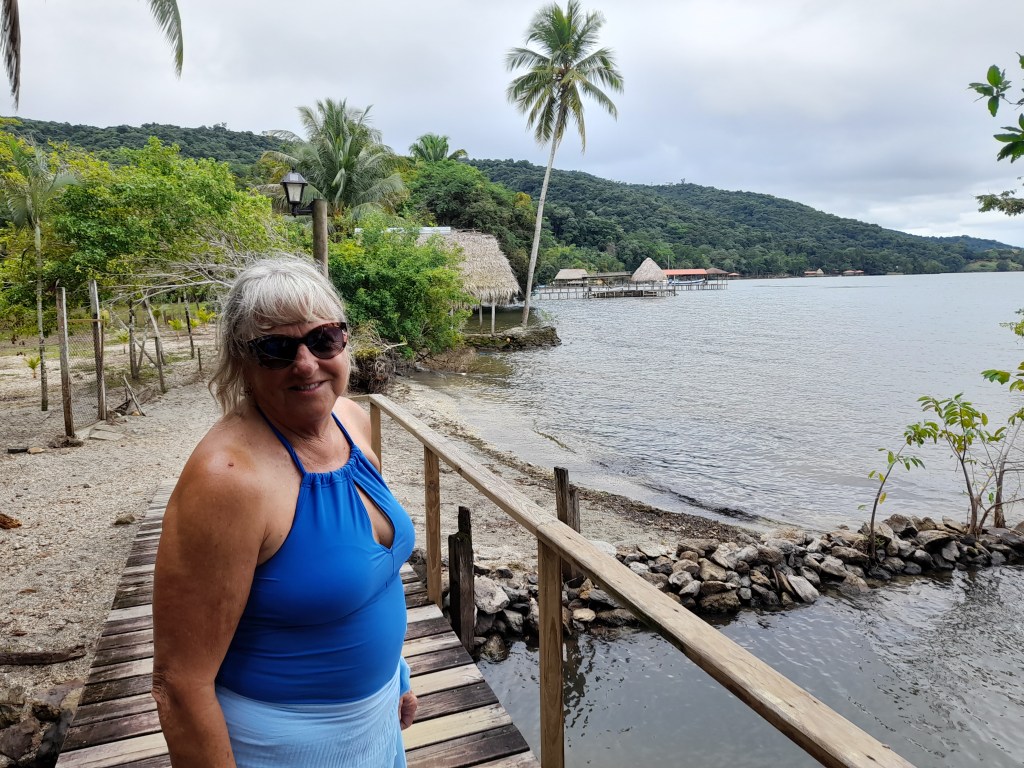
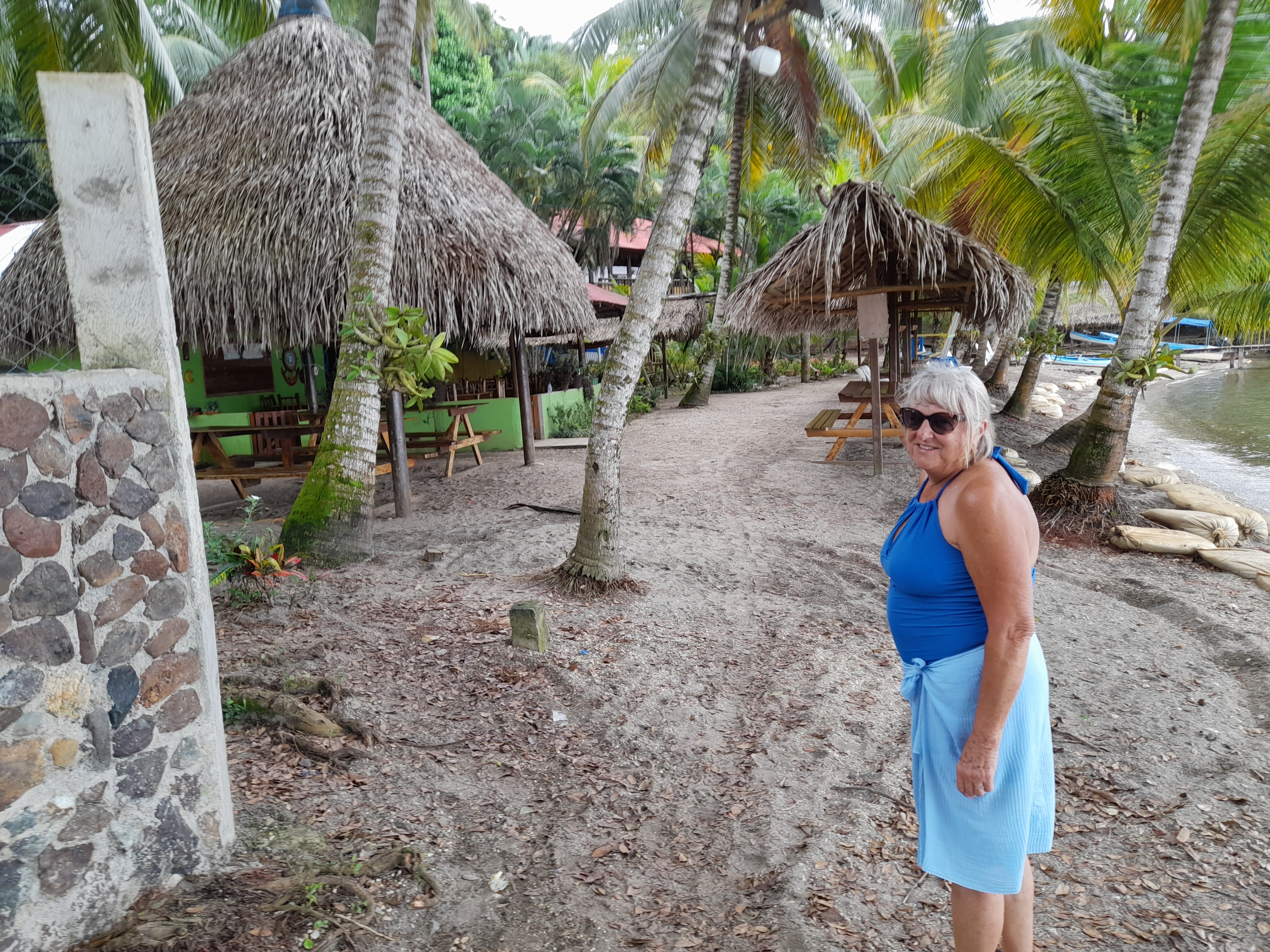
Jackie at the waterfront hotel where we hitched a ride to the water falls.

The hot water water water falls.

Jackie at the falls. the river water was cool but the falls were almost too hot.
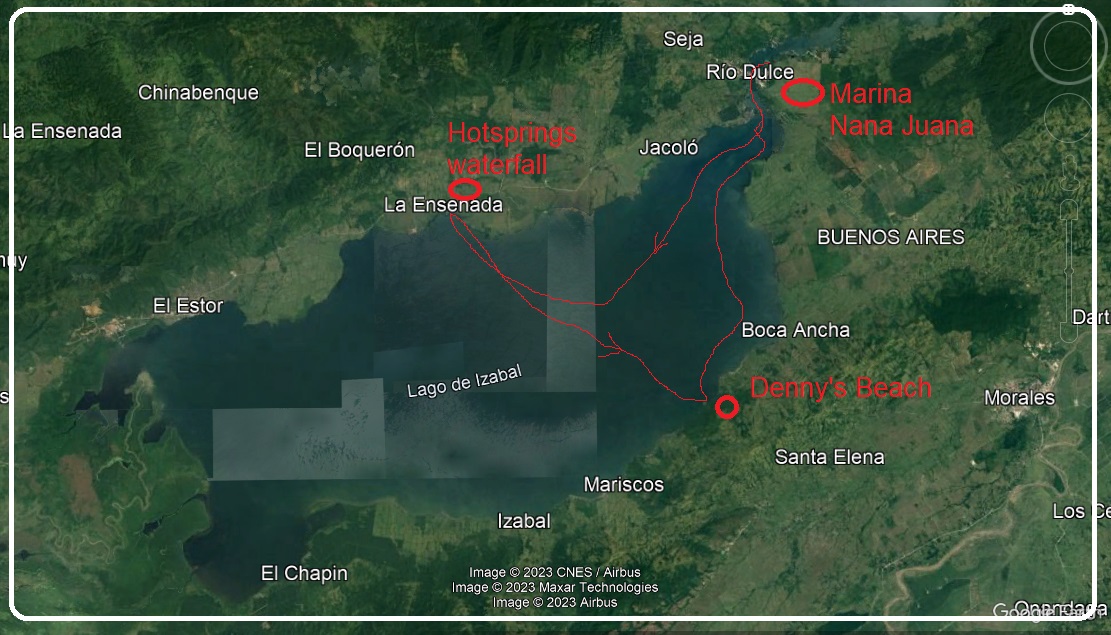
It was luxurious to say the least and Jackie and I had a splendid afternoon of dipping and resting on the boulder strewn banks. When we were in Mexico some years back, in a public market there was a lady who had buckets of tiny fish which she charged an absorbent amount of money for people to place their feet in the pails to have the fish clean off the dead skin from their feet.

Well, I know now where those fish come from as the river was full of the little beggars. If you stood still, the fish would congregate around not only your feet, but legs and nibble away. To immerses your entire body would invite a full body cleansing. The process tickled for the most part but when they attacked the delicate skin under my arms I started to which as if they were administering electric shocks. To avoid being eaten alive entailed wading into the hot water section of the river.  

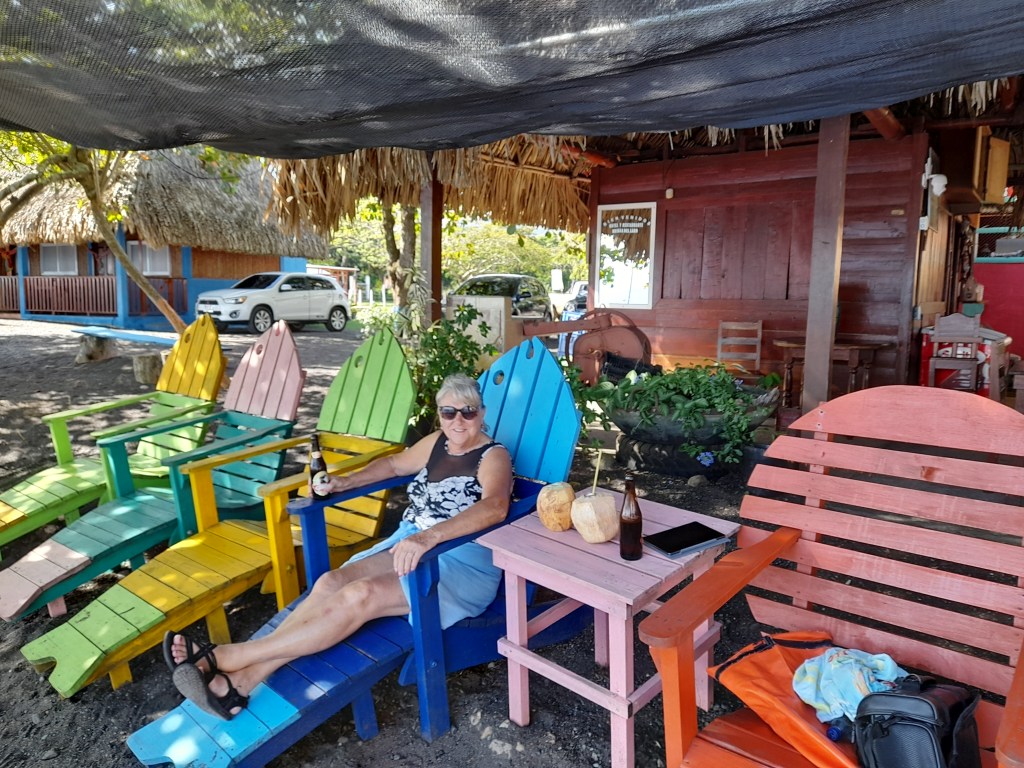
We had a grand day and on the way out we purchased drinking nuts for $1 from the eager children. My only regret was that I had not brought rum to add to the nut, next time. Our driver picked us up at the agreed time to take us back to the hotel where be bought beers and sat in loungers by the lake side.

It was almost dusk by the time we got back to the boat but we wasted little time, we had a quick swim then up anchor and headed across the lake in the dark and a stiff wind.

It was late by the time we anchored off of Denny’s Beach. We had heard a great deal about the place and were eager to go ashore to explore. There was a quaint little resort on shore but aside from the few grounds keepers puttering around, we saw no-one. We wandered about unchallenged, then we explored further down the beach. It was an interesting place and I’m sure during high season it would be hopping. But for us it was a bust.

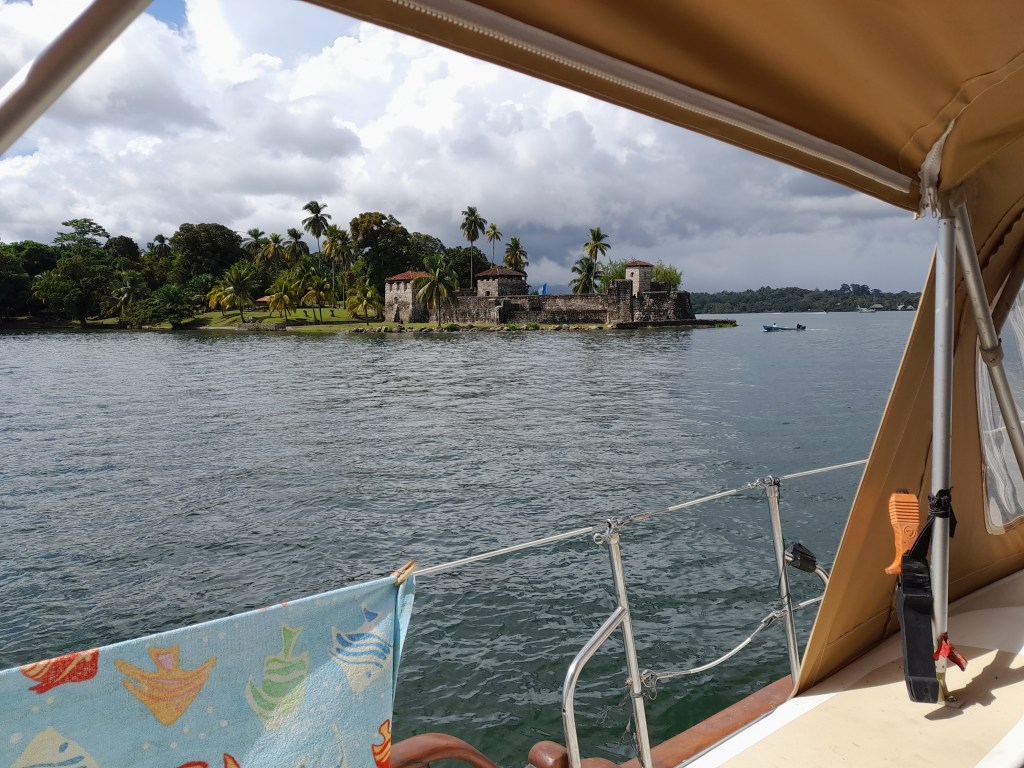
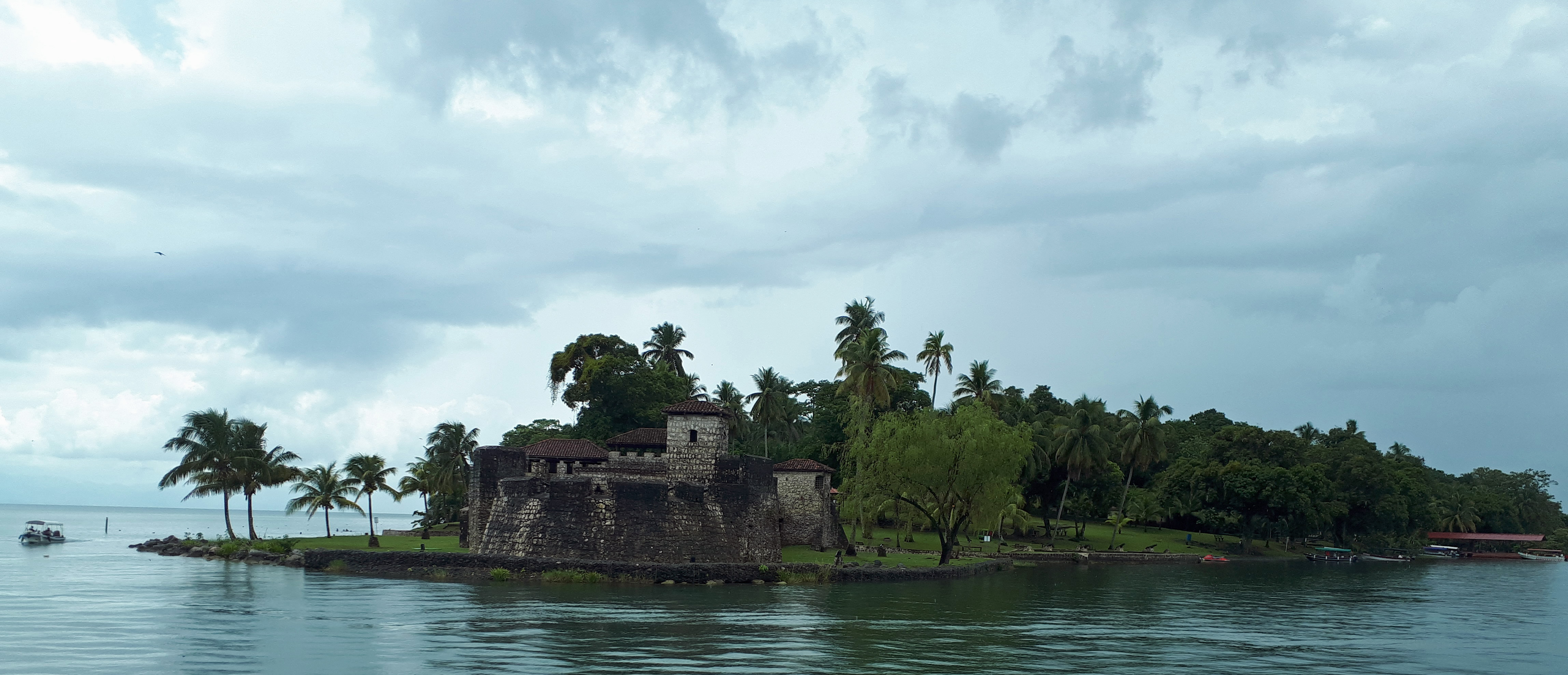
The place was reported to have one of the beast beaches in the lake but recent flooding and removed much of the sand. We only spent the day at Denny’s beach before heading back to the Rio. It was nearing sunset when we entered the month of the river to sail past a magnificent site. The Castle of San Felipe de Lara is a Spanish colonial fort built in 1644 at the entrance to Lake Izabal in eastern Guatemala.  Will make an effort to see it from the land on our next trip. We anchored back off of marina Nana Juana for the nigh where we received a visit from Jessica, who had made us our new dodger. Her and her husband came by to put a few more snaps on the dodger and to deliver the new curtains they had made for the boat. it was nice to take down the soiled towels we had been using lately and hang the new drapes.

the lonely dock at Denny’s Beach

Denny’s Beach with its now high water.

We only spent the day before heading back to the Rio. It was nearing sunset when we entered the month of the river to sail past a magnificent site. The Castle of San Felipe de Lara is a Spanish colonial fort built in 1644 at the entrance to Lake Izabal in eastern Guatemala.  Will make an effort to see it from the land on our next trip. We anchored back off of marina Nana Juana for the night where we received a visit from Jessica, who had made us our new dodger. Her and her husband came by to put a few more snaps on the dodger and to deliver the new curtains they had made for the boat. it was nice to take down the soiled towels we had been using lately and hand the new drapes.

Castle of San Felipe de Lara is a Spanish colonial fort built in 1644

We were up early the next morning to head down river bound for Belize, but that will have to wait for the next posting.

Fair winds all.

Back to Guatemala and to continue Maiatla’s Refit.

Just a recap, in January of 2020 due to covid travel restrictions, Maiatla was abandoned for a full 15 months on the island of Roatan in the Bay islands of Honduras.

The hotel and Marina, Fantasy Island in which I entrusted her care did the
unthinkable by closing the facility and turning the electrical power off. I had
left two fans and a dehumidifier running on a timer which normally kept the
boat mold and mildew free. But without the fans mold took root and to add to the
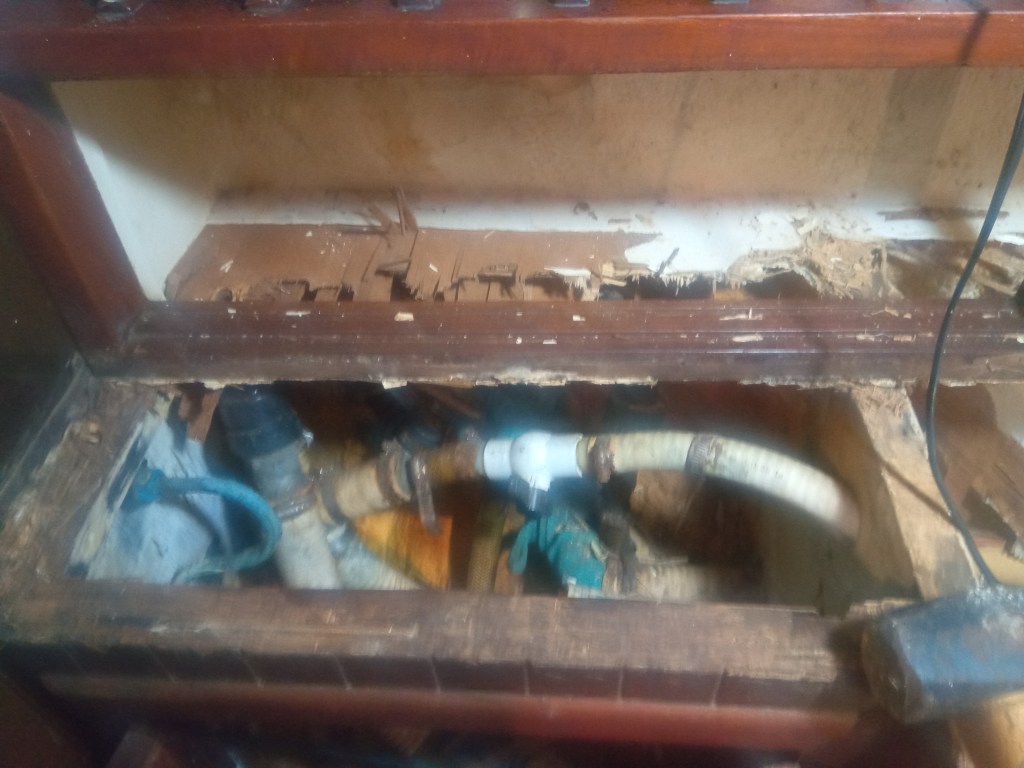
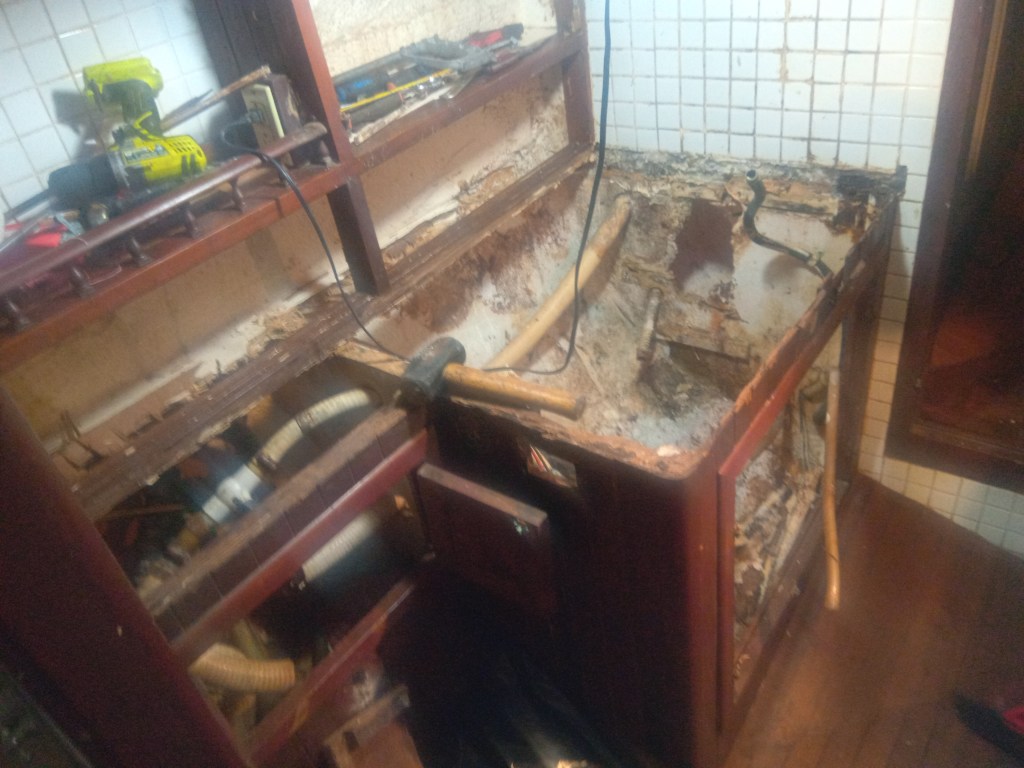
problem, a pair of portholes started to leak allowing the water to rot out all
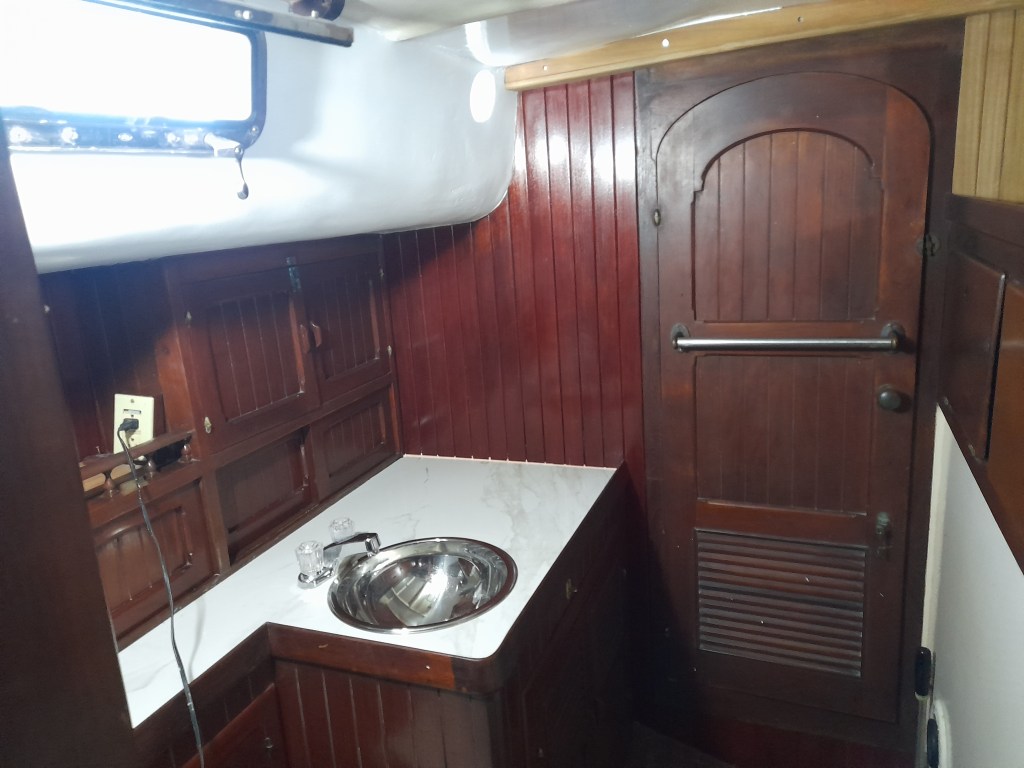
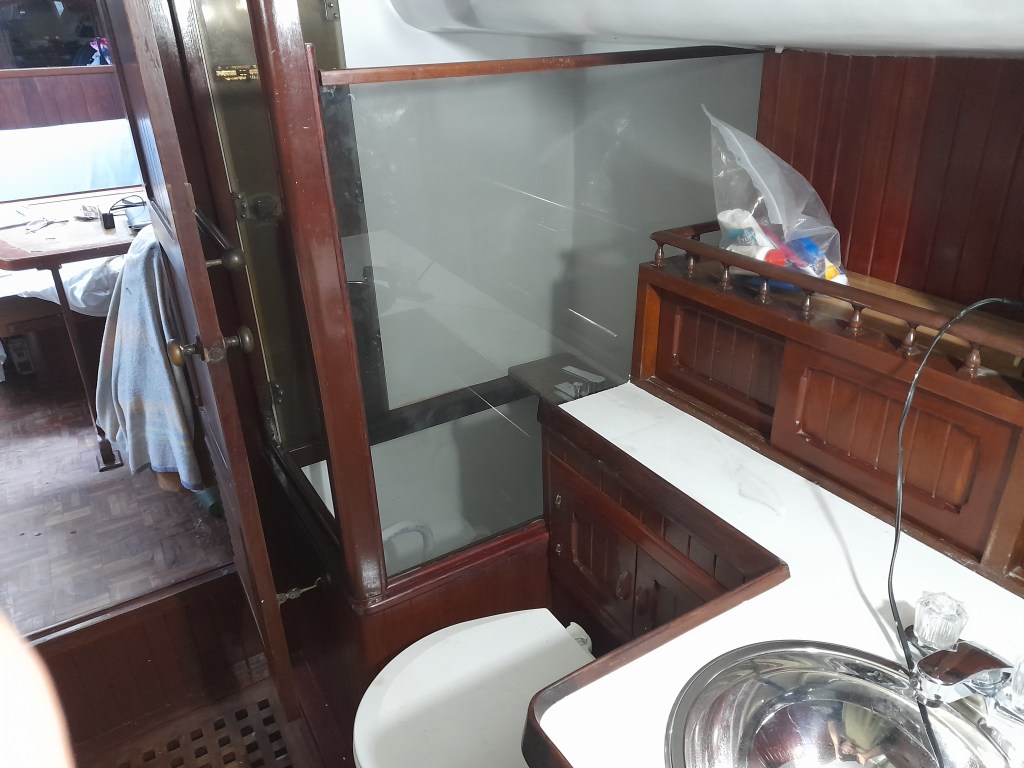
the teak cabinetry work in the head as well as two walls bordering the head,
fore and aft.

Almost a year and a half later when Jackie and I managed to finally return
to the boat the sight made me cry. Aside from the rotten head, the engine was
nearly entirely seized up. The battery bank was dead and the bilge was a
knee-deep cesspool of oil and fungi.

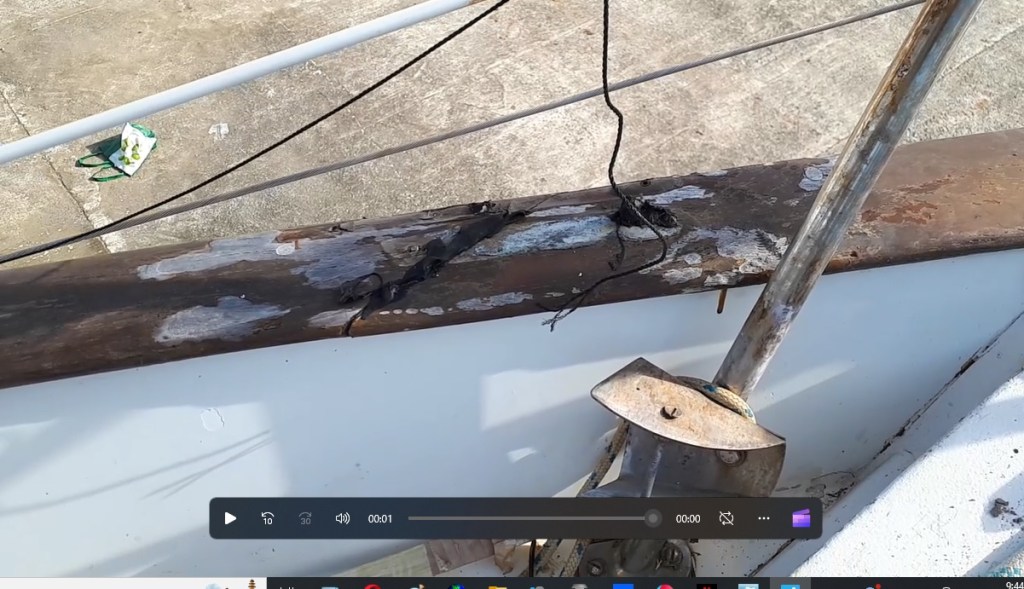
The exterior cap-rails and brightwork was bleached bone white and the canvas
dodger was burned to the point I thought a stiff wind would carry it off in
taters. To add insult to injury, a passing hurricane tore the dock loose
Maiatla was tied to and both went sailing away. Thankfully some other cruisers
saved Maiatla and the dock but not without damaging the fiberglass hull and
stern. All of my electronics were shot and need replacing. She was a mess.

After a couple of weeks of grueling work, we resurrected the engine and made
the boat ready for sea. It was only a day’s sail to Guatemala and the Shipyards
of the Rio Dulce. By August of 2021, the boat was in the Nana Juana Boat yard
and the repairs were begun. I would make a trip down to the boat in December to
oversee the continued work, which went slow but well.

I hired a local shipwright and his apprentice son to start the demolition
and repairs. I also hired a general laborer to start the sanding and
refinishing of all the exterior wood and as well as scrub the boat clean. These
three fellows have done a fantastic job. Work stopped in my absences for the
winter.

Well in November of 2022 my sister Jackie and I returned to the Rio Dulce to
continue Maiatla’s refit. Upon our return I found new issues. Several copper
hydraulic lines for our steering had corroded through where water had leaked
through the cockpit floor. So, no steering. Rot and permeated the main and
mizzen booms as well as a set of spreaders at the top of the mast. Many of the
electrical light fittings were corroded and not working.

To make thing s worse, there were several new deck leaks. The good news was
that the engine started right away but the engine exhaust hose blew out in a
spectacular fashion, instantly filling the boat with a thick black smoke that
sent my to carpenters scurrying topside for fresh air. We had our work cut out
for us and we did not have much time.

Note that since much of the damage was caused by a Hurricane and a “Act of God” -covid 19, insurance would not cover any of it.

Deported from Guatemala.

I had a few months to get the work done but soon after my arrival, I became
aware that my cruising permit had expired and I had to leave the country and
for a minimum of 90 days before I would be permitted to return. In the mean
time, I would be fined for every day past my expiry date. Thankfully the fine
was minimal, about $2.50 a day Canadian, not a killer but as we were already
tree months into the penalty phase it was adding up and with every day we were
running the risk of the government officials deciding to Nationalize Maiatla
and charge me import duty of 39% of the boats’ value, and they determine the
value.

Our good friend Jim, on Meander had a similar problem as his permit had
expired ( he had been there longer than us) and not only was he facing a fine
but the Government decided to review his case and he was ordered to stay until
they decided what to do with him. Ultimately her would be interned for over a
month before he was just ordered to pay a fine before he could leave.

So I decided to make the minimal of repairs and get out of Guatemala while
the getting was good. I planned on returning to complete the repairs once my 90-day
exile ended. But the trick would be to find a place to go. Guatemala was part
of a 4-country collective which meant if expelled from one, the other 3 were
off limits for the similar 90 days. I had a job back in Canada scheduled for
mid January so I would have to find a place to leave the boat for up to 6
months, which would prove to be a problem.

Where to Run!

The nearest country to which we could go to was Belize which was just a day
away but we had heard that it was difficult to get permits to leave a boat
there for more than 30 days, without renewing. which meant being there in
person. Next was Mexico, 3 to 5 days away but new rules made the check-in
process a bit of a nightmare which could take a week or more. Lastly, for us
anyway was Cuba, about the same distance but again red tape up the yin-yang!

After a great deal of internet searching and making contacts in all the countries, I decided
to give Belize a crack, that is as soon as we could get Maiatla fit and back in the water.


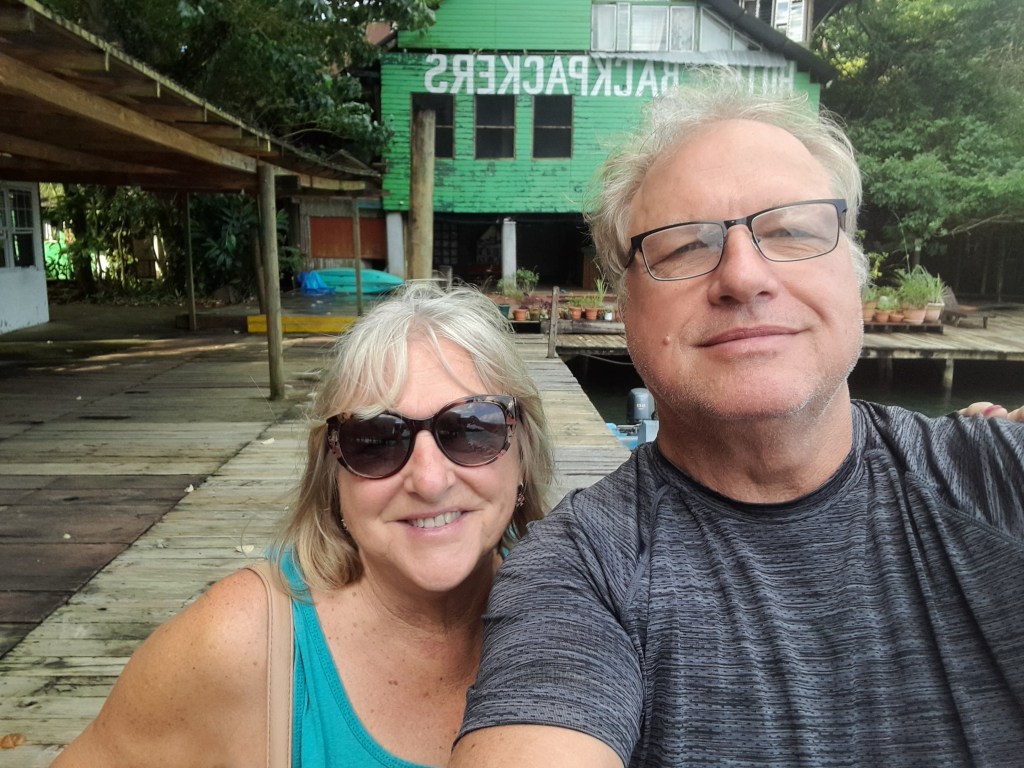
Jackie and I at the Backpackers restaurant , up river from Marina Nana Juana.


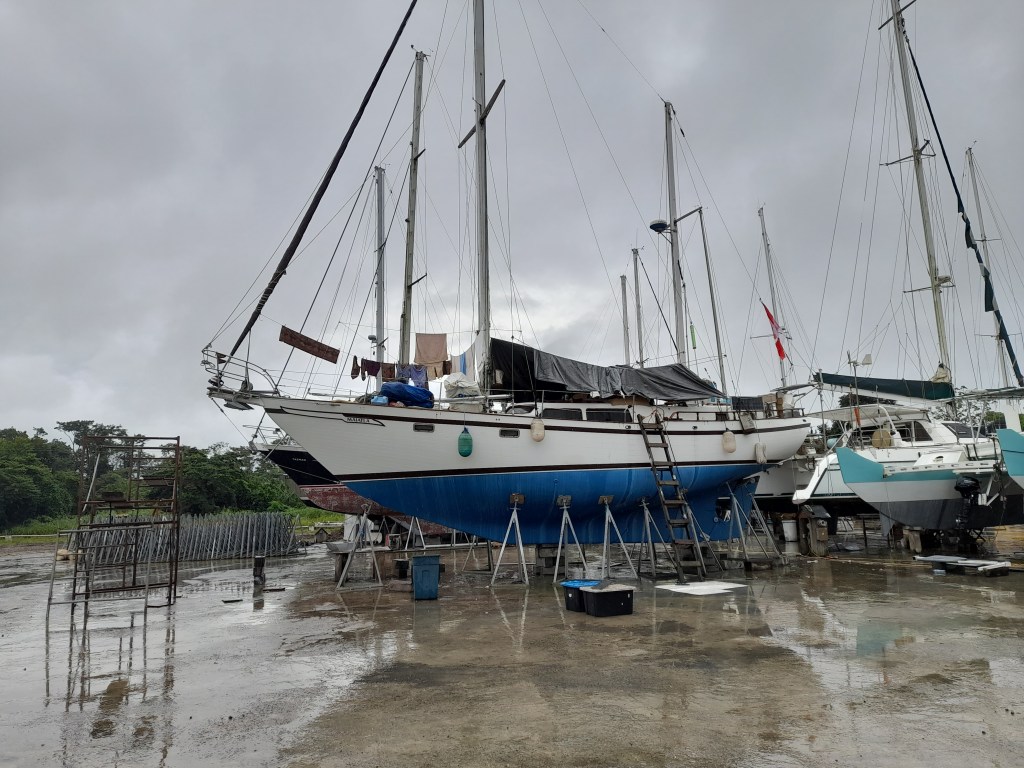
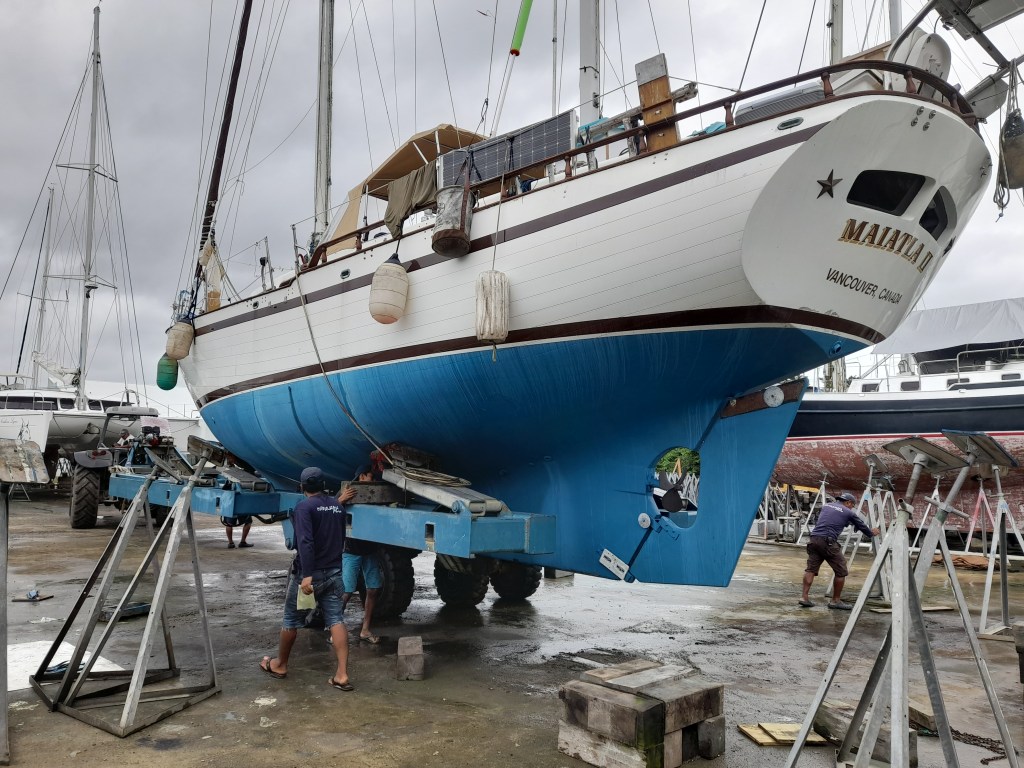
Maiatla on the hard at Nana Juana Boat yard.


Paint and fiberglass damage on the stern done when the dock blew away on the island of Roatan during a hurricane.


Exposing the rotten wood in the head inside the cabinetry.


The rot went through the walls into the aft cabin.


Burnt brightwork on the cap rail, caused by the intense tropical sun.


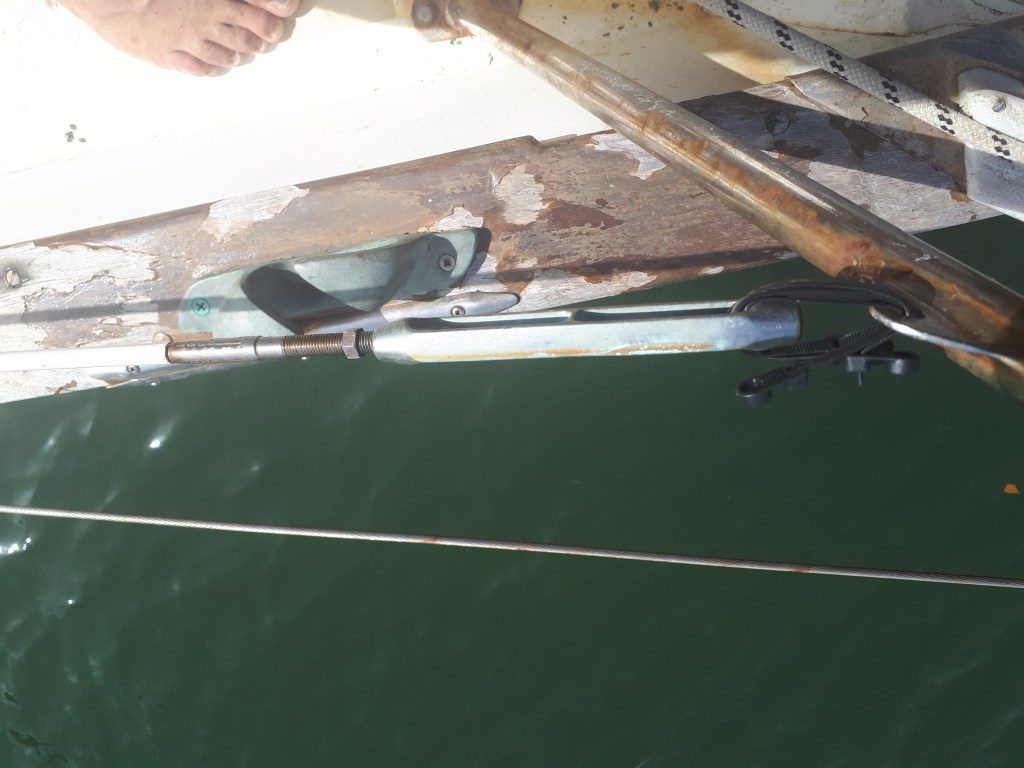
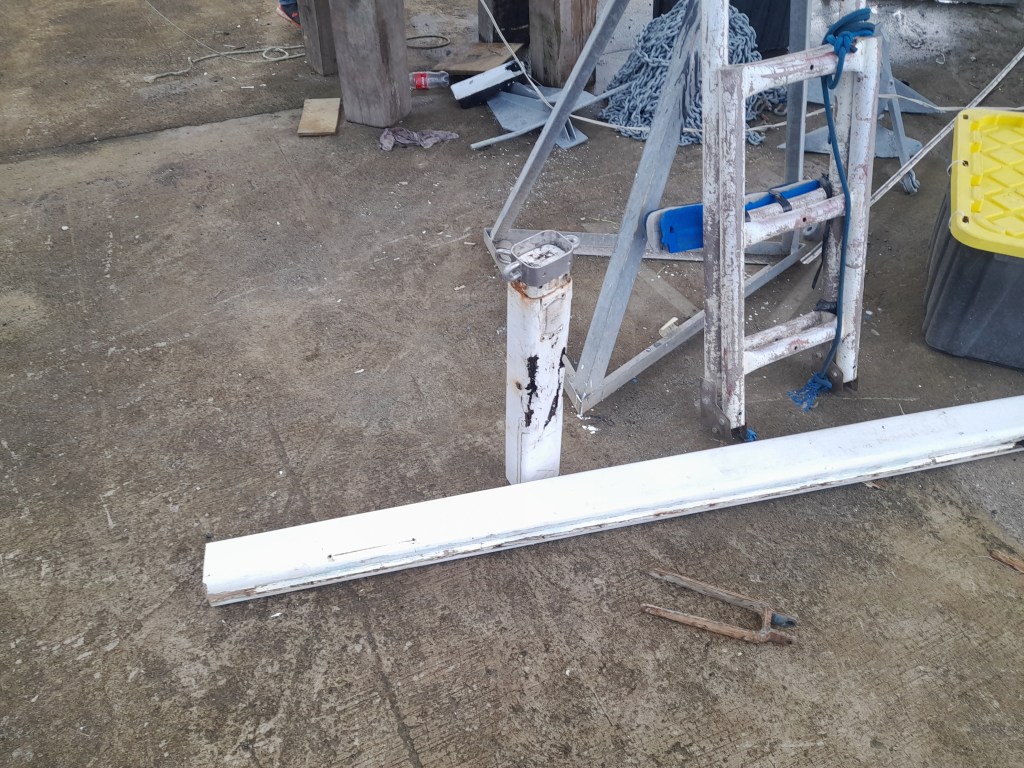
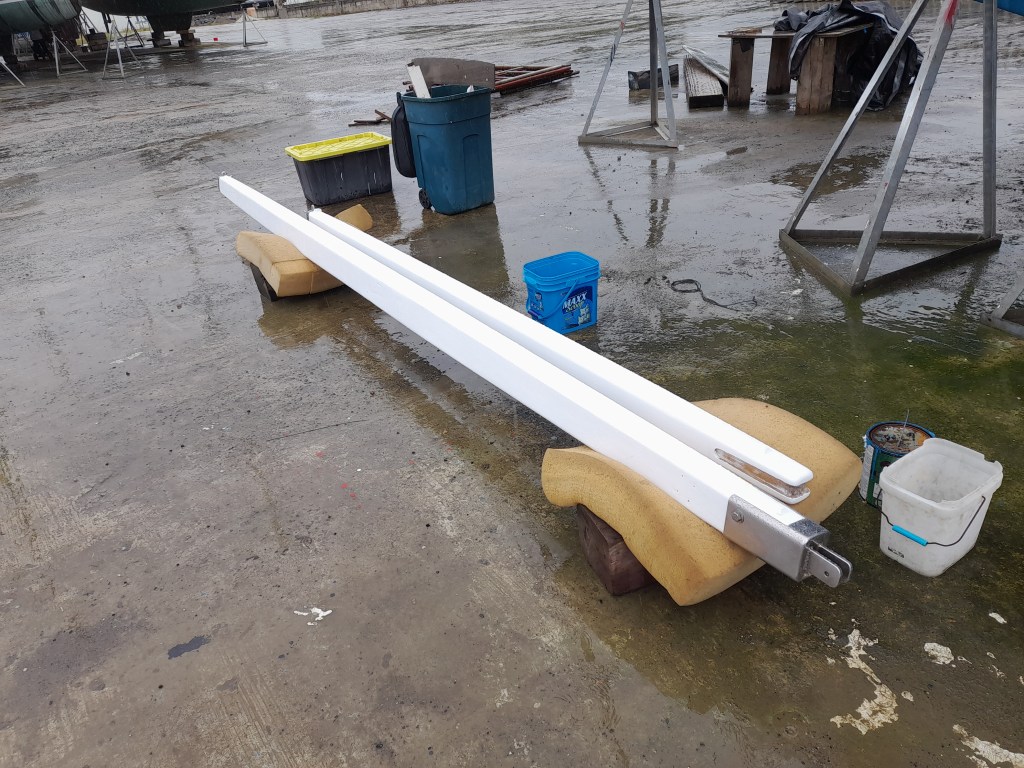
2.5 feet of mizzen boom had to be cut off due to rot. 5 feet off of the main boom.
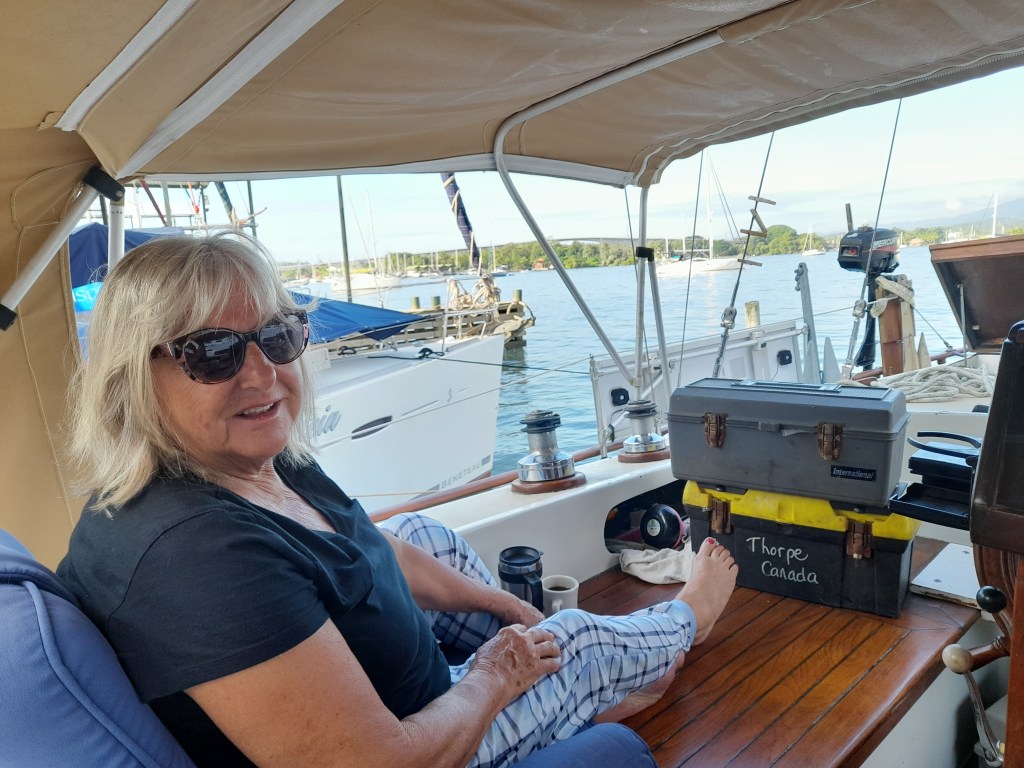
 

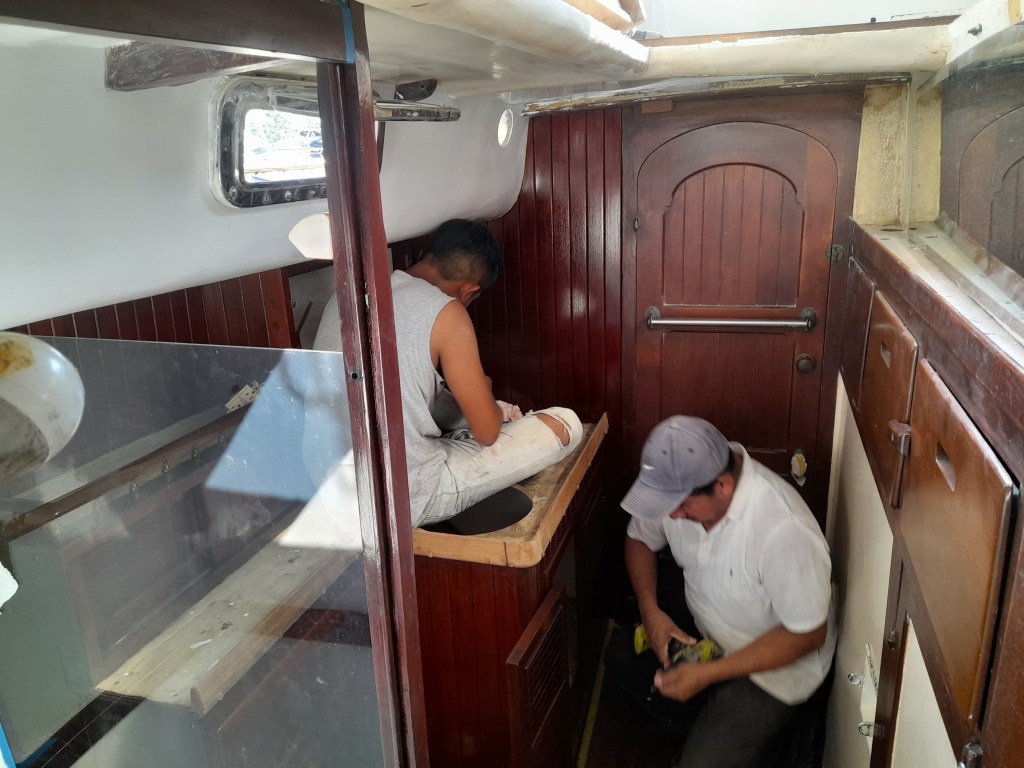
My two shipwright working on restoring the head.


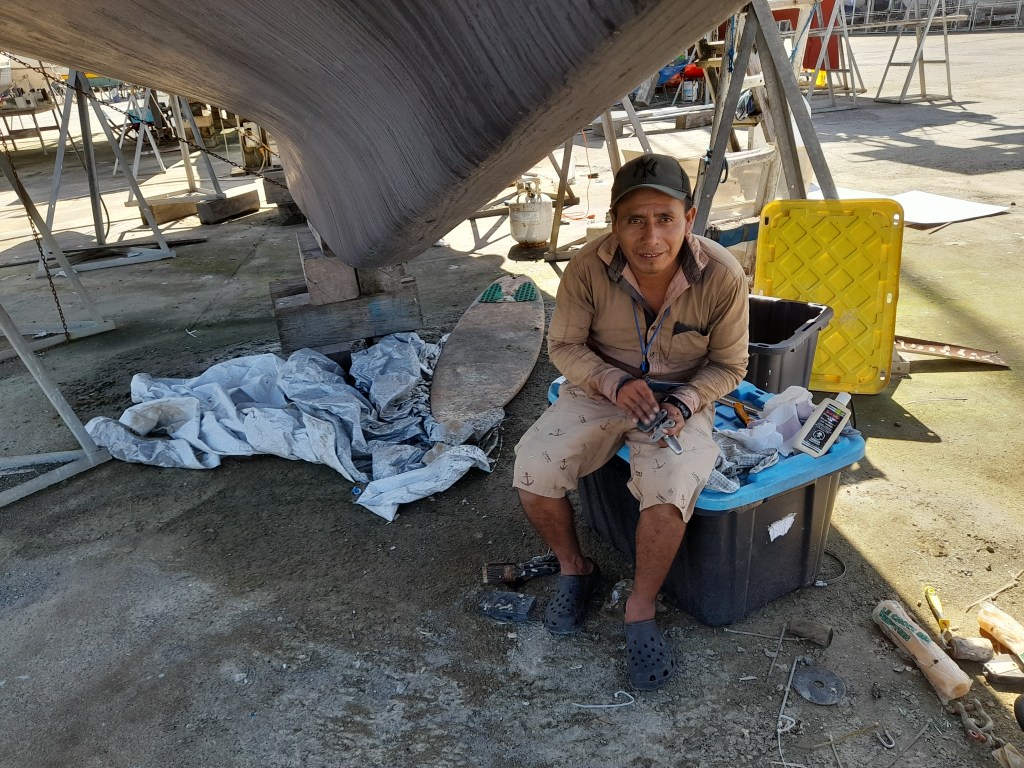
Roberto who refinished and restored all the deck wood as well as painted the bottom.


Head restoration nearing completion


The wall behind the shower stall was also replaced.


The hull freshly painted with the damaged stern and starboard side repairs complete


Booms under repair


Refurbished booms


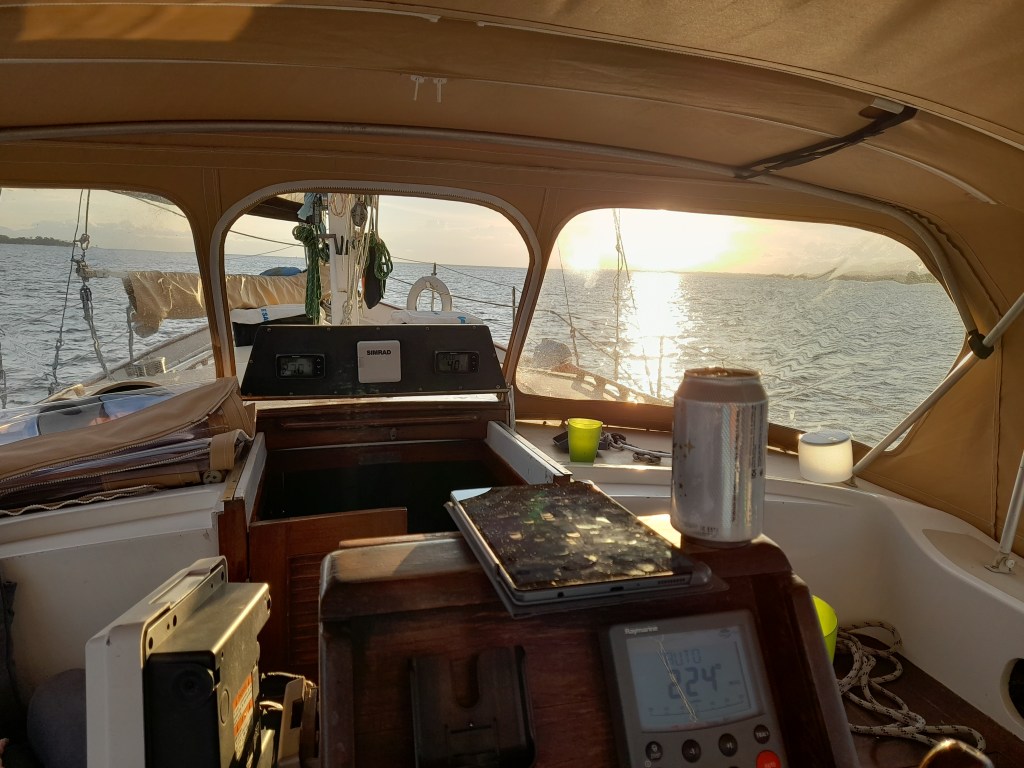
I had all new sail and hatch covers made as well as a brand new dodger made- Canvas work by JESSICA. nice to be able to see out the windows again. All new electronics were installed.


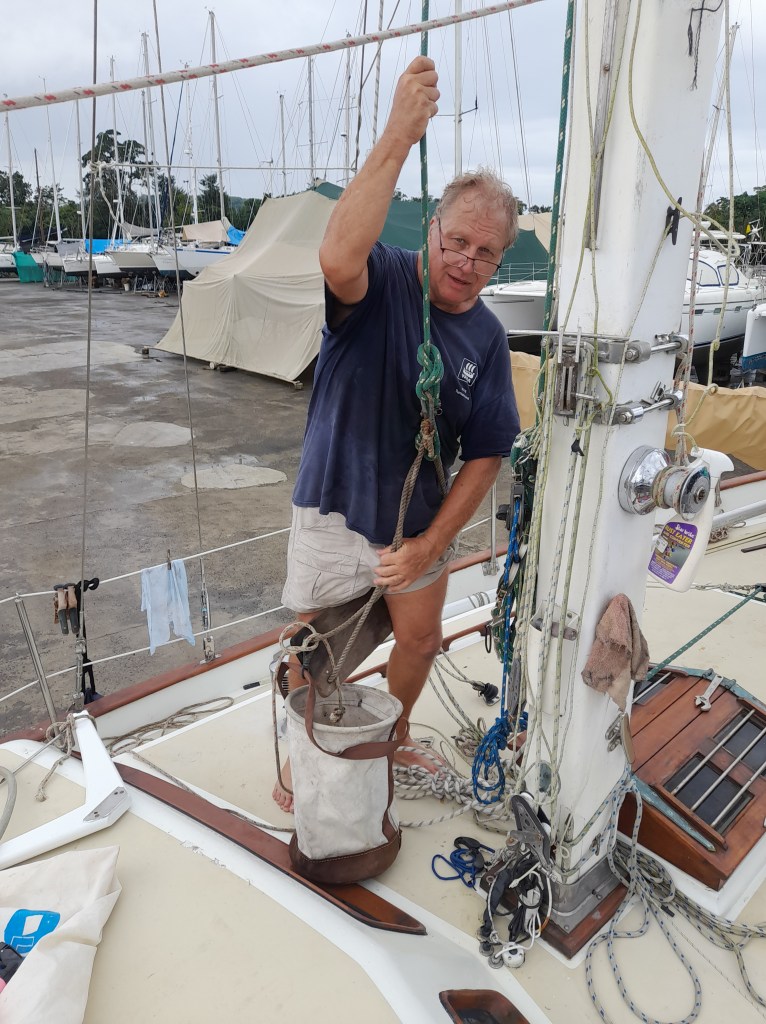
Heading up the mast to install the new set of jumpers my carpenter made. Notice the refinished woodwork.


Launch day. Restoration and repairs 90% complete but with an order to leave the country the rest would have to wait.
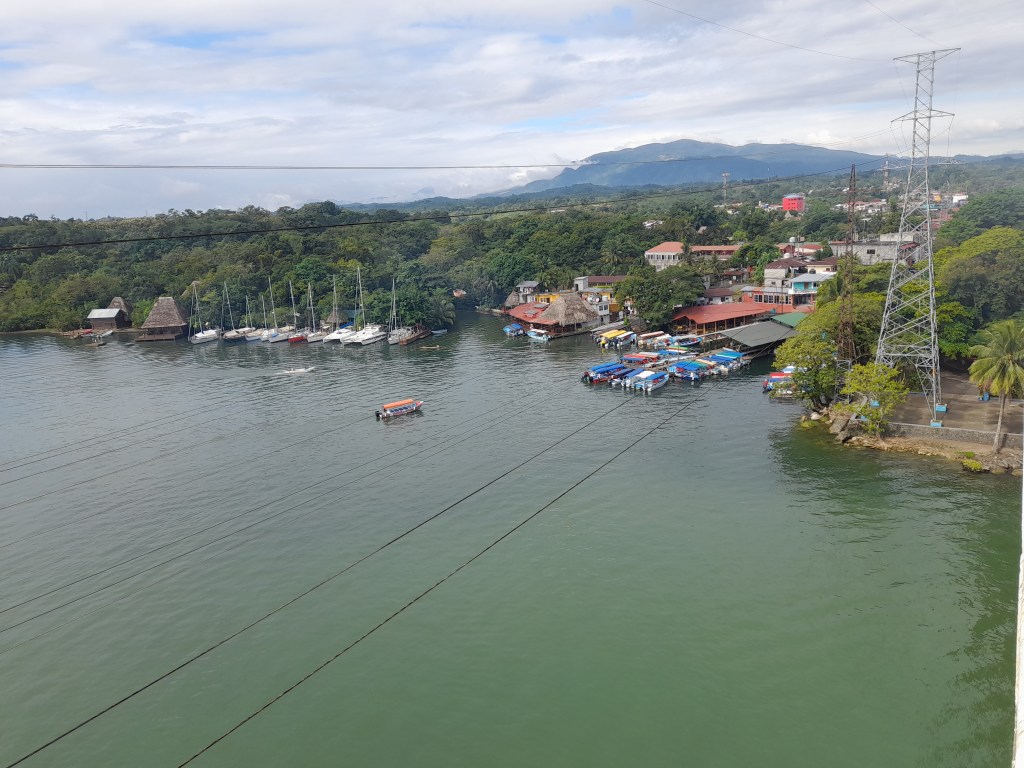
 

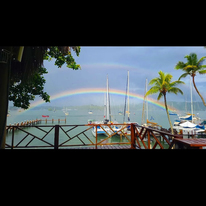
Rainbow cast over The Rio Dulce and Marina Nana Juana.
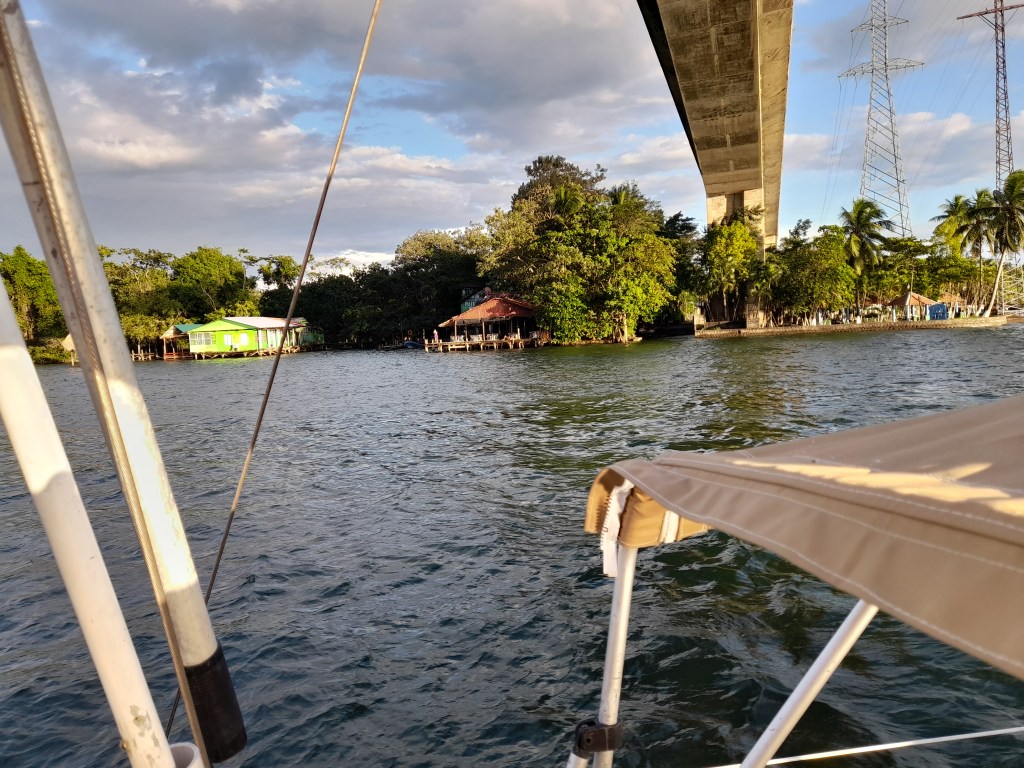
With the the necessary work complete, we were going to head up river into the lake for a shakedown cruise before heading to Belize.

Our latest Book to be Released

Well after literally years in the works, I’m very proud to announce that the first book of a two book series chronicling our sailing adventures from Vancouver Canada to Costa Rica has been completed.

Adventures in Central America-Halfway There!- Vancouver Canada to Mexico,” is now available in paperback and e-Book through Amazon. The companion title “Adventures in Central America – Beyond the Papagayo- Mexico to Costa Rica” will follow in the fall of 2022.

I’m particularly excited about these two titles because they contain over 130 photographs and maps and for the first time the interior is printed in full colour. Go on line and open the book for a preview and while there check it out our three other titles.

https://www.amazon.ca/s?k=andrew+W.+Gunson&crid=R15LOQ1MB57J&sprefix=andrew+w+gunson%2Caps%2C159&ref=nb_sb_noss

Now Available on amazon

Watch for the release of “Adventures in Central America – Beyond the Papagayo- Mexico to Costa Rica” in the Fall

COMMING SOON!

Up the Rio we Go!

25 Miles inland from Livingston and the Nana Juana Marina

After just a few hours ashore Jackie and I returned to Maiatla and headed up river. The first few miles the bank was lined with homes and small business an hotels. The life essence of the town comes from the river as the town is cut off from the rest of the world as there is no road access. As we progressed up the river the buildings diminished with the last of the ending at a narrowing of the river as black cliffs rose out of the jungle to encase the fast-flowing waters.

The start of the river as we head inland
The river gorge.

From here on in we were surrounded by the Guatemalan jungle. We had a strong head current and with the engine still overheating at high rpms it was a slow go but we didn’t mind as it just gave us more time to drink in the magnificent sites and sounds. I would later discover that the raw water impeller was worn and needed replacing.

A riverside bar out in the jungle.

The banks now consisted of vertical rock or trees and bush right down to the waterline. White egrets were plentiful and the sounds of the jungle birds, frogs and monkeys echoed across the water. I had been envisioning the trip up the river for years and as we would soon see, we would not be disappointed.  The waters flowed around river boulders that had tumbled from the vertical cliff. The water wound around sharp bends and tiny islands. Occasionally we spotted a thatched roof hut, a family’s home of a way stop, a riverside cantina. On such place boasted a full front dock and an upper balcony that could hold a hundred revelers or more. There were a few patrons eating at water front tables as music flowed out to greet us. I made a mental not to make a stop here on our way back down.

After a few hours the river opened up, giving us our first look of the first of two interior lakes, under cloudy skies we entered El Golfete. Just to the south was a little bay with a marina but we decided to anchor on the outside for the night and have a swim, while keeping an eye out for crocodiles. We had hear that August in the interior of Guatemala was brutally hot and humid, but we were pleasantly surprised. At anchor and being close to the river mouth we could still feel the cool ocean breeze that followed the river inland. It was downright pleasant. It was time for a swim, beers and diner.

The following morning, we motored the 10 miles up the lake which made me rather nervous as the lake was very shallow and we found ourselves touching the muddy bottom several times.  The jungle around the lake is wild but we could see huts up in the bush or along the water front, we passed several dugout canoes full of children dressed in the school uniforms with packs of books strapped to their backs. The more affluent were apparent as their dugouts came with outboards in leu of paddle power.

As we approached the head of the lake the river continued. As we round a small bend a Highrise bridge spanned the river and on the northern side lay a small town and all around was waterfront bars and marinas. We would have to choose. I had decided to check into the Marina Nana Juana which was aby all accounts the nicest in the area but for us the big selling point was the large pool and that it was within walking distance from town. Many of the marinas were water access only and since our dink was in sorry state of repair, we could not count on her to get us about. What stood out in stark contrast was the modern concrete bridge and directly up stream lay the 16th century stone fort and cannon that still guard the access to the lake to the west, Lago de Izabal.

Marina Nana Juana would become Maiatla’s new home as she goes under a refit. We had a lot to do to get her back to being truly seaworthy. She was now at a fine shipyard and would get the attention she righty deserved and more importantly, after being stuck in the hurricane belt for two seasons she was now safe from storm and tempest.

Maiatla is being hauled out of the water for repairs at Nana Juana Boat yard.
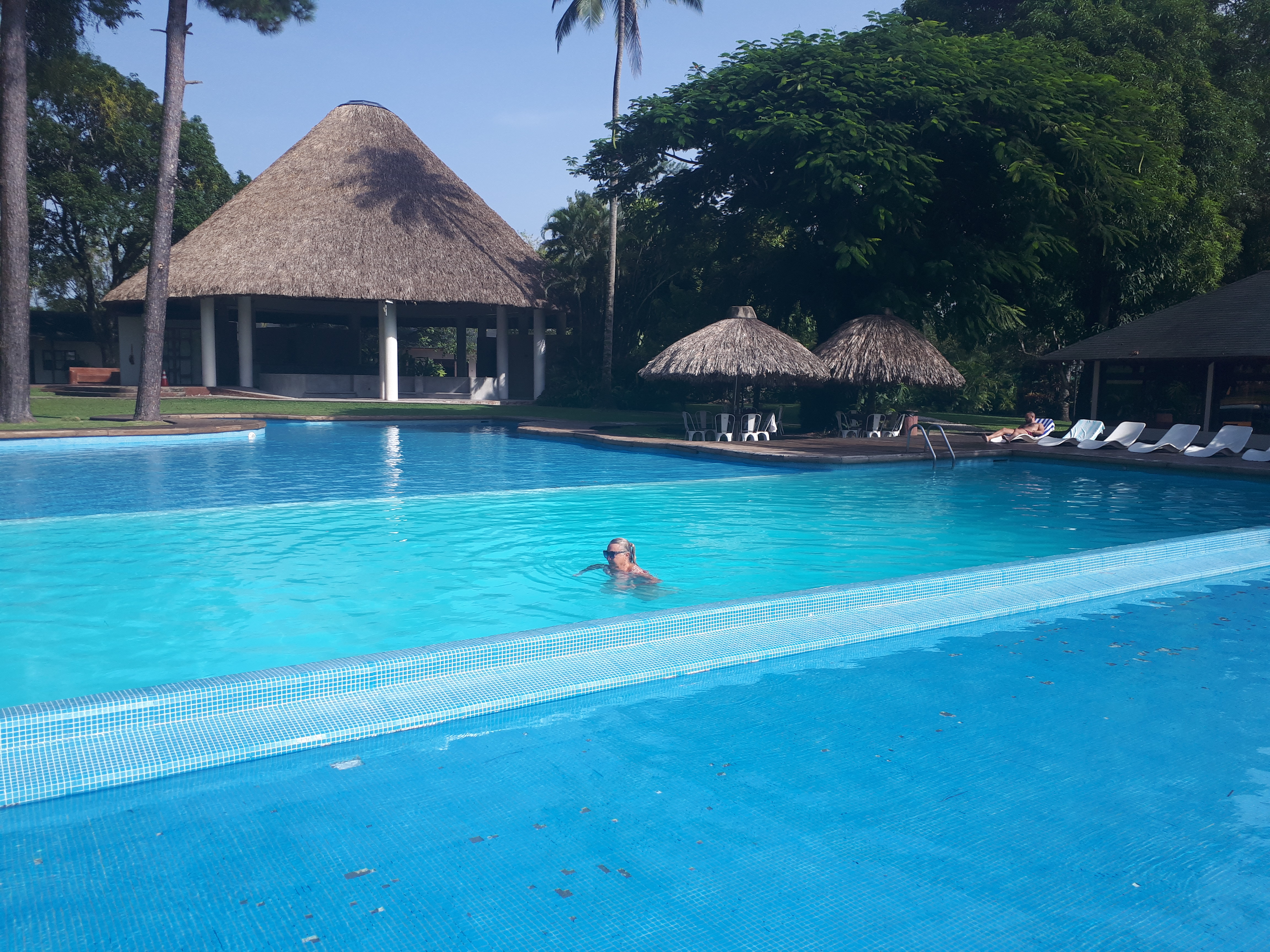
Jackie roughing it in the pool at our marina after a hard day working on the boat.

Utila Bound and Thunder Gales

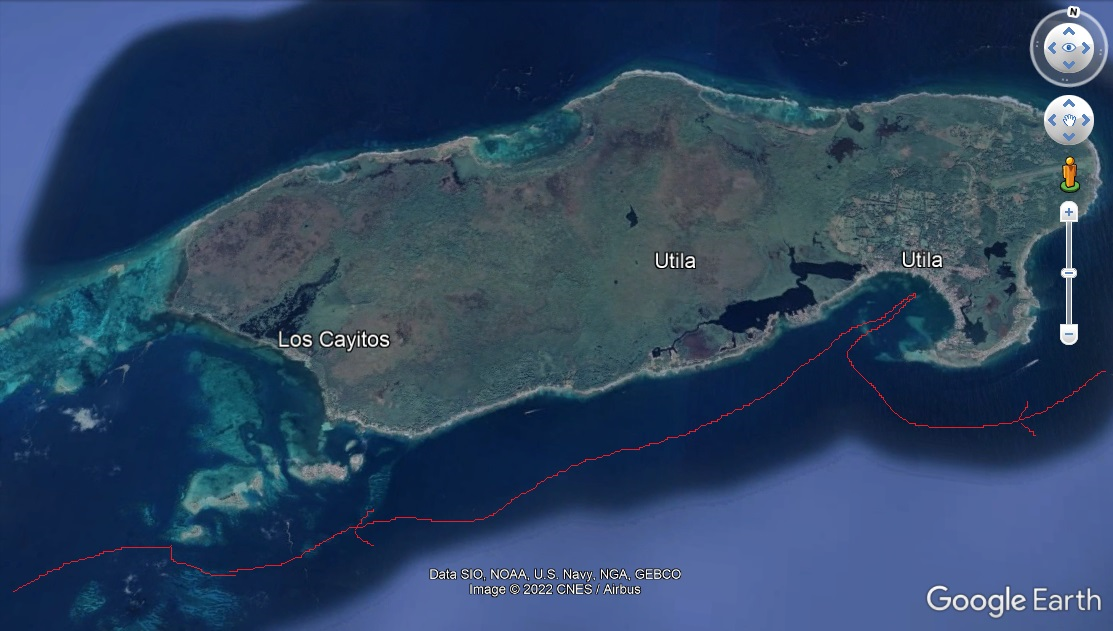
It was a pleasant sail over to Utila with the wind on our stern. The main harbour was easy to find but is protected by a long shallow sand bar at the entrance which required a wide swing. We anchored in 20 feet of water near the only town which consists of a couple of narrow streets bordering the harbour and a inland mangrove swamp. The two had a covid curfew which forced all business to shut down by 9 pm. From the boat we could hear the music from a few bars in town but precisely at 9 the town fell silent.

Utila.

Our first day we went ashore and rented a gas-powered gulf cart and took a tour of the island. We loved the feel of the community as the people were open and friendly. There were lots of nice restaurants with inexpensive food.  As Utila id a Mecca for divers, there were plenty of dive shops offering lessons and charters. Despite covid, there was a surprising number of tourist roaming about. We could have stayed …. Weeks! The island is on my “must revisit” list.

The small Island we anchored off of for lunch and a swim

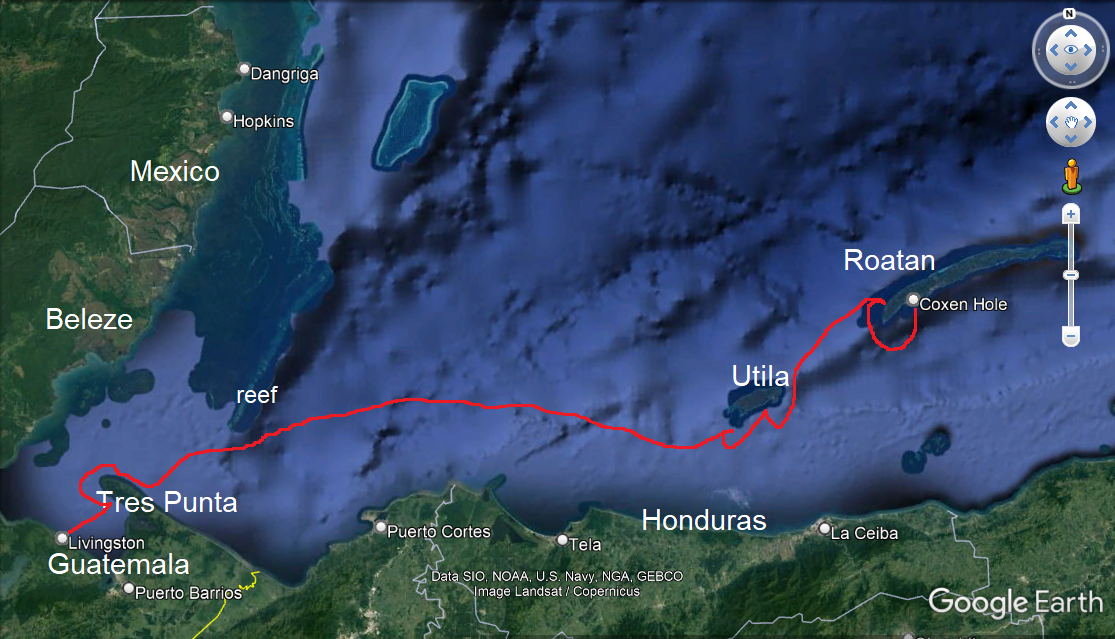
It was an overnight sail to the mouth of the Rio Dulce at Livingston so we would time our arrival to coincided with the Ebb High tide.  As we were told that we would need a tow over the bar, or more accurately , dragged over the bar, it was important to arrive with as much water under the boat as possible.  

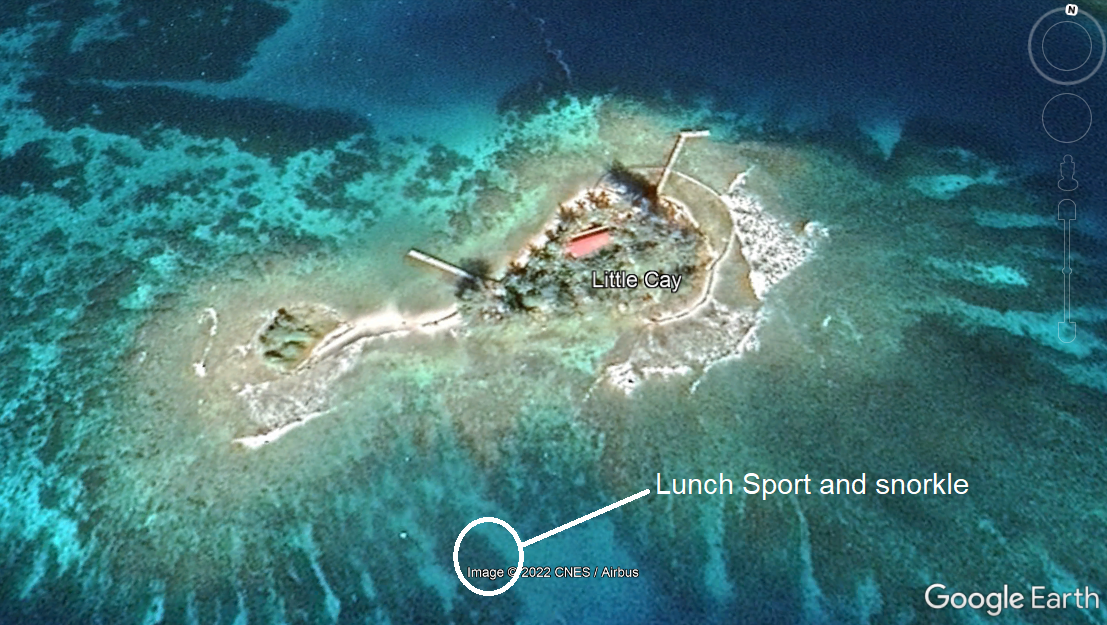
Anchored off Little Cay

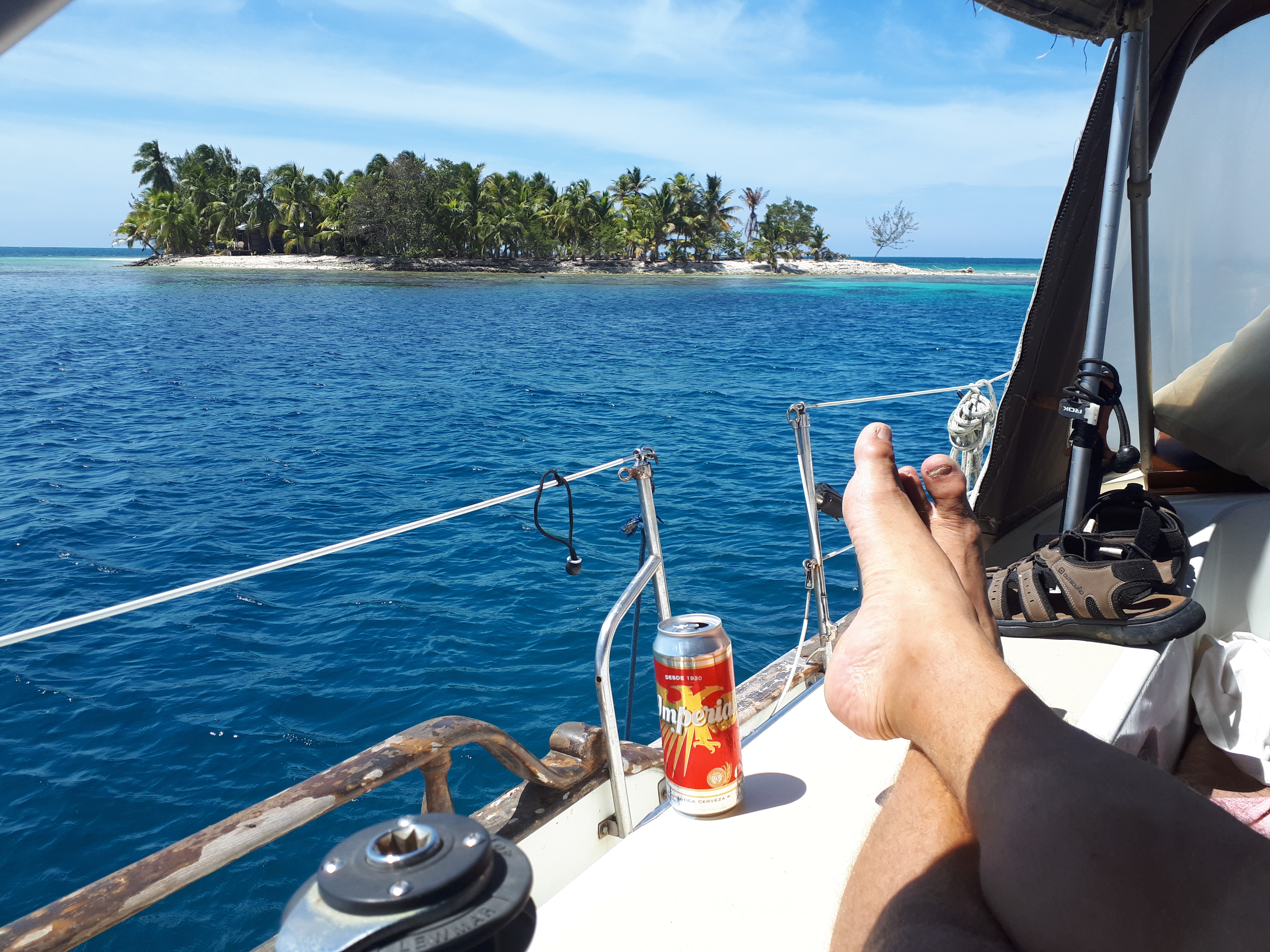
We departed the harbour early in the morning to sail to her far west end of Utila where there were several small islands and reputed good diving. Again, we had a fast sail then found a place to tuck in behind a tiny tropical island with its own coral reef. The island was deserted at the moment but it did contain a small house which we would soon find out, was a rental property. Late in the day guests would show up and display their displeasure with having to share their lagoon with us. Jackie and I had a pleasant lunch and a magnificent snorkel on a coral reef second to none. Unfortunately, by sunset it was time to get underway so we could catch the flood tide at the Rio in two days.

The wind was strong, 18 to 20 knots off the stern so we poled out the big headsail while vanging the main boom to the rail. with a full main and the 100% genoa, a full moon off n the west, it was a fast wind and wing sail. It was a grand night but around midnight the wind dropped then shifted to the west, right onto our nose then increased to a full gale bringing with it a lighting storm the likes I have never seen before.   

The waves grew to several meters with hardly a breath between them. Maiatla was slamming into the waves which nearly brought us to a stand still. We could have laid a bit to gain some speed and put the waves more on the beam off but the offshore coral reefs of Belize were only a few miles off to starboard hiding in the dark, so I didn’t want to go that way. If I tacked to head south, it would take us towards the mainland Honduras, and its reputed pangas pirates. So that direction didn’t look good either so I decided to start the engine and with the sails still up, motor sail up into the wind and waves. It would be a wild night with no sleep. Despite the bashing we were making good headway, that is until the engine started to over heat. I throttled down the engine until she began to cool, then we carried on as there was little, I could do about the mother at 3 am, in the pitch of night during a gale.  The wind was surprisingly cool so I wrapped myself up in a blanket as I sat at the helm.

Shortly after sunrise the wind died and the clouds parted, treating us to a bit of warmth. We were only a couple of miles from Cabo Tres Punta which reaches out from the Guatemalan Mainland, forming the Bay of Honduras. And on the far side of this bay lay Livingston and the mouth of the Rio Dulce. We were about 18 hours early for our big high tide so we tucked in behind the point to find a place to anchor for the night.

 The shore was jungle lined but between the trees, we could see white-washed plantations and or homes of the wealthier of the locals, many with docks and pools. The bay was shallow on this side so we anchored about half a mile from shore in about 15 feet of water then settled in for the night.  16 months after departing Panama bound for Guatemala, we had finally made it to within five miles of the Rio, but if we thought all the trials and tribulations were over, we were about to get a rude awakening.

While Jackie was making diner, I put up the sun tarps to keep the brain-baking sun off of our heads But no sooner had I returned to the cockpit a massive thunderhead grew in the west and began to eject bolts continuous of lighting. The storm force winds and rain struck with such suddenness and forcer on Maiatla’s beam that I nearly fell off the cockpit bench seat. We immediately lost sight of the land as the visibility dropped to a coupe of boat lengths. I bolted to the deck with the intent of taking the tarps back down before they trashed themselves apart but before I could get a single one down, I noticed that we were now dragging out anchor and we were drifting fast and towards the unseen shore.

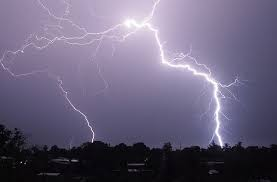
The lighting as the storm approached.

 I let the tarps to their fates and ran to the anchor windless to pay out more chain in and effort to increase the scope in hopes the anchor would bite into the bottom. The play worked, or well sort of. The Boats nose rounded back up into the wind and just when I though we were secure again the bow would fall off as it began to drag again. To help the ground tackle I ran back to the cockpit and started the engine and throttled up. The engine took the pressure of the anchor so I managed to keep the boat in one place. A check of the radar put us close to the beach and we were in 7 feet of water. For over an hour I played with the engine while watching to make sure we didn’t get any closers to the beach.

As fast as it came the wind died, the sky cleared and we were sitting on a clam sea once again. Jackie returned to her diner making and after moving the boat back out to deeper water, we ate in the cockpit under tarps that miraculously survived the storm.  

BY first light were off Livingston and the infamous sand Bar.  The sand is constantly shifting so the channel is not always easy to find. I had a compass heading provided by another cruiser so I was hopefully to find my way in without running hard aground. Fortunately, when we arrive, another sailboat was already shooting the bar. I called him on the radio and he told me that at the shallowest he had 6 inches under his keel. I would mimic his course in. But he gave a warning that while passing over the shallowest part, a small fishing boat tried to cut him off. He assumed that the boat was trying to run him out of the channel so he would get stuck and require an expensive tow.

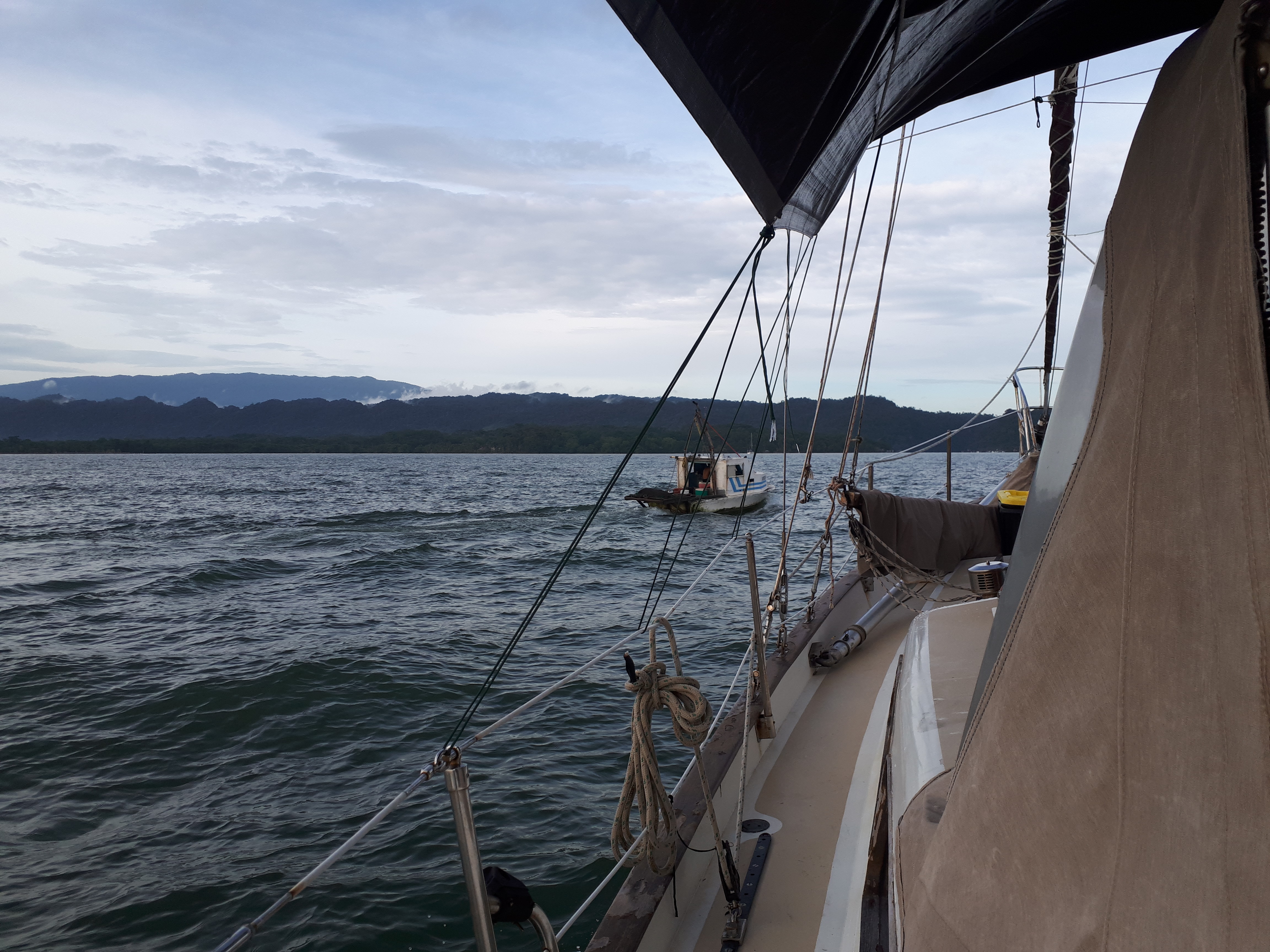
The fishing boat attempting to run us out of the channel.

I was told that the bottom was a soft mud so the trick was to keep your speed up and if your are luck you would “Plow “ your way through. A good strategy but with the engine over heating at high RPS, I was limited to abut 4 knots.  We made it over the bar just fine but like the boat in from of us, we had a fishing boat try to run us out of the channel, but I held my course, refusing to alter course as the 10 meter fishing boat cat past my bow and how we did not collide escapes me. We anchored in the river long enough to go ashore and clear in with our agent and customs then we had an impromptu tour of the town after meeting a local Youtube celebrity.

The Town of Livingston
The Streets of Livingston
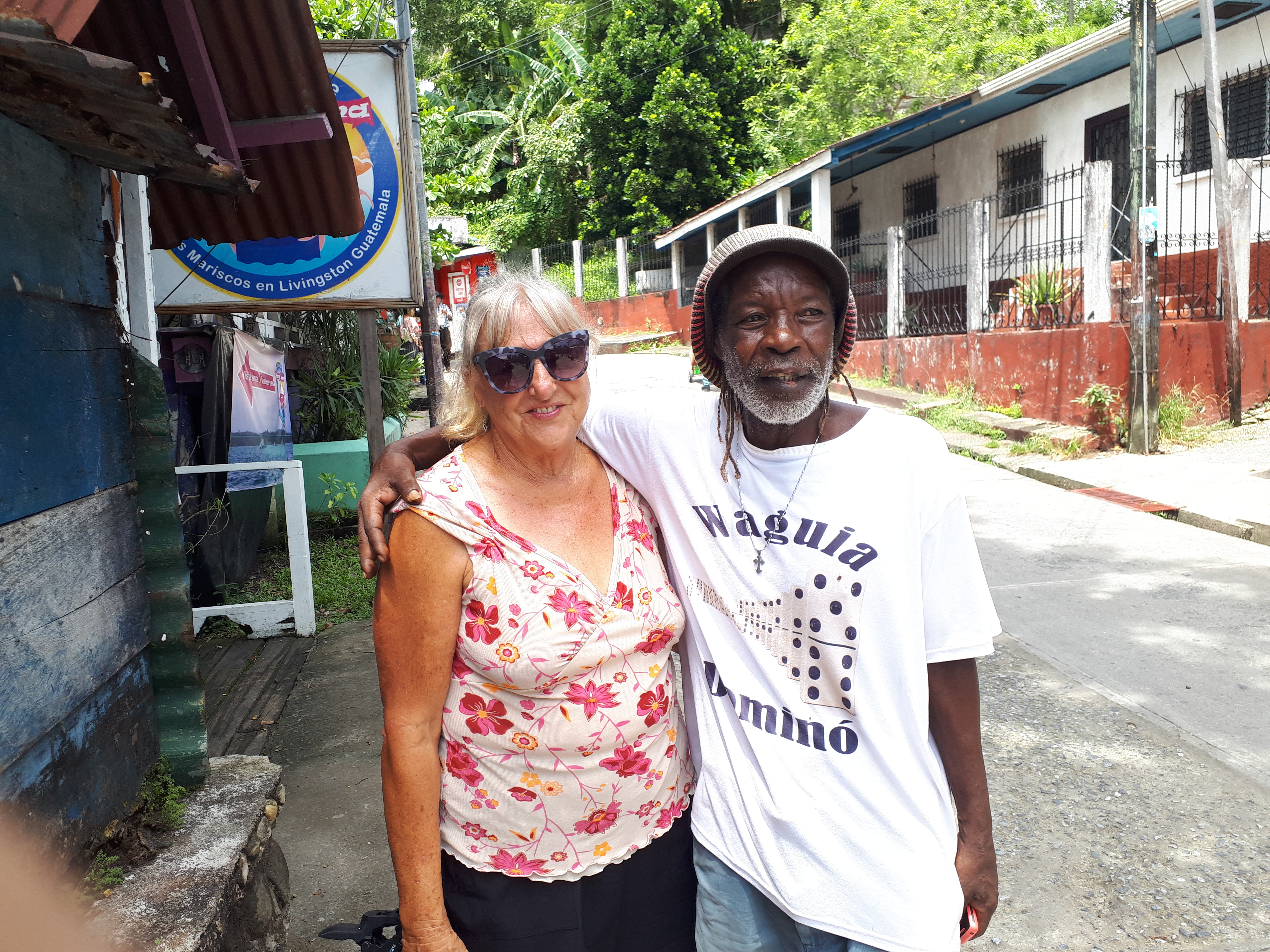
Jackie made a friend who gave us a quick tour of town.

The town of Livingston look very interesting but we were warned not to spend the night anchored out in the river due to midnight boarding by local thieves.