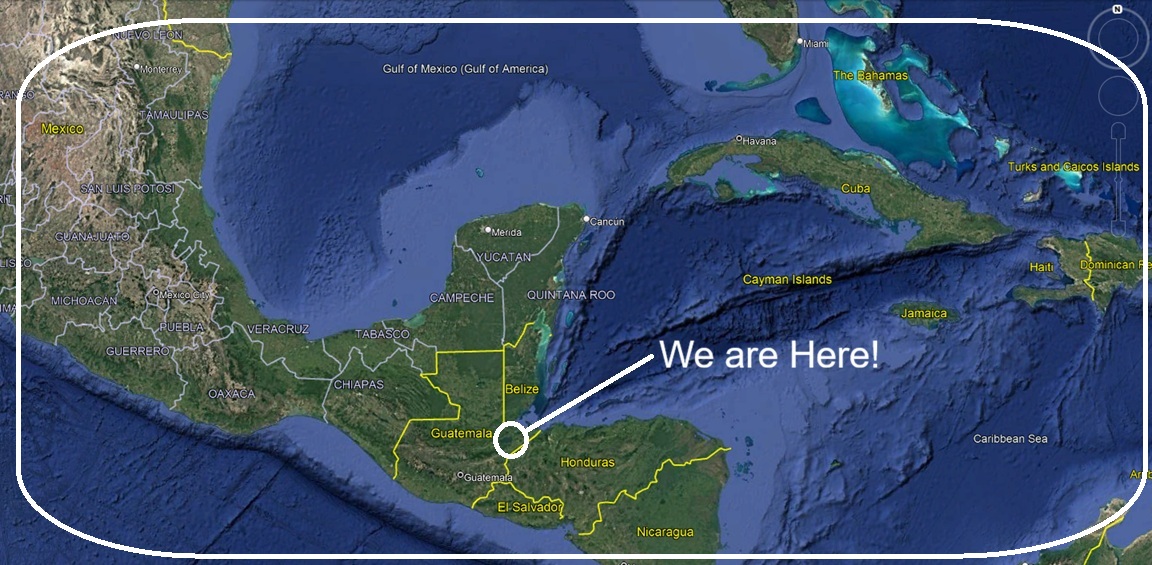
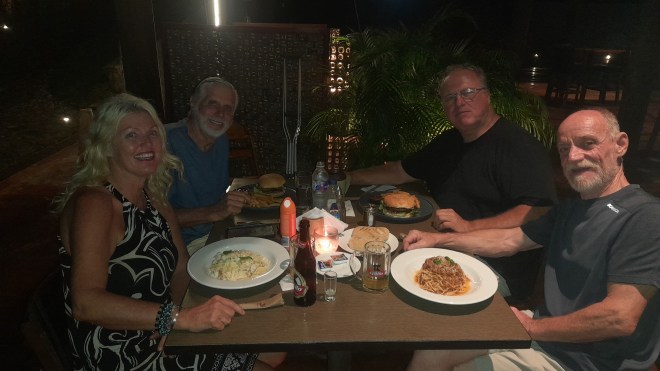
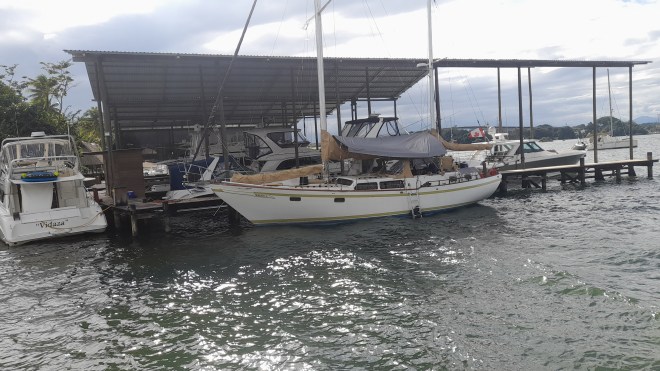
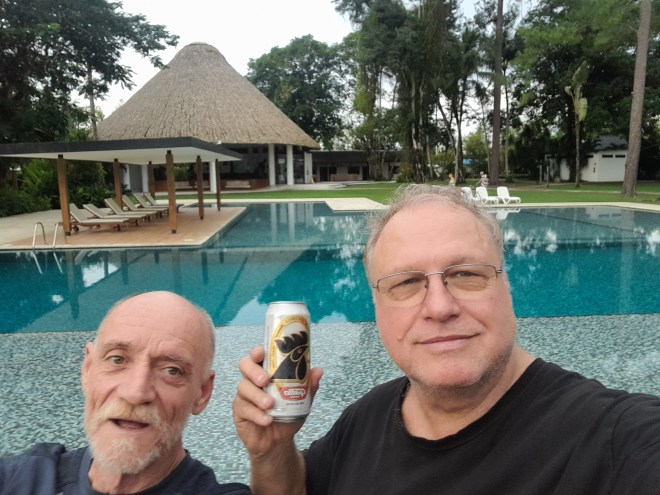
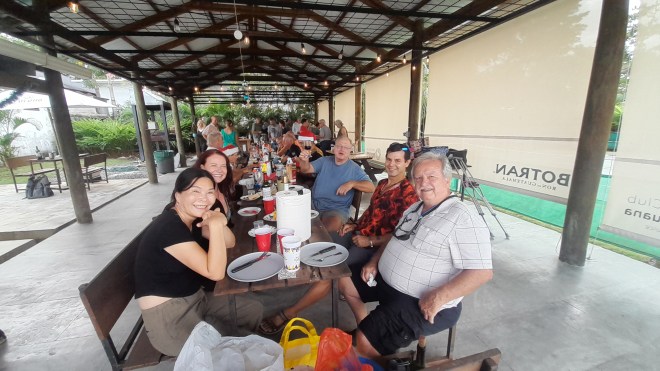
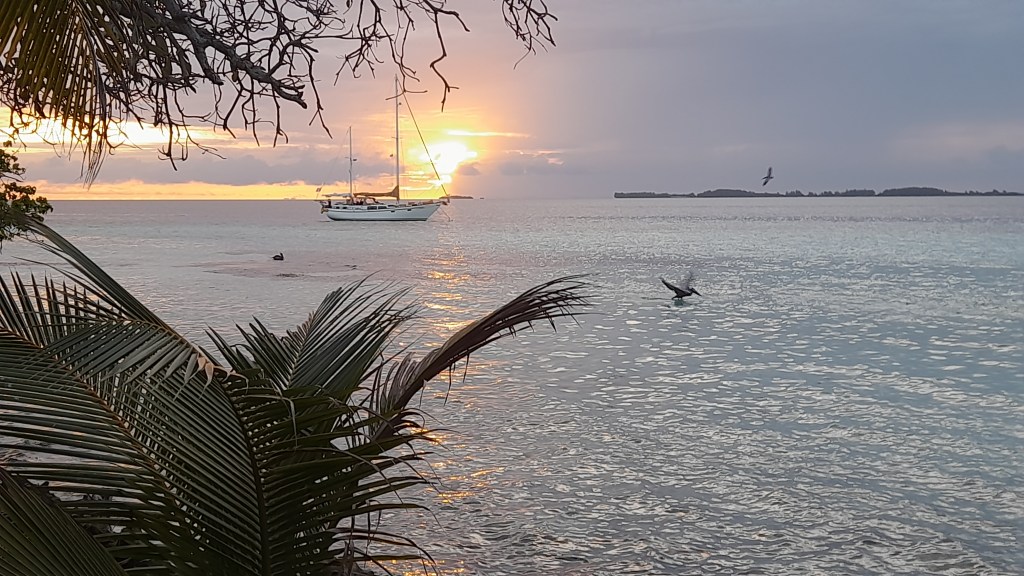
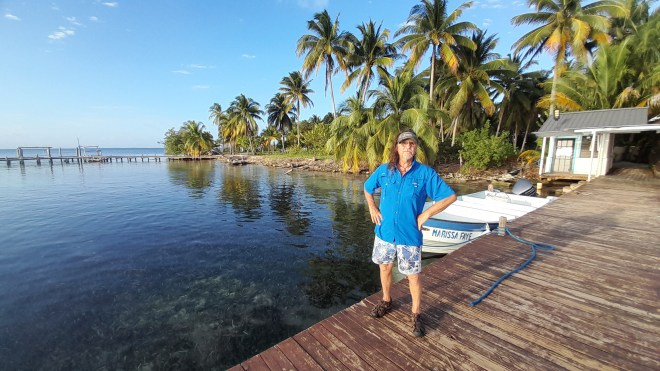
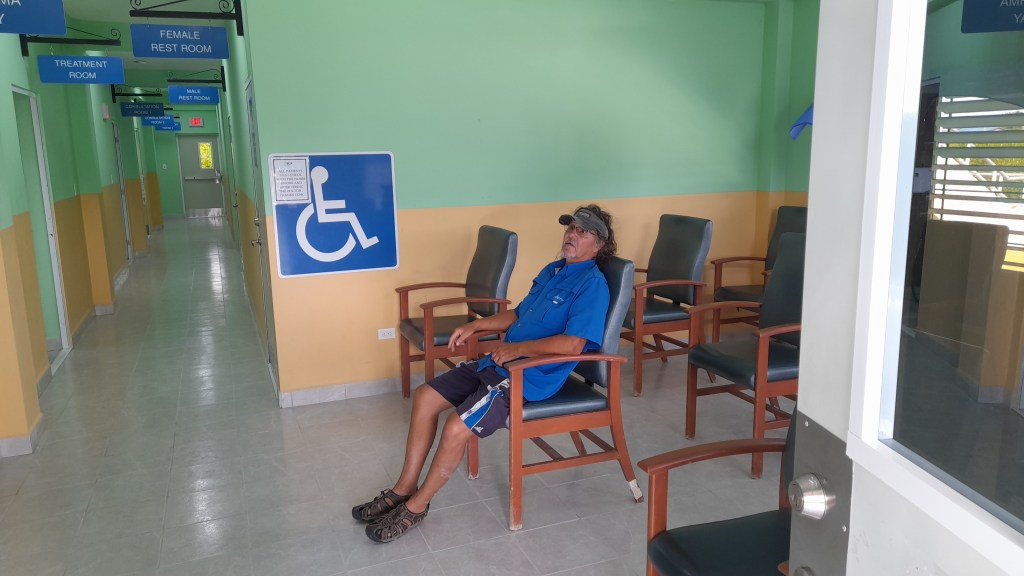
July 1st. My 200 mile solo voyage from Utila Honduras to the Rio Dulce in Guatemala, was mostly uneventful. The winds were good with a long-term positive outlook so I decide to take a detour through Belize and stop for a few hours to see some old friends in Plascencia. Chris and Shannon, a retired Newfie couple who live on Plascencia Caye. Their story is worth telling but that will have to wait for another post. After a quick diner ashore with my friends, I decided to take advantage of the favorable winds and a full moon, to make the final 46 mile run south to Livingston, Guatemala and the mouth of the Rio Dulce River. I departed at midnight, finding 15 knots of wind on a broad reach. Maiatla loved the heading and was clipping along nicely at 6 to 7 knots under her headsail and mizzen “Jib and Jigger” as we call it.
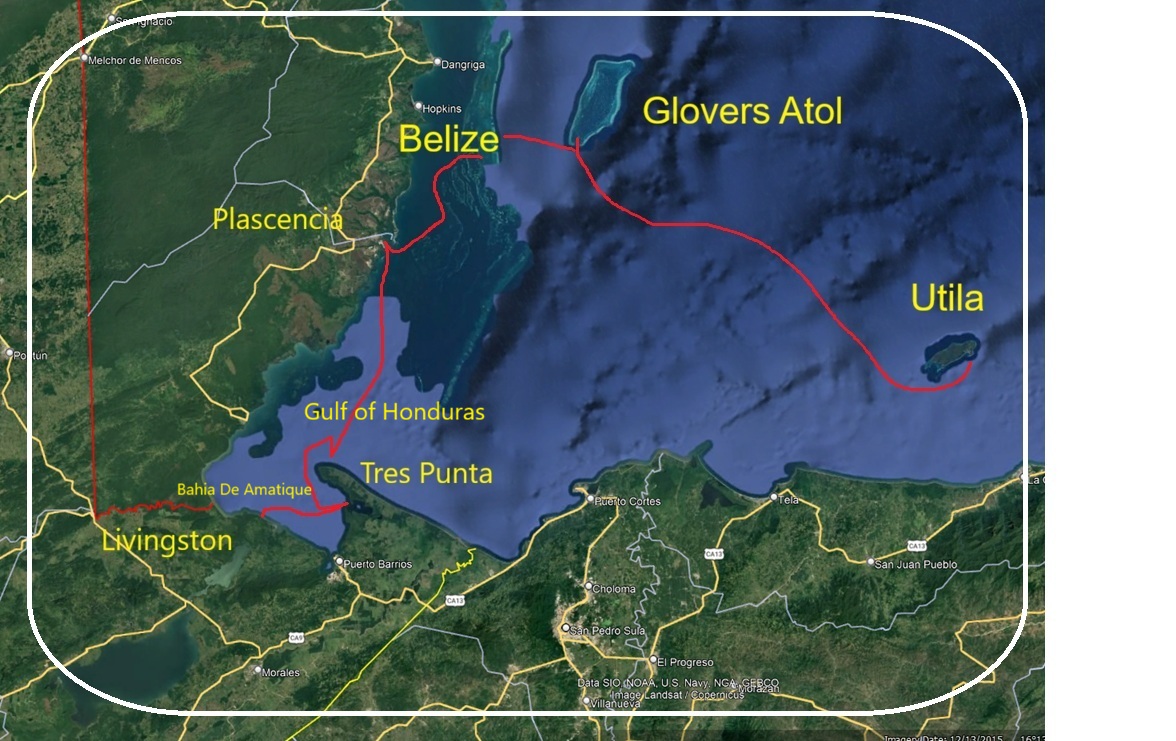
Maiatla’s course from Utila Honduras to Livingston Guatemala
The night was beautiful with a full moon peeking out from behind darting clouds while I, dressed in flannel pajama bottoms and a tee shirt, lay in the cockpit listening music. Around 3 a.m. lights appeared on the horizon, a cruise ship all alight. She passed 4 miles to my portside, heading to where I had departed just a few hours before. Shortly after, I noticed the high atmosphere was growing thick with moisture, creating a haze which is typical for this time of the year. We were a full month into the Caribbean hurricane season so the weather had to be constantly monitored. Lower down, just above the sea, thick black clouds scudded past as they fled in the direction the Guatemalan coast. The clouds piled up against the mountains and it wasn’t long before lighting commenced to slash across the horizon off the bow. Fortunately, it was a long way off and I wasn’t particularly worried.
Dawn broke in a spectacular fashion with reds and pinks dominating the palette. The scene reminded me of a sailor’s axiom that states “Red shy in the morning, sailor take warning. Red Sky at night sailor’s delight.” This should have been my first clue that I may be in for it. Cabo Tres Punta is a strip of land that protrudes into the Bay of Honduras while forming a great bay called Bahia De Amatique, its on the west side of this bay Livingston is located. Deeper in the bay is a large commercial shipping port with heavy freighter traffic so I would have to be on serious lookout for shipping from this point on. Sailing on, the wind dropped to 3 knots and backed to the west. After trimming the sails, Maiatla settled down and carried on towards Tres Punta. On this present course with the wind coming from a new westerly direction, I would not be able to clear the land without tacking the sails and heading back out into the Gulf, which would not normally be a problem as this is how it is done on a sailing vessel. With the new light winds coming out of the gulf, I would have to motor if I wanted to make the bar crossing at Livingston at high tide in about 2 hours. I decided to hold my course and approach Tres Punta and when it was time to tack away from the land, I would drop the sails and motor straight westward for Livingston. Apparently, the weather had other plans for Maiatla.
As we sailed along, the wind grew stiffer, over the next few minutes increasing to 12 knots, then to 28 and then straight on to 46 knots. Quickly I reduced the headsail and kept the boat driving at 7 knots, but I was charging straight for land and a reef. Still not overly worried, I decided to carry on, close on the land then tack back out while still being a mile of so offshore. Plenty of room, or so I thought. As I prepared the sheets for the upcoming tack, a heavy rain struck and when I glanced towards the land, it was gone. Tres Punta had been totally consumed by a white wall of rain and sea spume. It was a Line Squall. A thundercloud microburst.
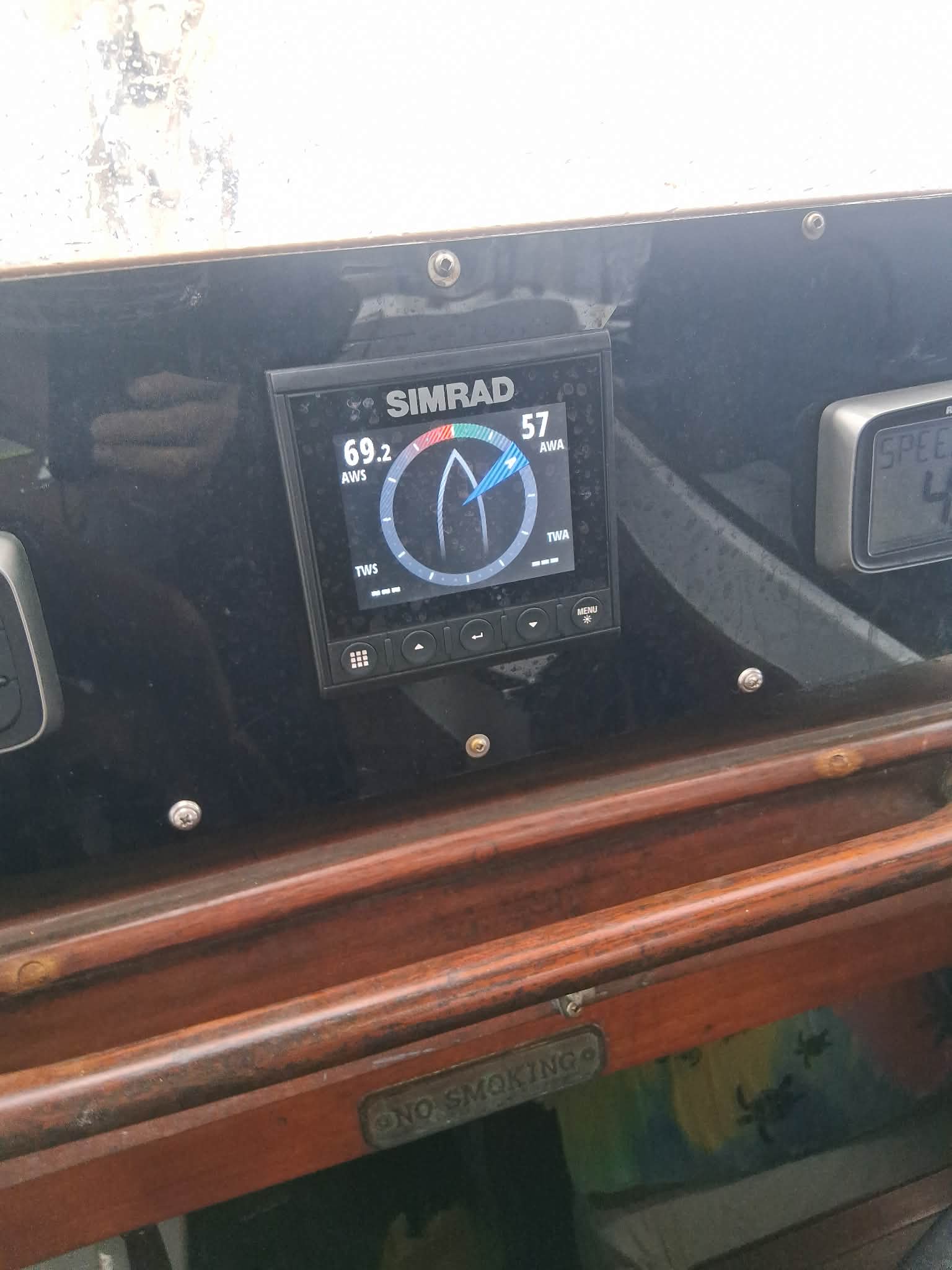
The AWS, Apparent Wind Speed is reading 69.2 knots with the wind on the starboard bow.
Enough wind to rip the ears off a snake!
I threw myself across the cockpit and began to furl the remaining headsail, but before I could completely douse the sail, a new wind struck with force and furry. It was all I could do to finish furling the sail as the wind tore at it. In what seemed like seconds later, the waves grew to perhaps 7 to 8 feet, creating a nasty cross chop as the new waves clashed with the old. Maiatla slammed into the waves while nearly throwing me off my feet. I fought to reach the helm seat and started the engine. In an attempt to turn into the wind, I pushed the throttle to the maximum while throwing the helm over hard. Behind me the mizzen was violently vibrating in the wind but it added the sail power I need to turn into the steep wind waves. If not for the power of the mizzen sail, I would not have been able to head up against the wind and waves.
The intense downfall pounded the decks, rain and sea water rushed across Maiatla s decks overwhelming the scuppers that fought to release the three inches of water that had already accumulated. Maiatla stalled as she came head to wind, the now useless mizzen sail shuttered, the rigging vibrated in a high pitch scream. I feared the sail would tear herself apart. At that moment, I glanced at the “AWS”, the apparent wind speed indicator, momentarily, I could not register what I was seeing. I stared at the instrument as the gusts shot past 70 knots, hurricane force winds. I don’t know why, but I grabbed my phone and snapped a picture of the instrument.
Checking the chart plotter, I could see that I had closed dangerously close to Tress Punta, which was still obscured by the rain. I had to put distance between Maiatla and the shore so I continued to turn to starboard and before I had even competed my turn, as quickly, as it struck, the wind began to subside as I motor sailed back out to sea. 10 minutes later the wind dropped down to 22 knots, but this time it stayed there. Maiatla was still at full throttle and for the first time since starting the engine, I heard it, it was an alternator belt screaming. “That’s all I need now”, I thought, to blow a belt and loose the engine. After throttling down, my world started to make sense once again. Without hesitation, I unfurled the headsail and killed the engine. I was again sailing fast, hard on the wind with the auto pilot engaged. From the time the wind first struck until this moment, was perhaps 20, 25 minutes, maybe a bit more. No time for fear.
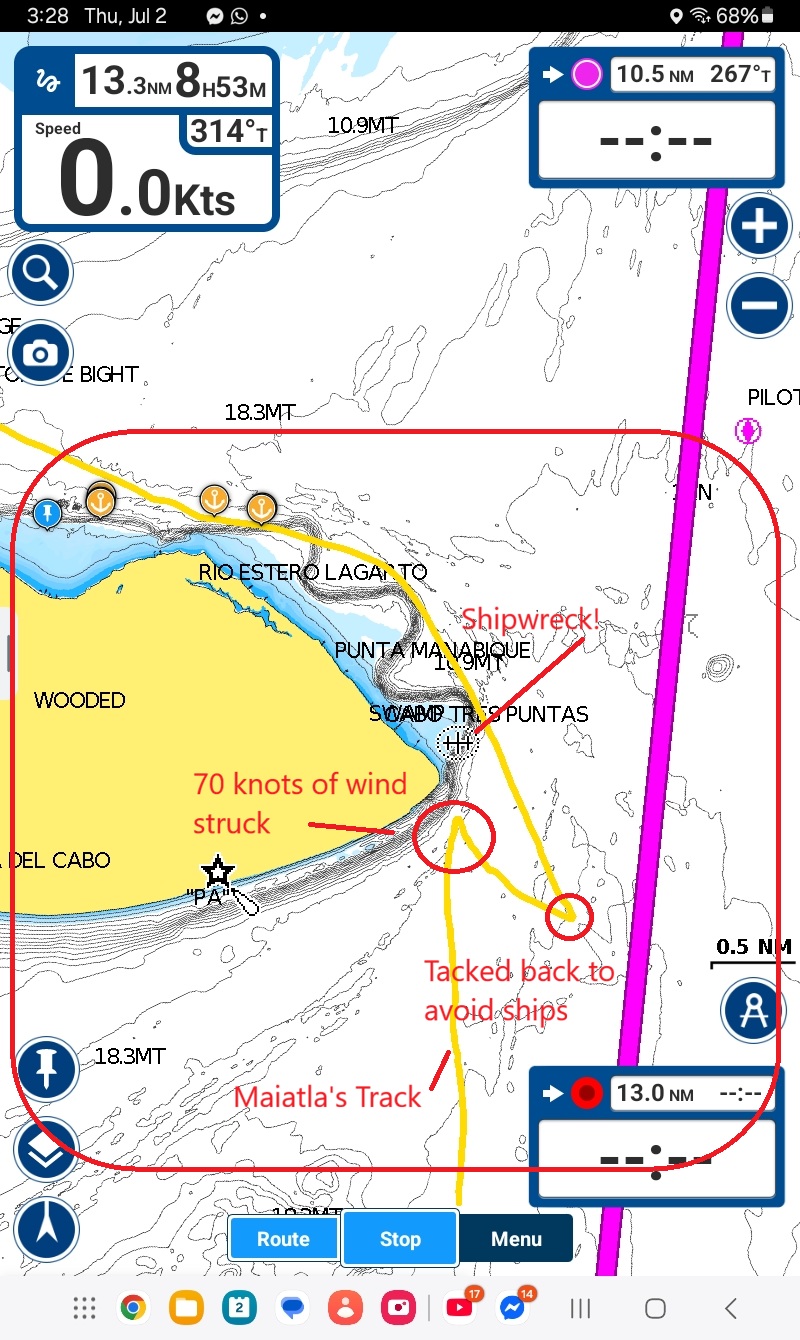
Photo of my chart plotter and Maiatla’s actual course as it happened. Notice the shipwreck on the point!
The land behind me showed itself once again and the rain quit. Checking the chart plotted I calculated how far out on this heading I would need to go so when I tacked back, I would clear the point. Another mile, a mile and a half should do it. It was at this point I realized my clothes were soaked and with the strong winds pulling on them, it sent a shiver through me. Stripping off, I tossed my soggy cloths to the end of the cockpit. I was just about to drop below to grab a towel when I saw it. It was ship about a mile away and he was headed directly at me. But if one was not enough, approximately a mile further back was a second ship, but he was perhaps another half mile out. “Really!” I shout into the air. I had no time to track their speed and movements on radar so I made a guess. If I hold this course the first ship should pass behind me, but barely. Holding my course, I watched the ship and as I did, the ship made a slight but critical course change. He had seen me and was making room. My attention now turned to the second ship and like the first, he was now coming directly at me. While the first ship was still passing my stern, I tacked Maiatla and began to race back the way I had come in an attempt to get out of the way of the second ship. Apparently, I cut it a bit close as I had to head down to pass under the first ships stern, but in doing so, I was now clear of the following freighter.
On my present heading we easily cleared Tres Punta, and enter Bahia De Amatique. I had long given up on attempting to carry on to Livingston as all I wanted was to find a calm anchorage, get into dry clothes and have a stiff rum or two. Not Necessarily in that order. Fortunately, I knew just the place. I had been in Bahia La Graciosa before. It was isolated bay, surrounded by mangroves and clear water. And it was only 5 miles away. The anchorage was as calm as I remembered and after dropping the anchor, I surveyed Maiatla’s deck. It was the first time since it all started that I was really able to take stock of my home. She had taken beating, but she had taken care of me and I’m happy to report, we didn’t break a thing. But I wish I could say the same for my cell phone which succumbed to drowning somewhere along the way. Despite placing the phone in a bag of rice, two days later she was pronounced dead and taken off life-support. Thankfully my only casualty.
After spending a peaceful night at anchor, by 8 a.m. I was back underway, motoring the last 11 miles to Livingston Guatemala. The sand bar at the mouth of the river is shallow, so shallow that many sail boats require being towed in. Literally dragged through the mud. Some boat with slightly deeper drafts gets stuck and have to be tipped and dragged, a process that requires having one boat pull and another, with a long rope secured to the top of the mast, pulling sideways “Tipping” the boat over to reduce the vessel’s draft. One boat would require tipping this morning. This was my 9th crossing of the bar and fortunately, I’ve never have had to be tipped or towed. I have struck the bottom a few times but due to the shape of Maiatla’s long keel, Maiatla at full throttle, would simply plow a trench through the soft mud.
As I approached the bar a full hour late for high tide, I was fearful that this time I may not be so lucky. I had called ahead and warned the towing company (Hector) that I may need a tow or God forbid, a tip and tow. On my first crossing back in 2022, I bumped bottom but I made it without issue. I charted my course over the bar and have used the same headings ever since. Today on my 9th cross, it went without a hitch with the shallowest spot still leaving 8 full inches under Maiatla’s keel. Easiest crossing yet.
After anchoring in front of town, I hoisted my Q Flag, (Quarantine) and waited, along with 7 other sail boats for customs and immigration to board and clear us in to Guatemala. When I had departed from here 7 months ago, I had no intentions of returning. The plan was to spend this hurricane season in the Eastern Caribbean. Dominican Republic or Trinidad. But after spending over three months castaway on the Honduran island of Roatan with engine problems, my cruising season was shot. By the time the engine was repair the hurricane season was upon us leaving me with little choice but to head back to the safe hurricane hole of the Rio Dulce. Maiatla and I have spent the last four years sailing out of the Rio so as we sat here waiting, I realized that it felt like returning home.
Sorry for the lack of posts but life has been crazy the past year. As I write this its June of 2026, the start of Hurricane season and I’m broken done on the Island of Utila in Honduras with my engine in pieces waiting for parts and watching the weather. More about this later.
So let me fill you in a bit. I returned to the Rio Dulce in Guatemala in November of 2025 where Maiatla was on the hard at Marina Nana Juana. The marina had finished painting Maiatla’s decks and I was excited about getting underway after Christmas and sailing to Belize. But in the mean time, I was able to hang with my old friends, Bill and JoAnne of the trimaran Ultra, as well as meet some new cruisers. Life is seldom boring when cruising as there is always something interesting to do here in the Rio and as usual, JoAnne was up to organizing the cruisers for some short excursions around the area.
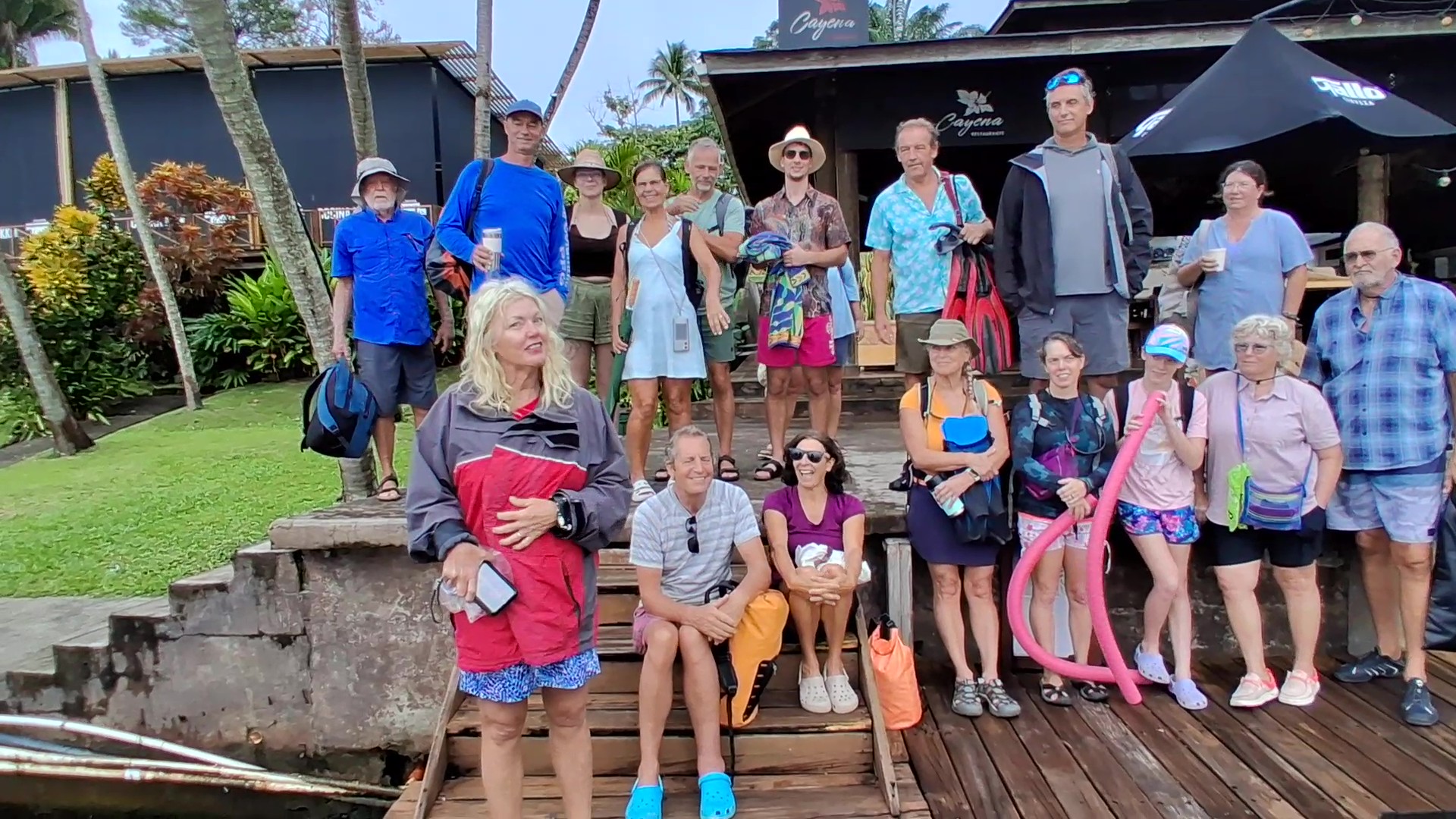
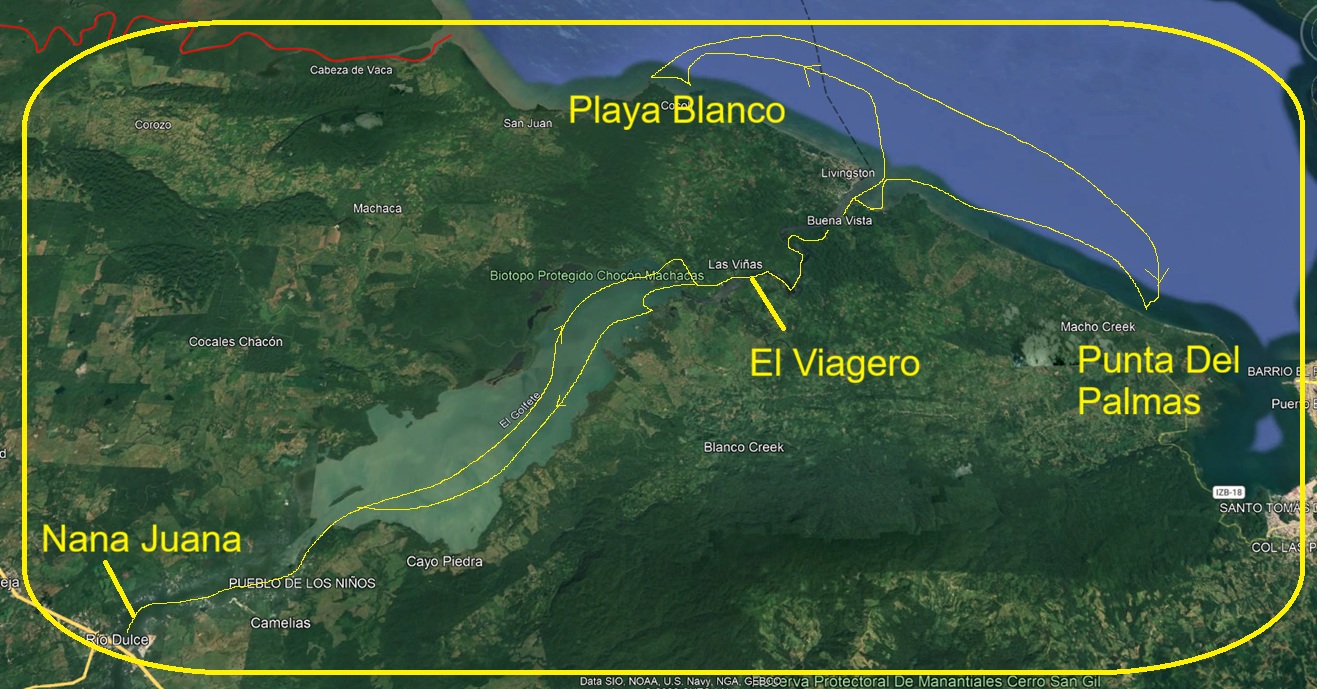
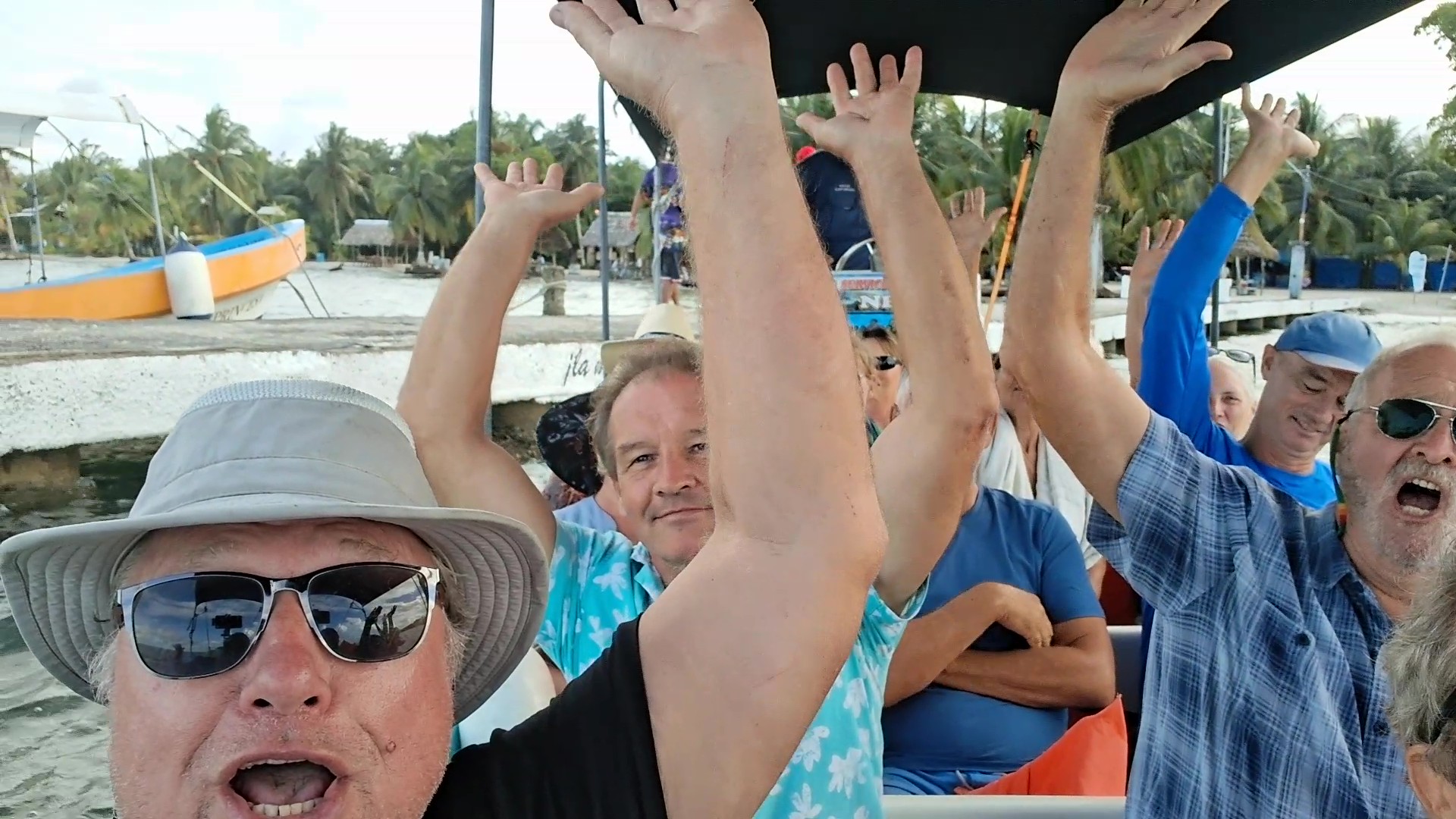
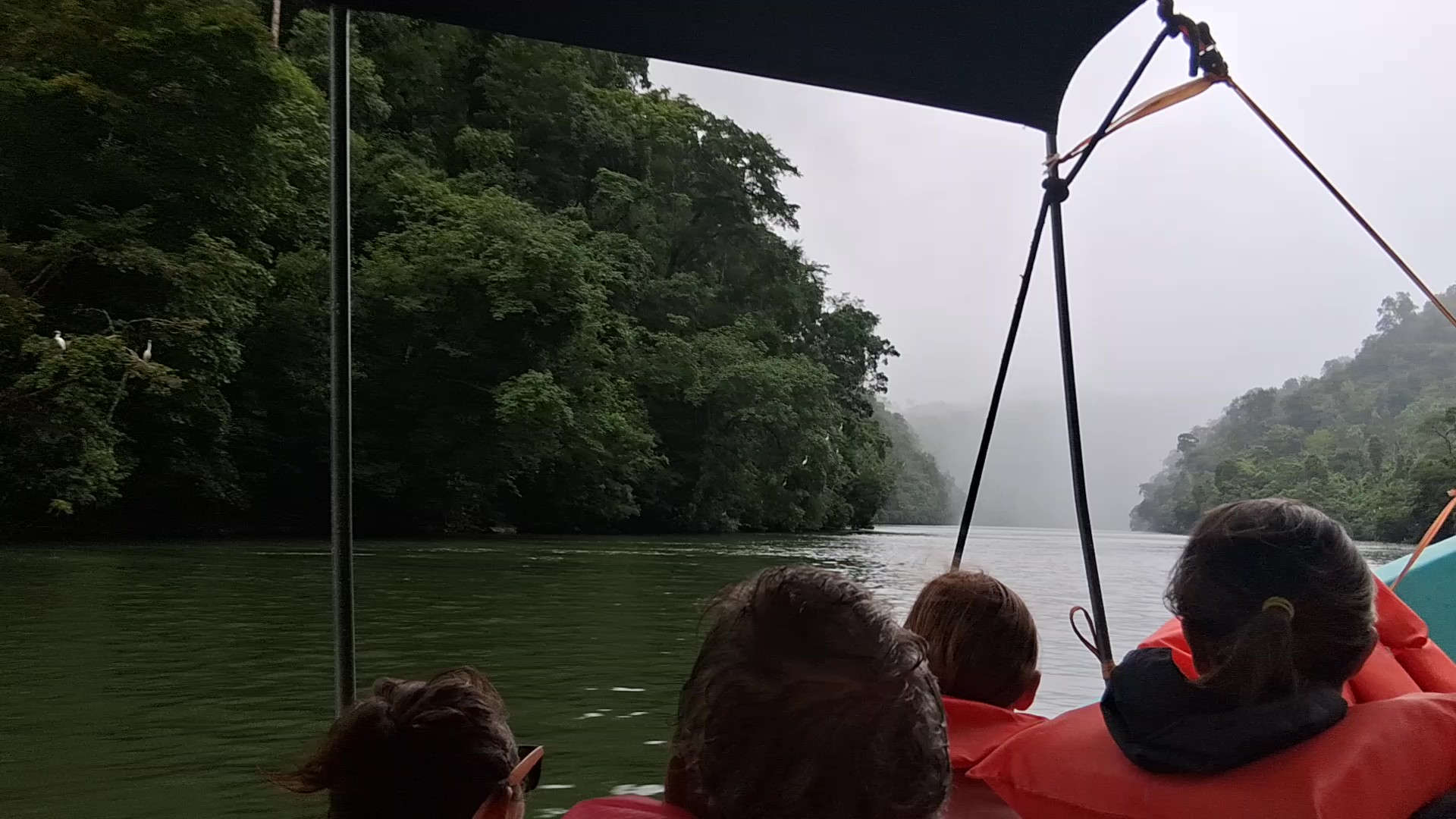
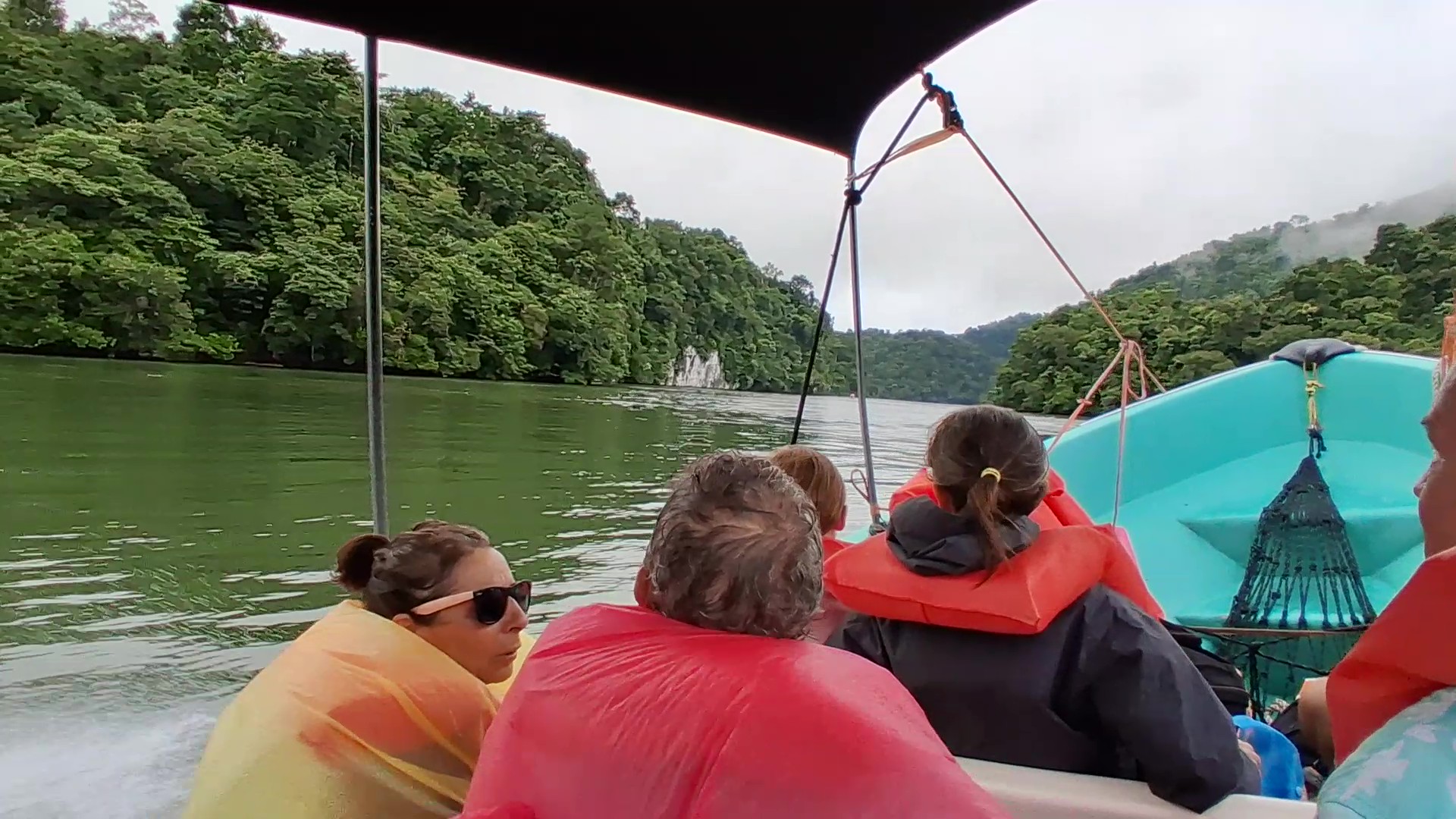
On what would prove to be the Guatemalan version of a “Pub Crawl” a group of 18 of us took a panga ride across the lake and down river. Our travels would take us about 20 miles through the famous river gorge and past the entrance to the Rio and the frontier town of Livingston. Livingston has the reputation of being quite lawless and sailors will not anchor there overnight as getting boarded and robbed was likely. I have stopped there 8 times so far while checking in and out of Guatemala. Livingston is quite the eye-opener and worth seeing, but visits are best done in the daylight.
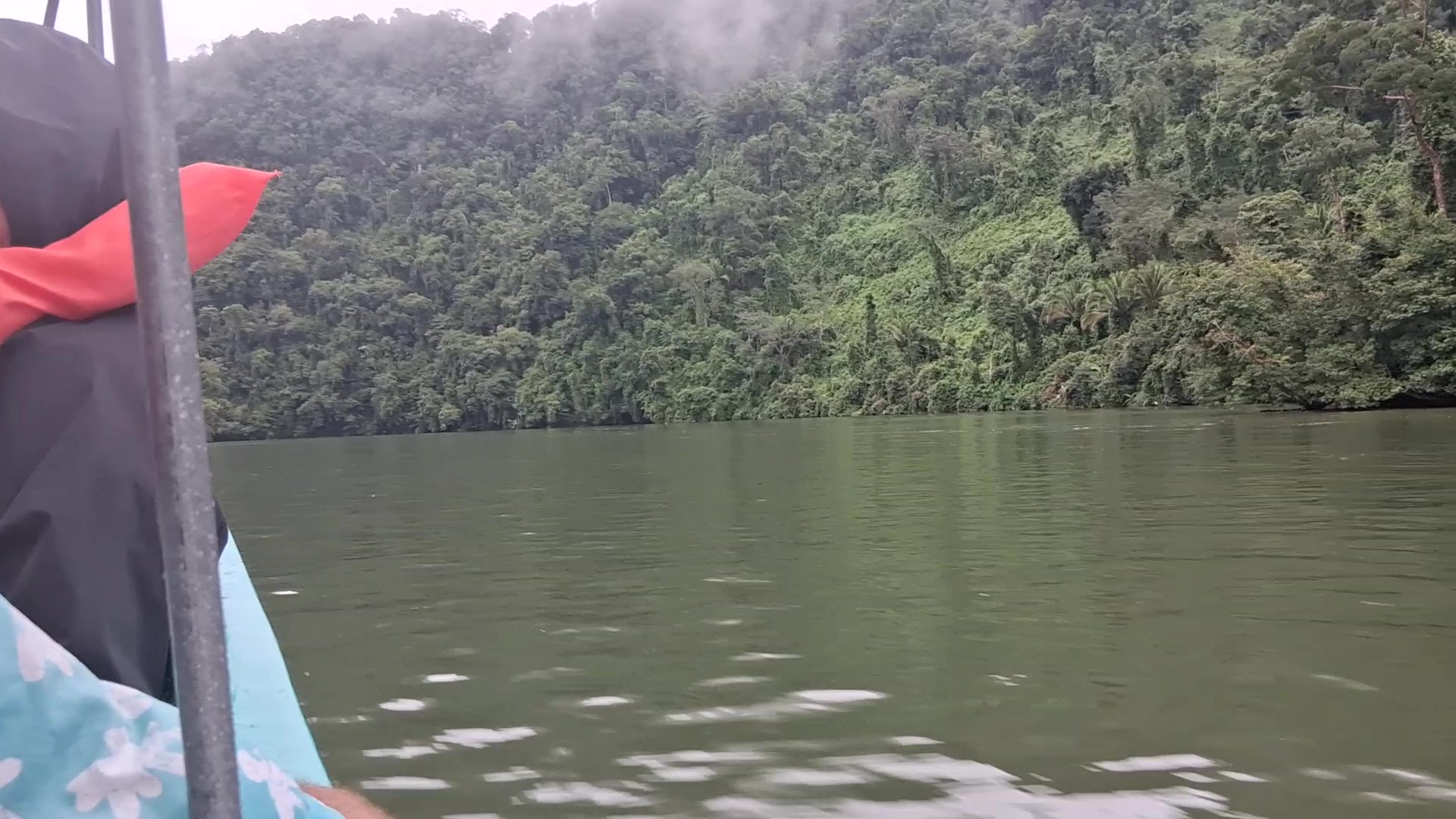
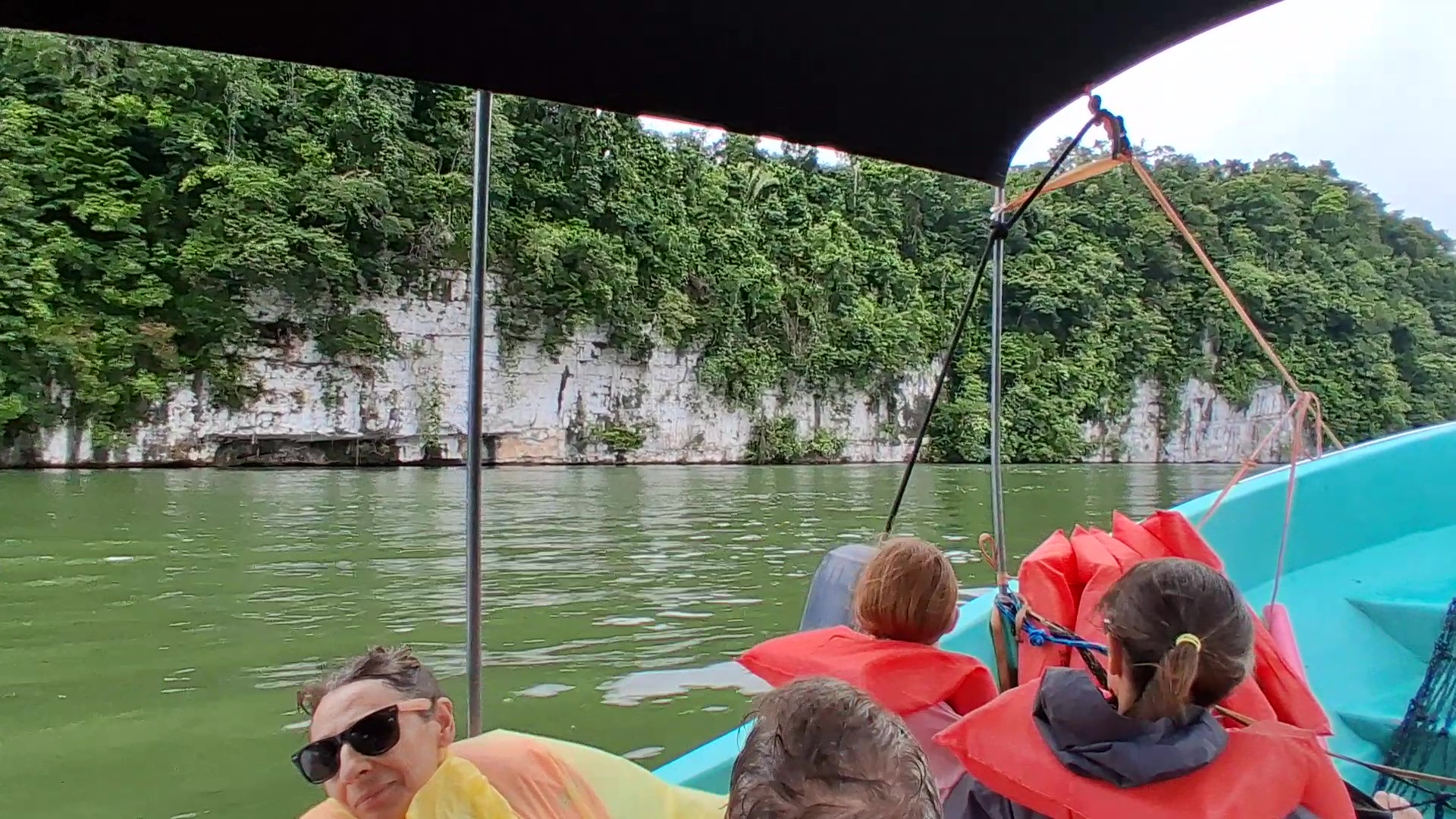
Leaving lake Izabal, the waterway narrows and on each river bank, the jungle grows thick and echoes with exotic bird songs, howler monkey demands while emitting that musty, fung smell that sticks to the inside of your nostrils. The broad leaves and towering trees let little direct sunlight to strike the land so it was common to see three and four-foot-long iguanas sunning themselves on branches overhanging the water. Other cantilevered branches supported scores of White Egrets and Blue herons. The river continued to narrow as we approached the tall, guano covered lime stone cliffs, the bottle-neck of the pass and most scenic spot on the river. When sailing this section on Maiatla, we had to stay clear of the shore because massive trees reached out over the water, threating to hook our tall masts if we dared to get too close.
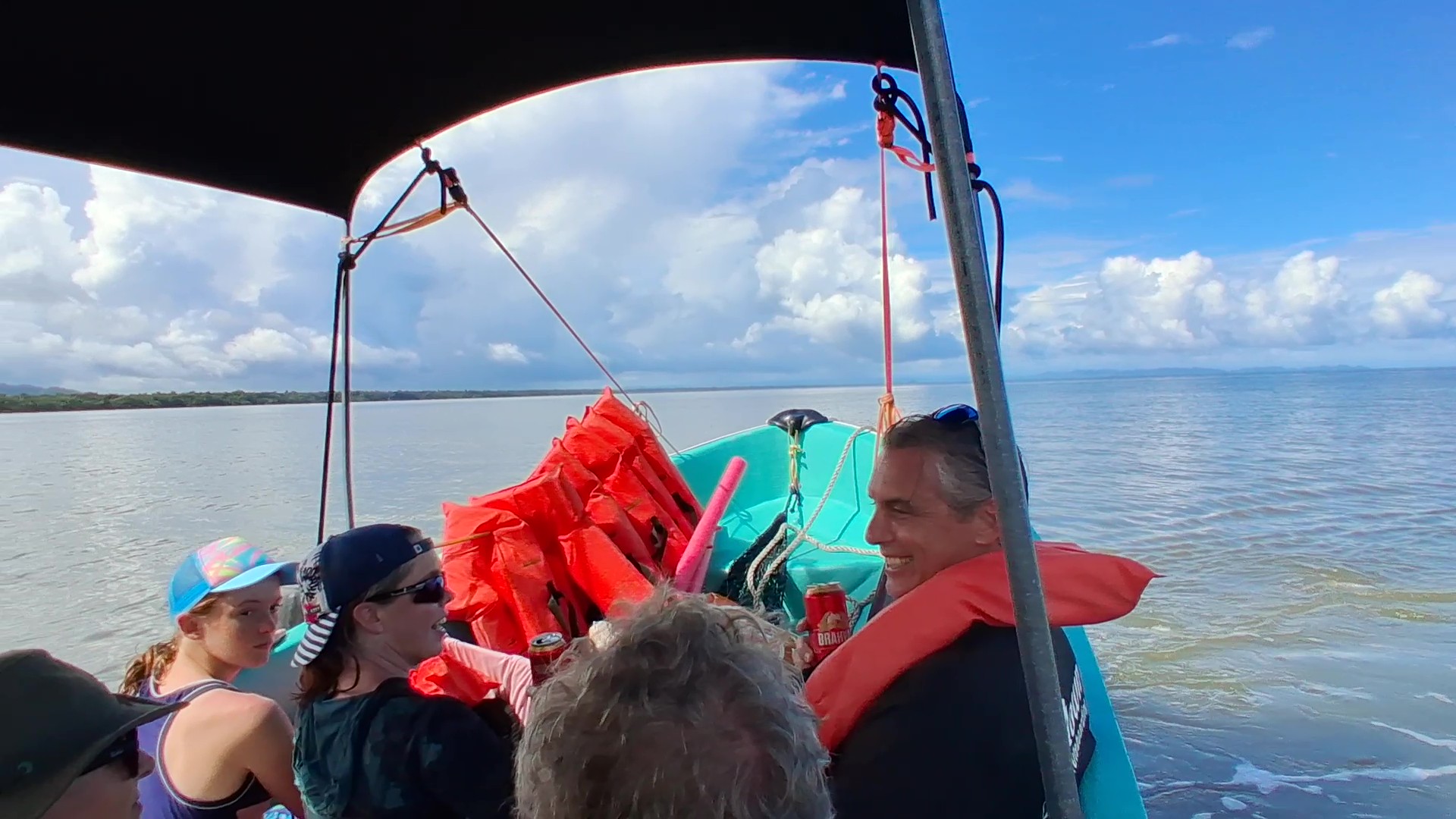
Caleb on the right with Jackie and Melissa in the bow
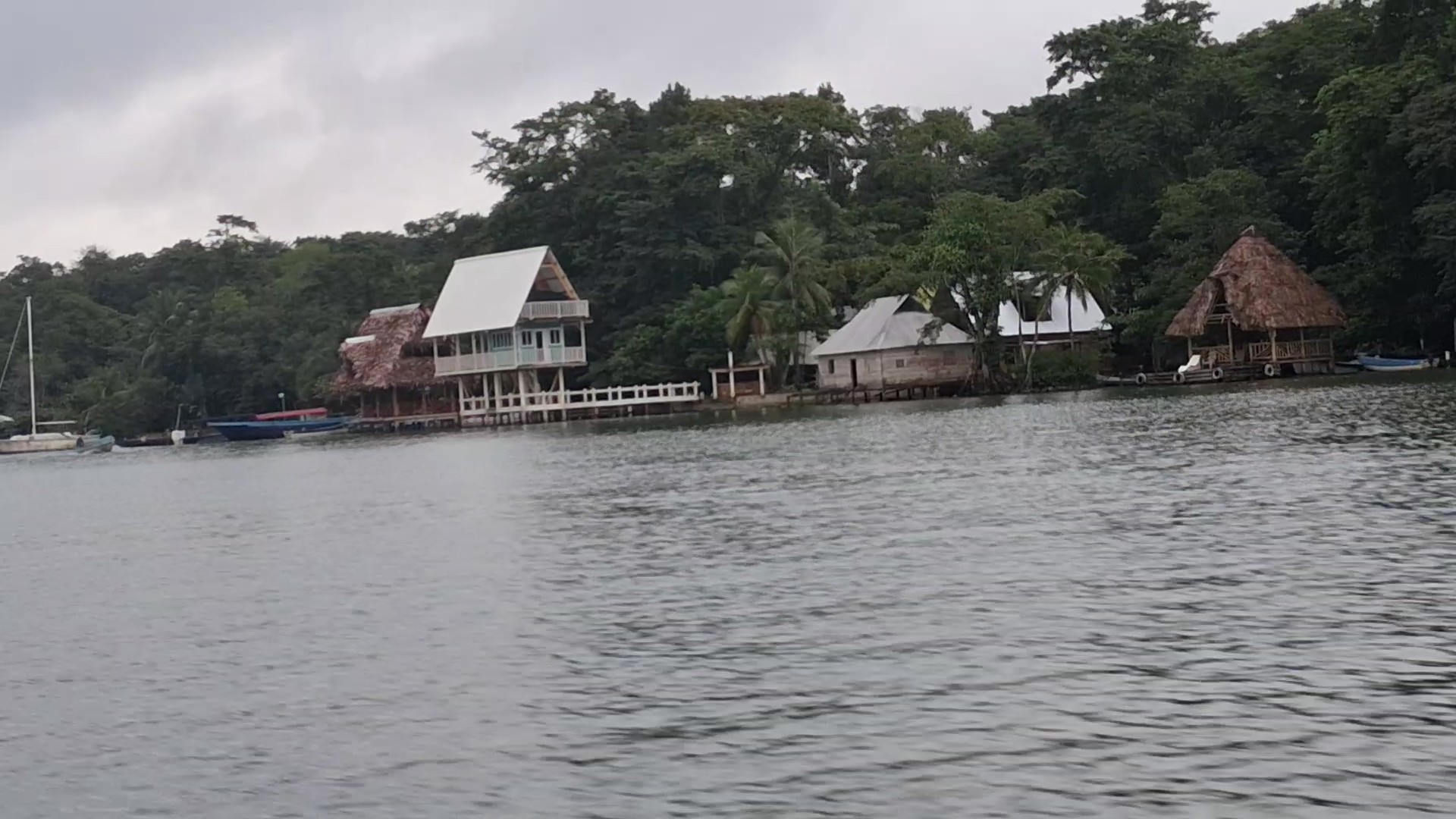
We raced passed kids and adults in dugout canoes, fishing with hand lines or casting nets. With enthusiastic smiles, they always waved in return. It was a vision little changed from the past centuries, aside from the workhorse of the river, outboard motors. Some of the waterfront homes were obviously owned by the wealthy, but most were rough-hewn shelters constructed of what could be scavenged or the jungle provided. Functional homes occupied by humble people who fish the river for a living.
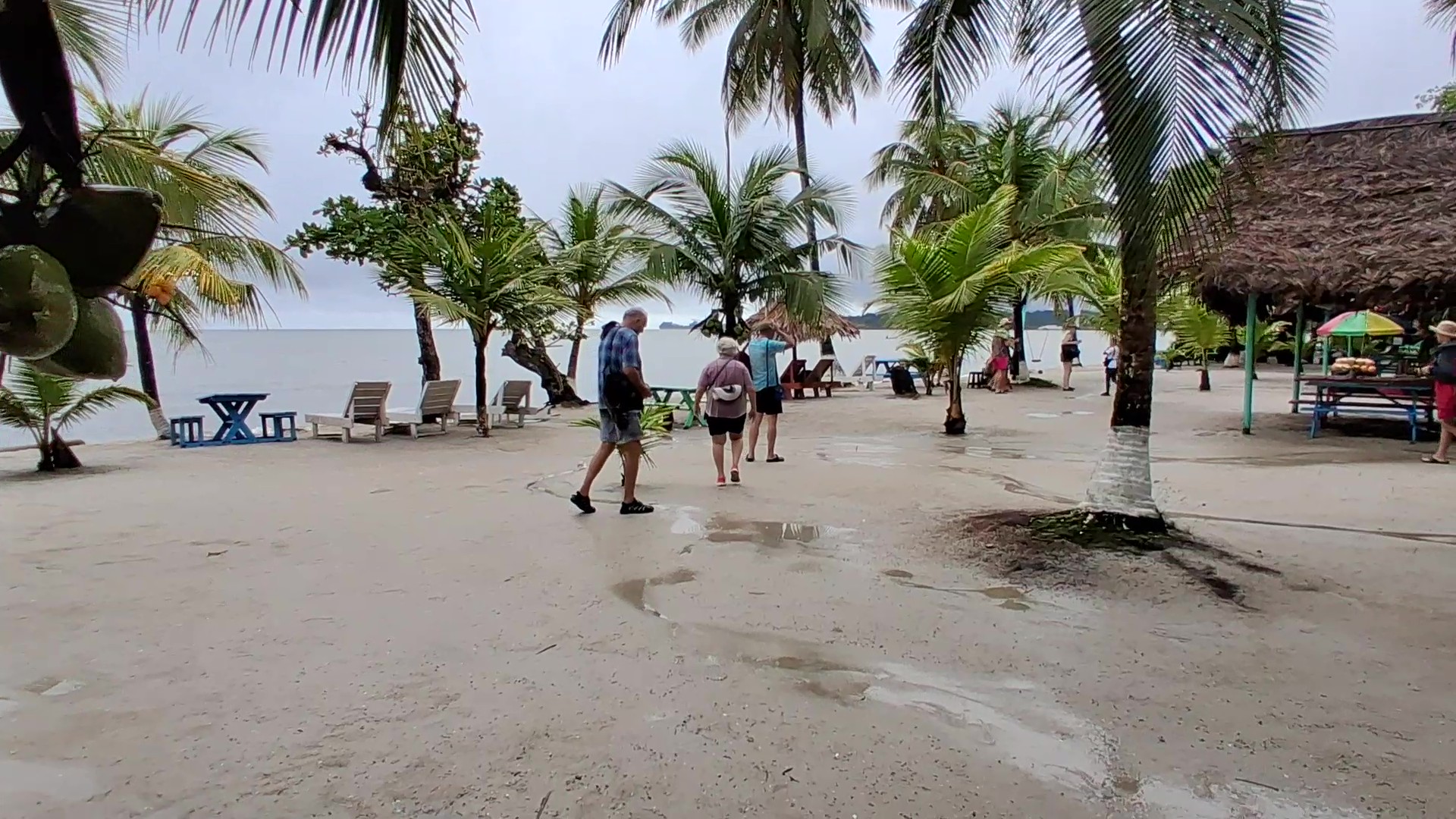
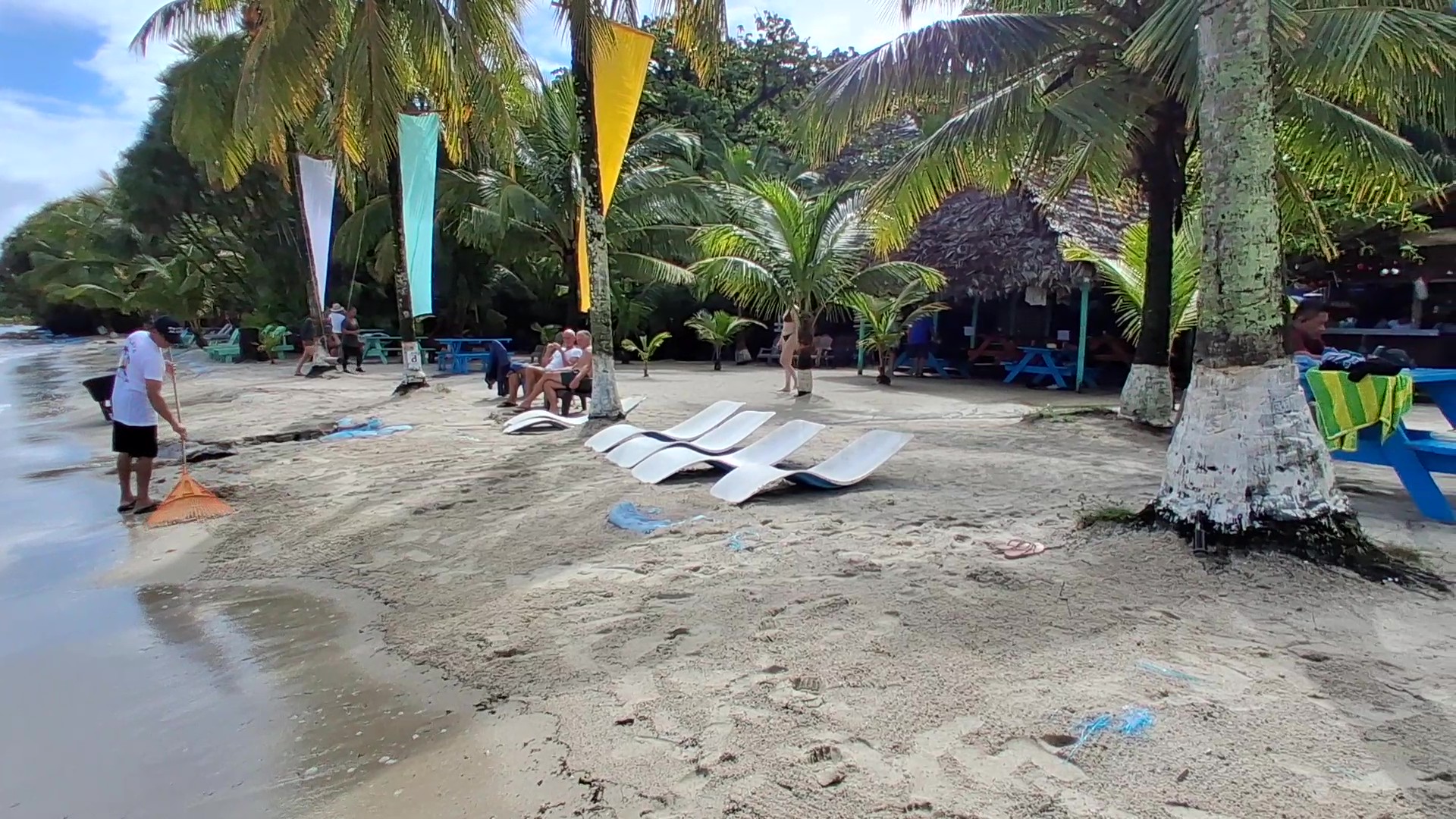
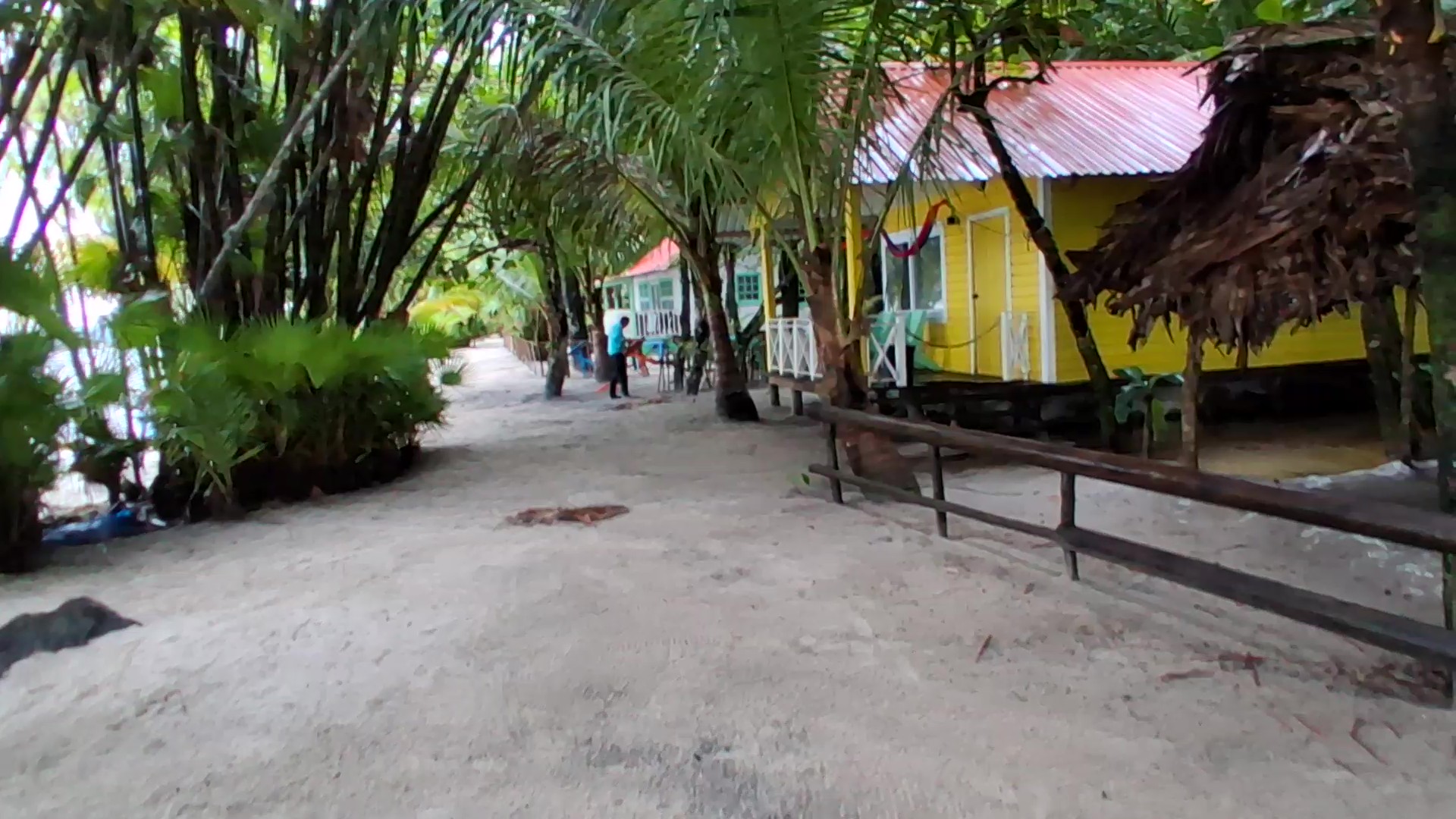
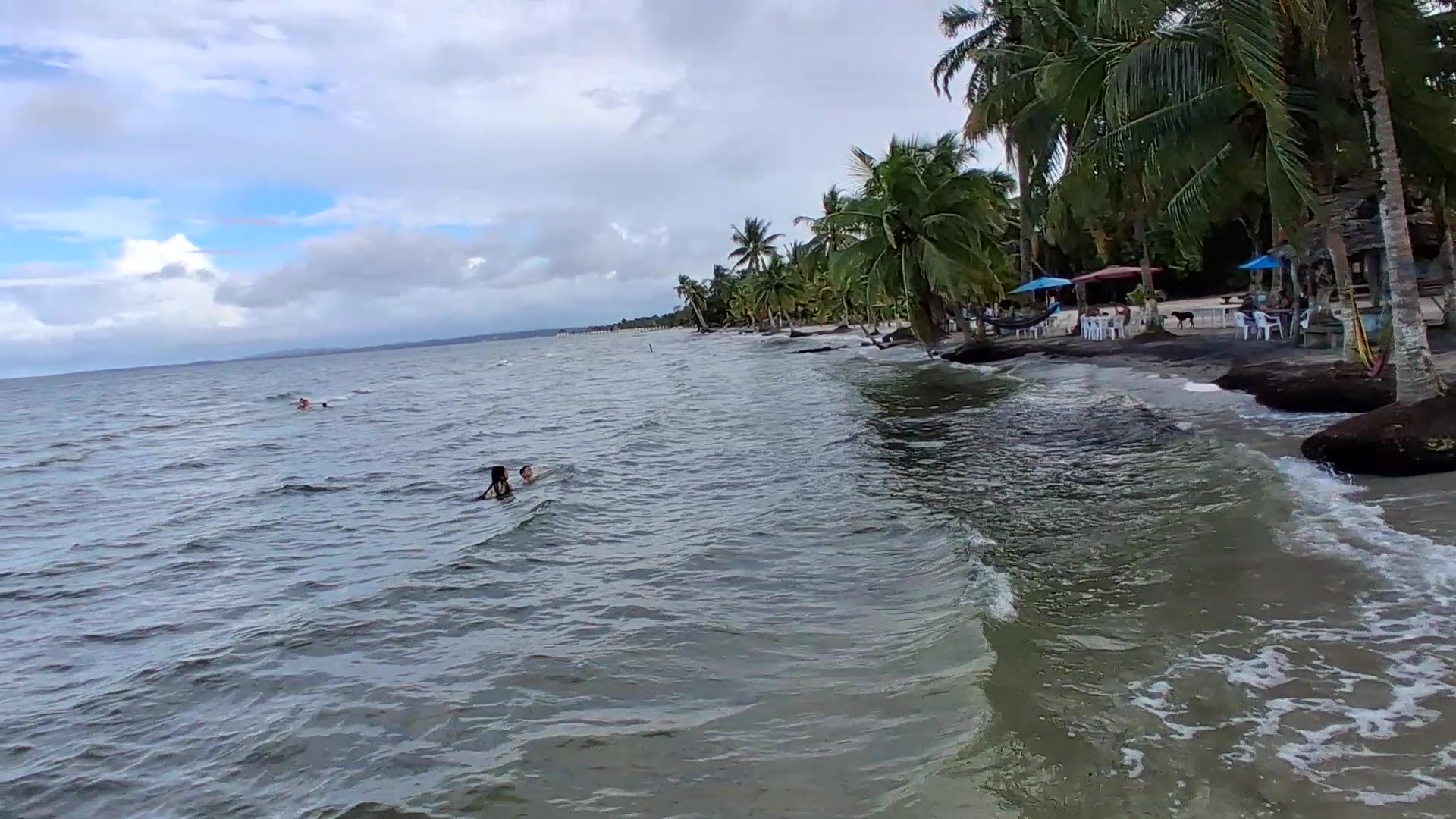
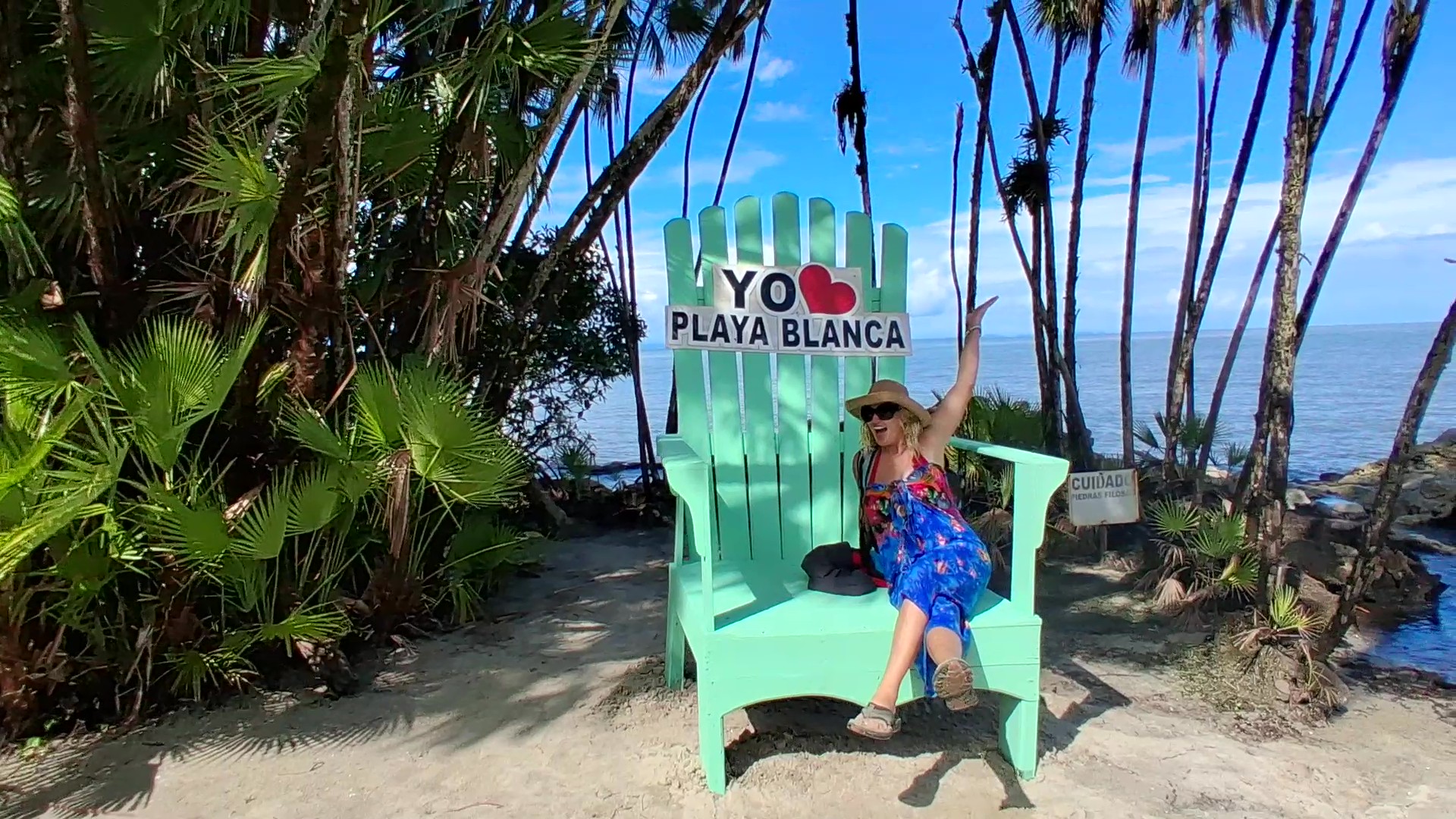
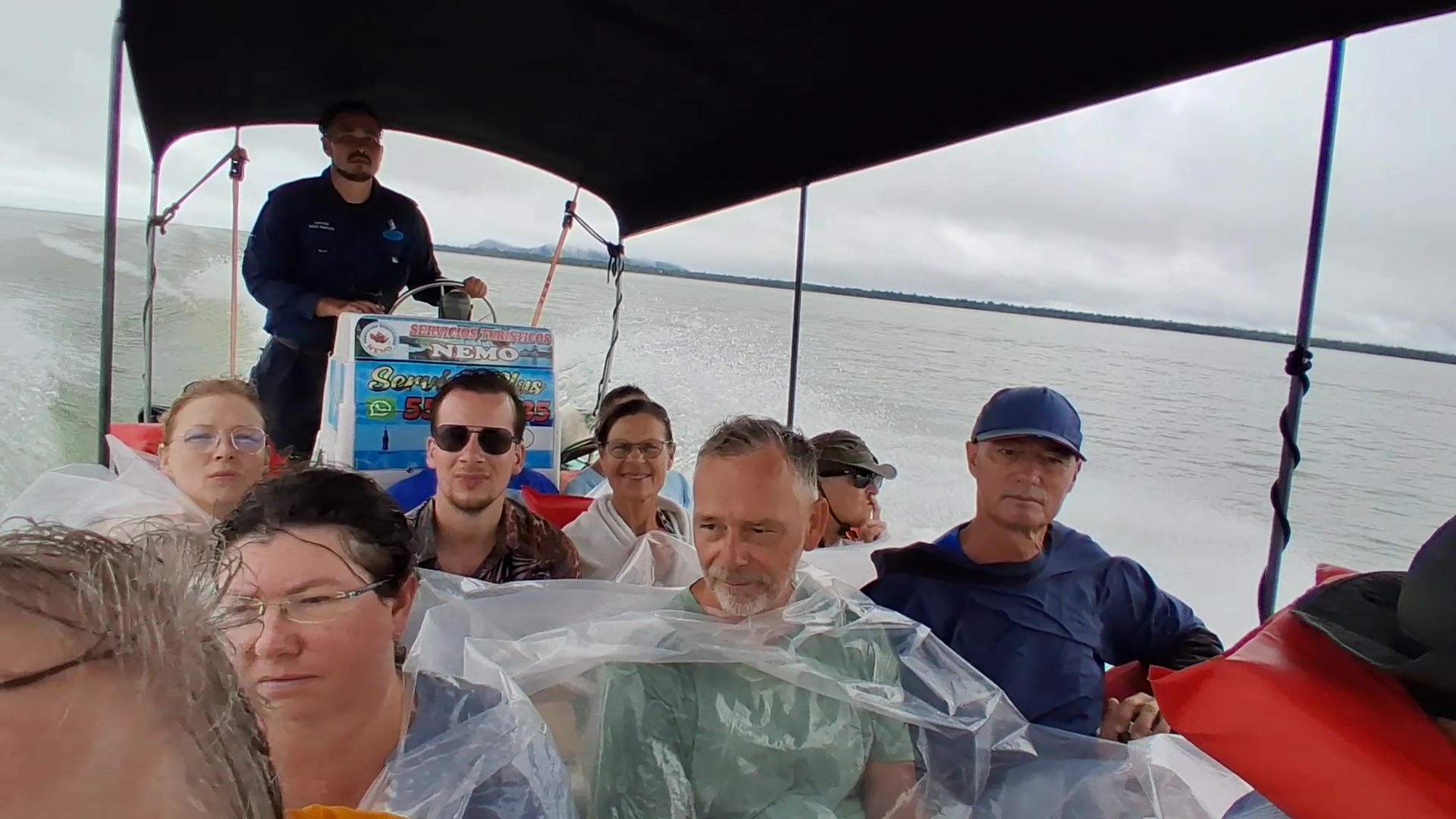
Without stopping at Livingston, we shot over the river bar and headed north across a four-foot swell which, at times sent spray over the otherwise happy cruisers. Light rain showers initially struck forcing the crew to further huddle under sheets of plastic or garbage bags the boat captain provided. This was not my first trip through a rain forest so I brought a rain coat. The sun finally broke out as we rounded Punta Cocoli and tied to a thin, but sturdy dock owned by a small beachfront resort called Playa Blanca. Set against the backdrop of a thick, now steaming tropical jungle, it was a picture-perfect place with fine sand to squish between your toes and the quintessential canting coconut palms for shade. Any direction you glanced a postcard worthy image blessed you.
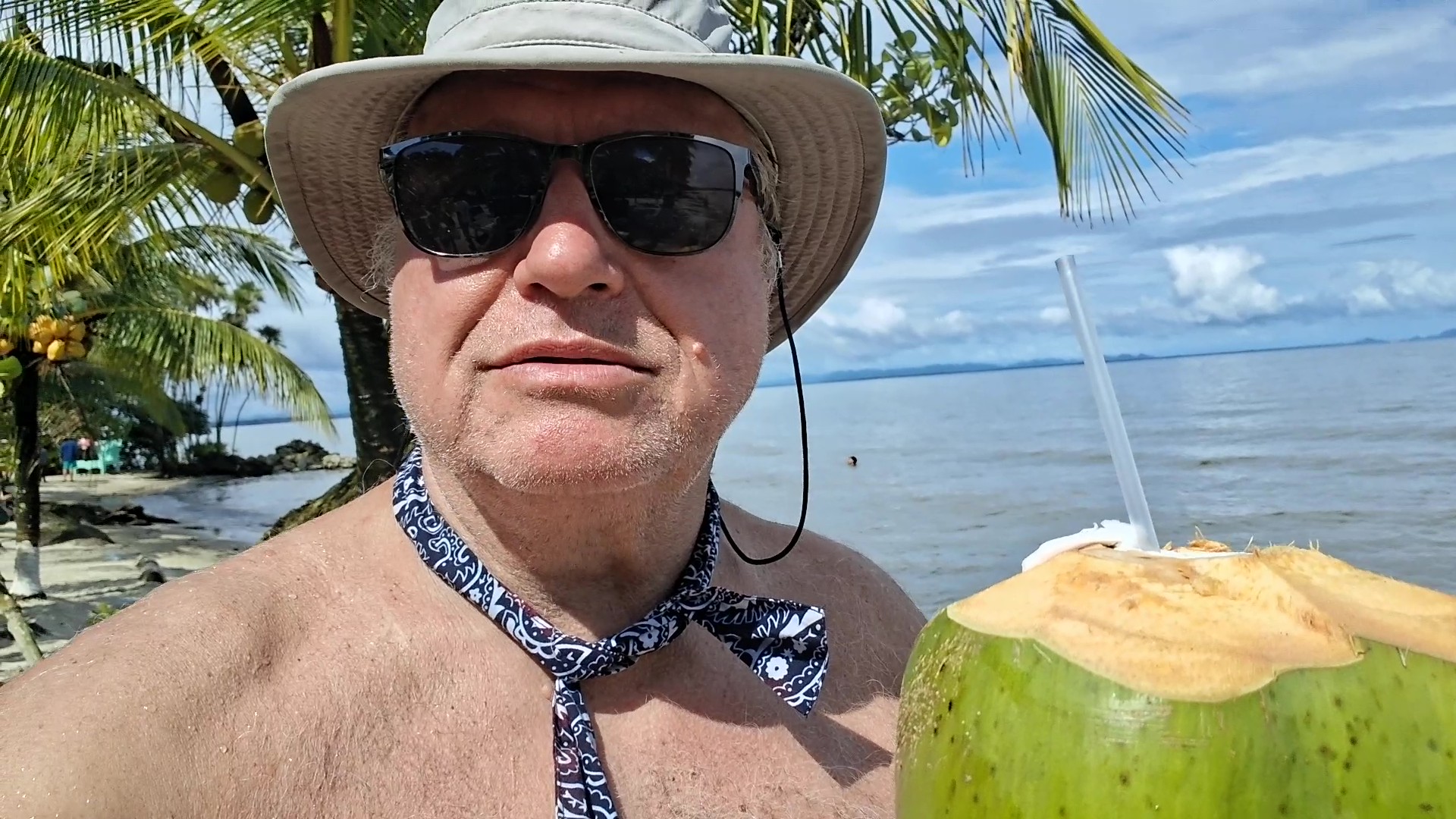
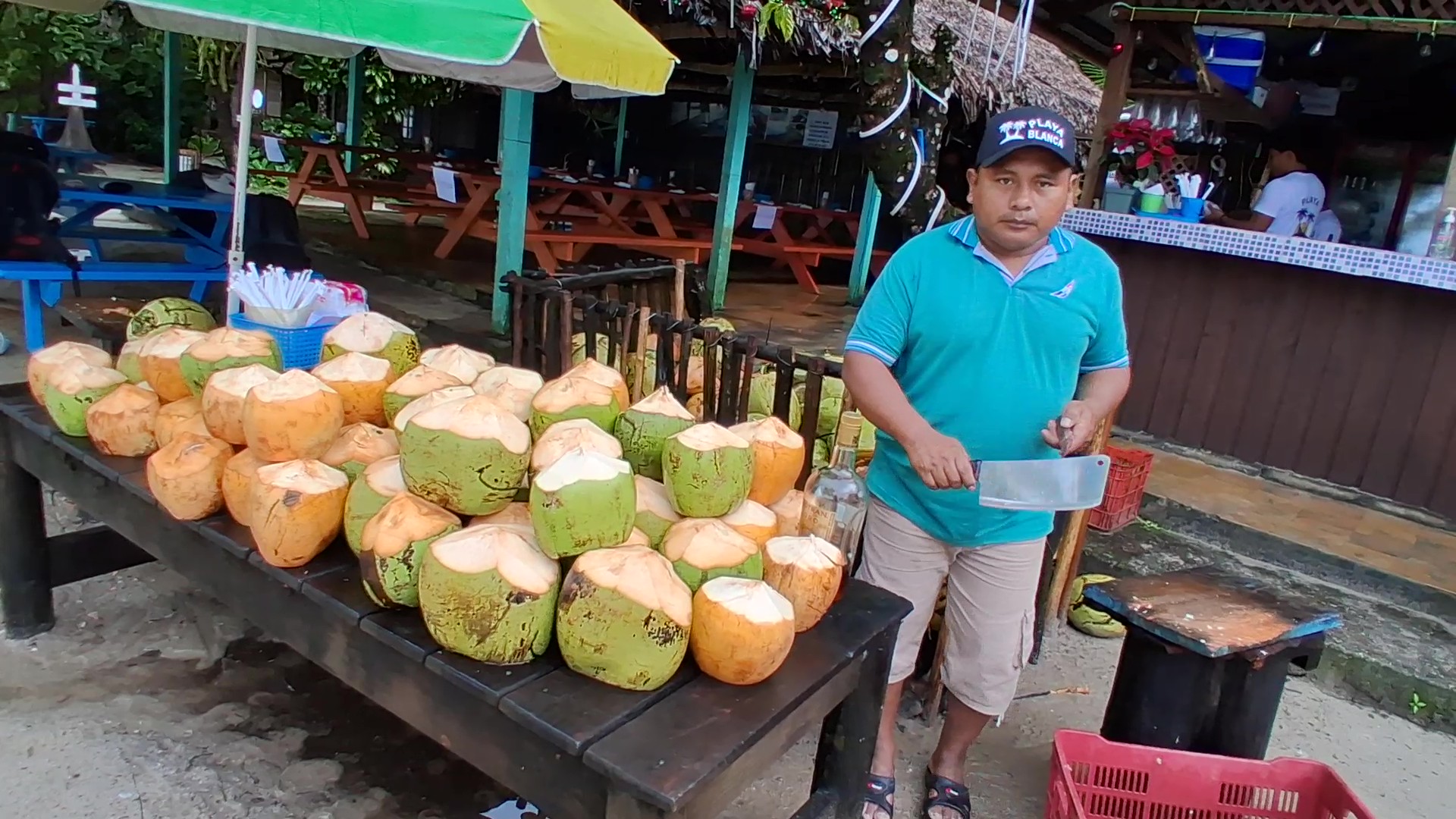
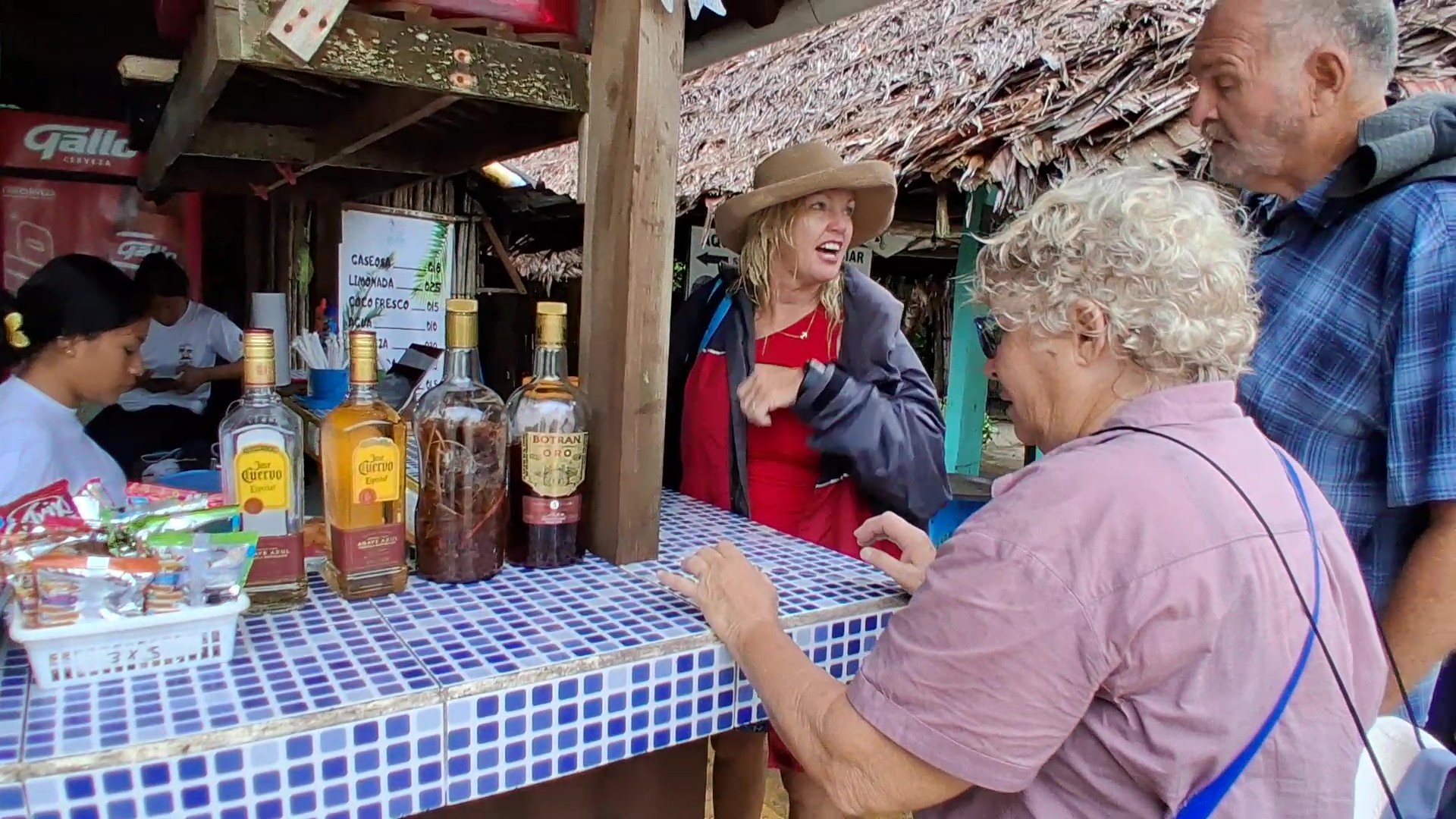
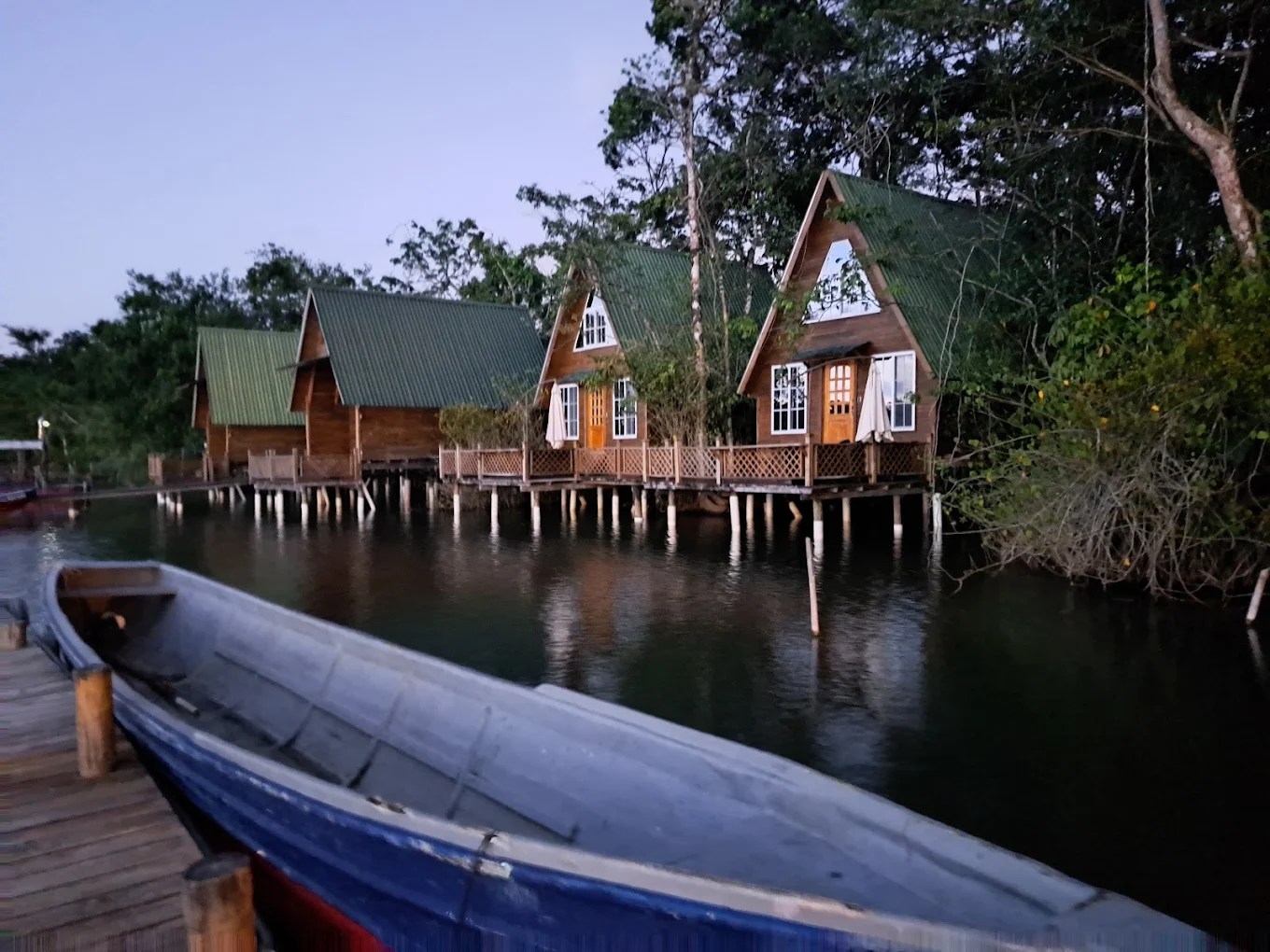
There were colorful tables and chairs organised under the shady spots with a giant swing strung between to lofty palms which permitted the occupant to swing out over the beach and water. The tiny resort boasted some interesting little cottages that were for rent. There are no roads into this part of the jungle, water access only. There was a fellow with a cleaver prepping drinking coconuts for sale. Purchasing a coconut I promptly added a few ounces of Guatemalan rum, just to sanitize the coconut water. Can’t be too carful!
Under partially cloudy skies, some ordered food while others dove into the sea while clutching margaritas or rum punches or “enhanced” drinking coconuts. It was here, in our group I met a nice family from North Carolina, Caleb, his wife Jackie and their 12-year-old daughter, Melissa. I took photos of Caleb pushing young Melissa in the giant swing. Great father, daughter moment which triggered a flood of memories with my own daughter, who is likewise named Melissa. As I videoed a touching moment, I had no idea that in just four days, this family would suffer a personal tragedy that would threaten their future cruising dreams.
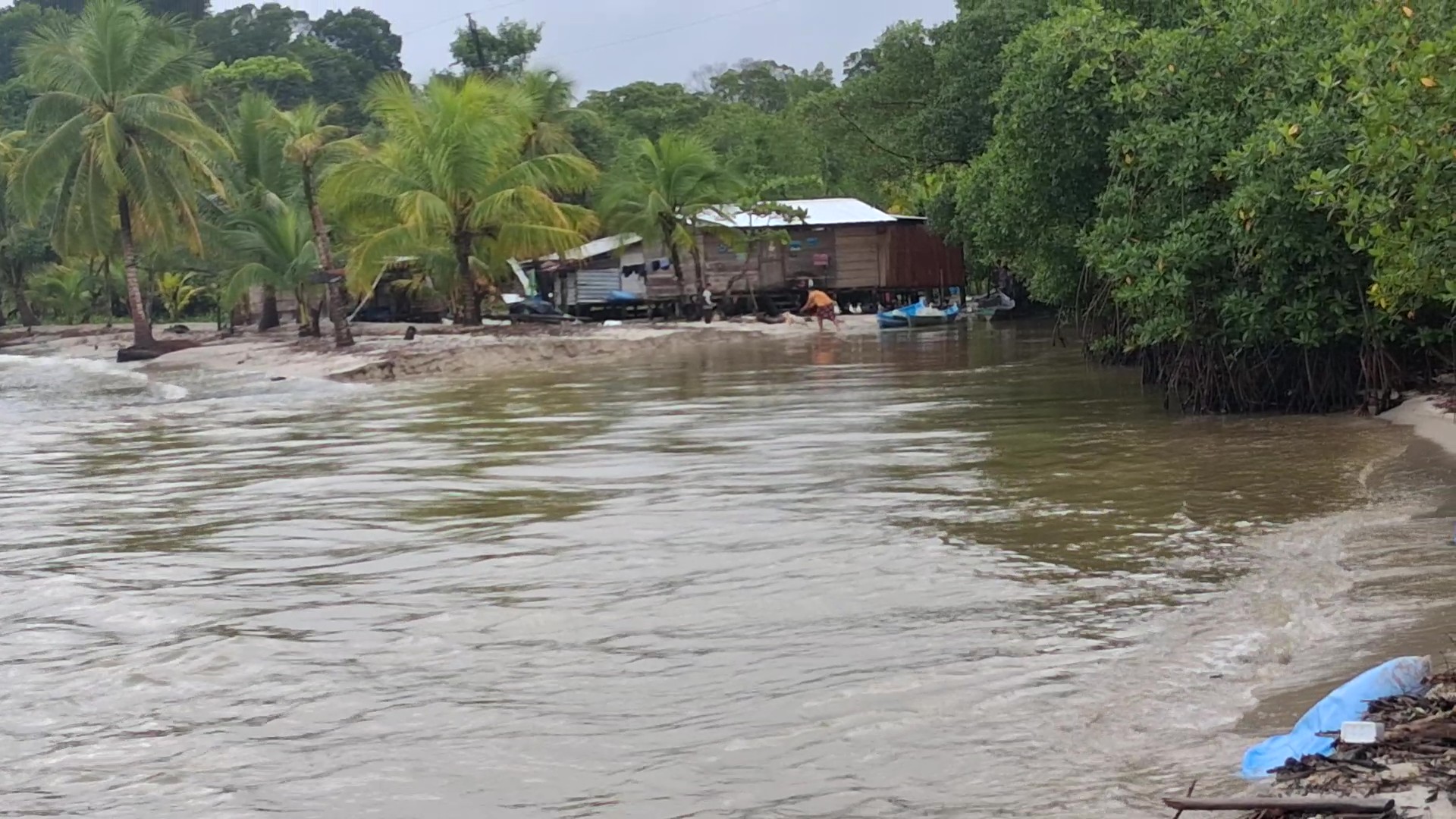
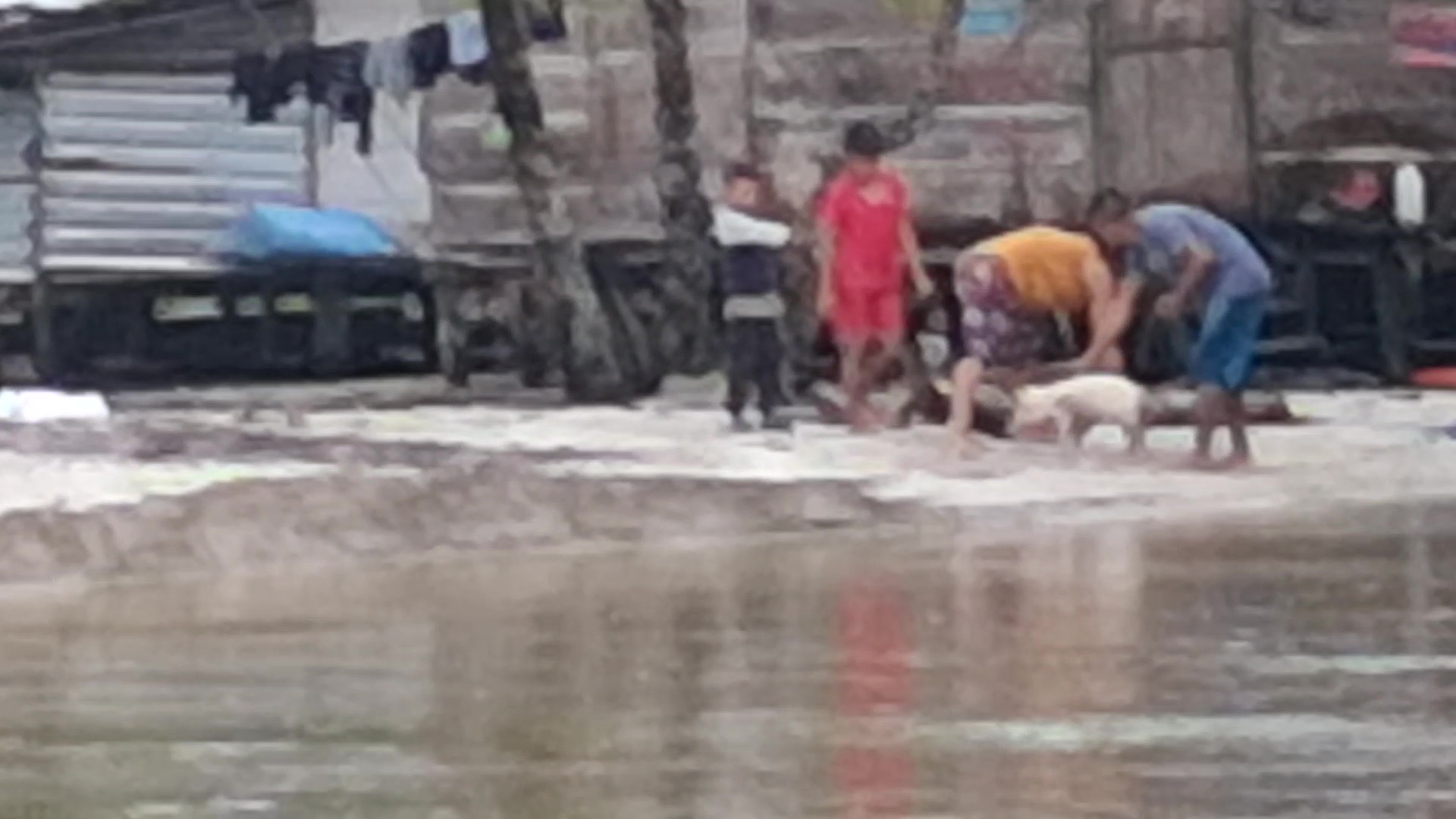
Clutching a reloaded coconut, I wandered down the beach where a small stream, now swollen with the recent rain, flowed into the sea. As I approached the bank, suddenly an awful screeching emanated from across the water. Wading up stream, a crudely build home with a tin roof came into view. On the sandy bank next to the home stood a man and a woman with two young children and they all appeared to be wrestling with a dog-size pig as it struggled on the end of rope leash. Amidst the high-pitched screams of protest from the pig, the animal was none too gently, dragged into the river where the family began to give it a bath. I videoed as the ruckus continued. I assumed either that the family pet was stinking up the house or it was being prepped for a diner invitation. I concluded the latter. With squeals still reverberating across the water, I wandered back to the resort and friends where I downed a couple of more rums while standing chest high in the surf.
Before noon, we departed to race over a choppy sea, past Livingston and onto another resort favored by the locals, Punta Del Palmas. The beach was not as nice as the first place but the beer was equally cold and rum abundant. The food proved to be quite good but we did not hang out long as JoAnne had a special surprise waiting for us back up river. It was again a wet and bouncy ride past Livingston and up into the gorge.
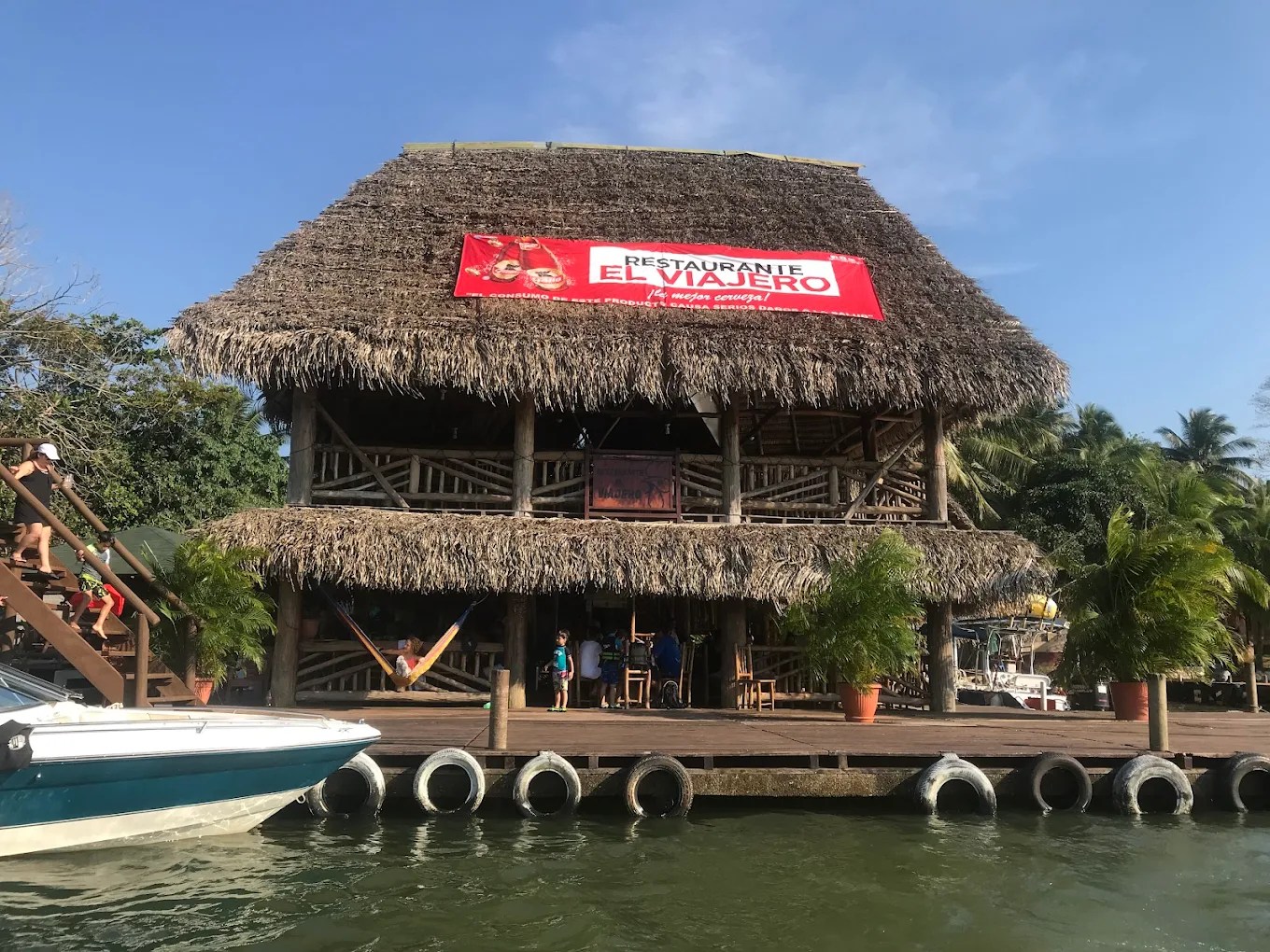
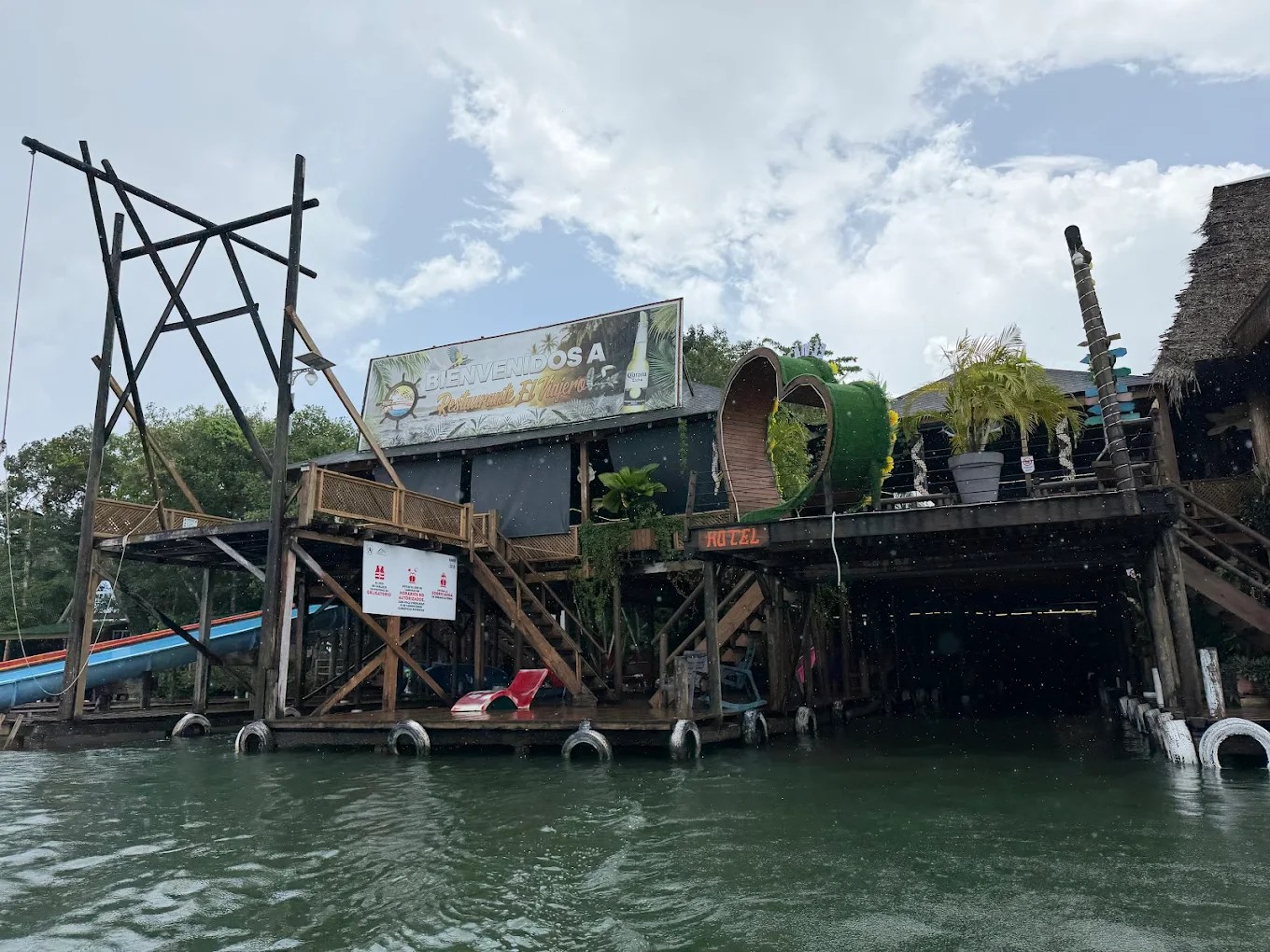
As we rounded a corner, a sprawling two story structure came into view. It was a grand restaurant with a pair of colourful waterslides that originated on the upper open deck, designed to dump its patrons into the river below. I assume crocodiles are few in this stretch of the river. Meal orders were placed and while waiting, gleefully, Melissa challenged Jackie to a race down the slides. The restaurant specialized in local dishes, as well as some western style burgers and fries. I had a prawn dish which proved quite tasty. We departed the restaurant as the sunset and only managed to get back to Nana Juana before dark. It was a great day and all had blast.
It was just a few days later as I was working on the deck of Maiatla in the boatyard when my rigging was shaken by a violent explosion. As I glanced about, I spotted a plume of black smoke rising up from between the neighboring boats. Stunned at first, I watch as flames were propelled into the sky. Shooting down below, I grabbed a fire extinguisher. By the time I arrived at the scene, several marina workers with water hoses and fire extinguishers where already battling a blaze aboard the catamaran, SV Little Bird. There was not much more I could do other than stand there. Moments later I saw Caleb come out of the washroom shack behind me and he was visible distraught. Understandable as it was his boat that was burning. I went over to see if I could help. That is when he told me that their propane stove had exploded when Jackie attempted to light it.
Jackie was now under a cold shower attempting to alleviate the pain from what would prove to be second degree burns over 60% of her body. principally her face and arms. The bomberos from town, the firemen and paramedics were quickly on scene attending to Jackie and the fire. As I held and extremely fearful Melissa, I attempted to comfort and reassure here that her mother would be fine. The fire was extinguished even before the ambulance departed for Morales and the hospital. Surprisingly, there was little damage to their home and boat and after just a couple days in the hospital, Jackie, resembling a mummy was released form the hospital and returned to the Marina. The family took a room at the hotel for a few days while Caleb cleaned up their boat. This event spurred me to check all my propane connections and hoses while making a metal note to upgrade my propane sniffer. We forget how quickly life can change.
There is a saying amongst Cruisers, “There are those who admit to having run aground, and then there are liars!”
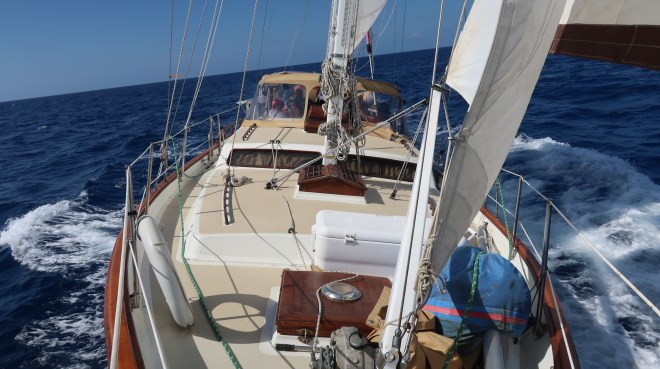
Maiatla under full sail
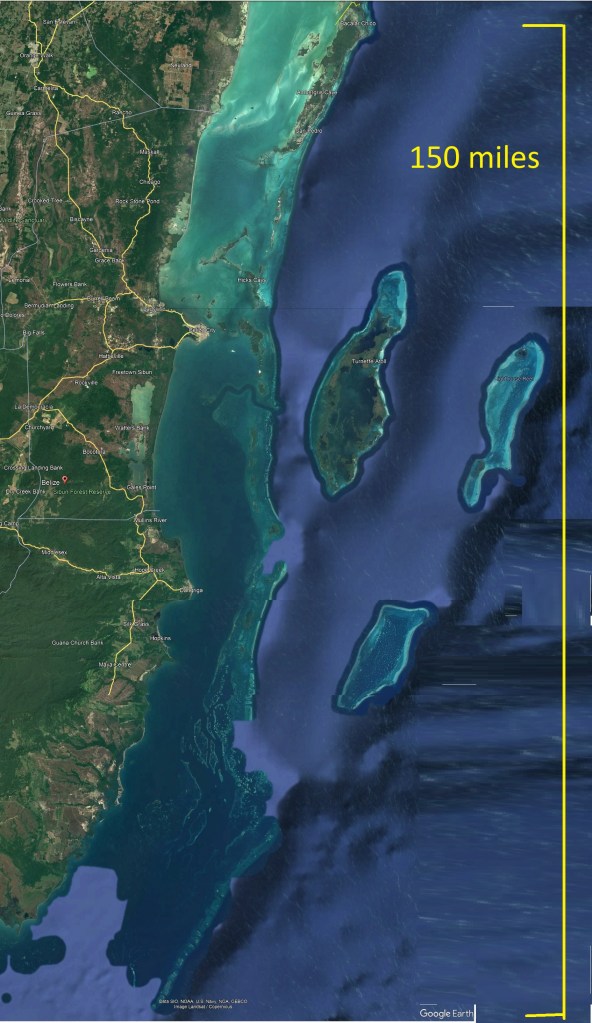
The offshore islands of Belize are a natural wonder to be sure with its hundreds of beautiful islands and white sand beaches. The water is blue-sky clear and is teeming with marine life and what makes it all possible is the coral barrier reef, the second longest in the world next to Australia’s Great Barrier Reef.
Belize, 150 mile long Barrier Reef and three coral atolls.
It’s an increasable diving and cruising ground for sailors with its countless anchorages and rustic beachside bars and restaurants. But despite all that it has to offer, this mecca has a dark, hidden side which come in the form of poorly charted reefs and shifting sand bars which often migrate during hurricane season.
Bommies, hundreds if not thousands of small coral heads are scattered about, often hidden by only a foot of water, a literal minefield in which one must navigate by sight if you wish to pass.
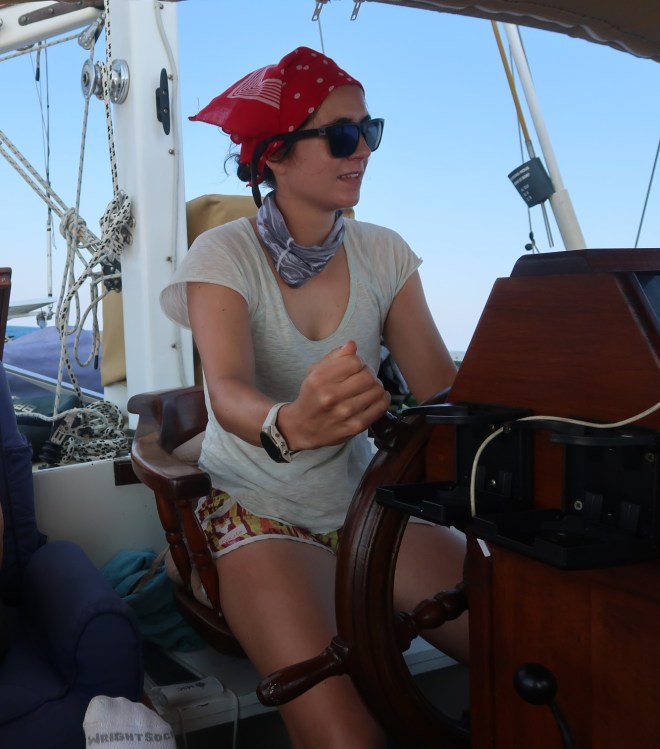
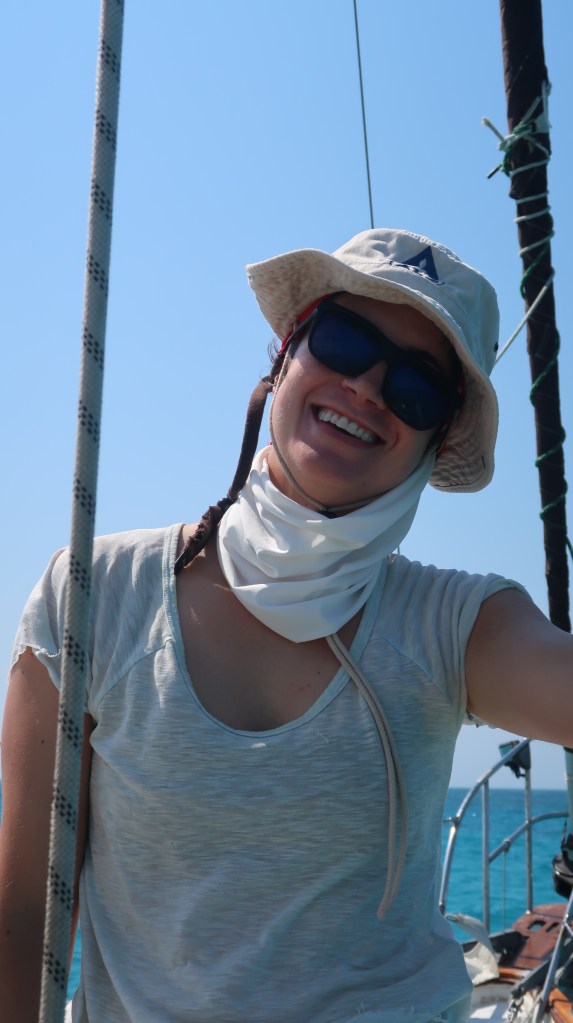
Stephanie, on the helm.
Maiatla was tied to our friend’s dock in Placentia Belize, our crew of Marina and Adriane had departed the boat and were winging their way back to the great white north; not a place I want to be in March. Stephanie, Adriane’s daughter and my sailing apprentice, had later flights to take her back to work in the hills of Mexico where she was employed as a Geologist. We had three more days before she had to depart so we decide to head up the coast to find a place to scuba dive. After diving the Great Blue Hole the week previous, most anywhere would likely be a disappointment, but we were game to try.
We cast off early and once clear of the Placentia cut we hoisted the sails and made our way over to Lark Cay where we hoped to find a spot to dive. We had a grand light air sail as we tacked our way up wind but when closing in upon the Lark Cay, the wind turned fickle so down came the sails as the motored was fired up.
Nestled amongst a handful of Mangrove islands we dropped the hook and prepared to dive as we found a likely looking spot. After donning our gear we dove to find bottom at 70 feet. We worked our way into the shallows towards the reef. By all accounts, it was a dismal lunar seascape with scattered coral bits and few fish. The highlight was spotting a lone lobster under a coral head.
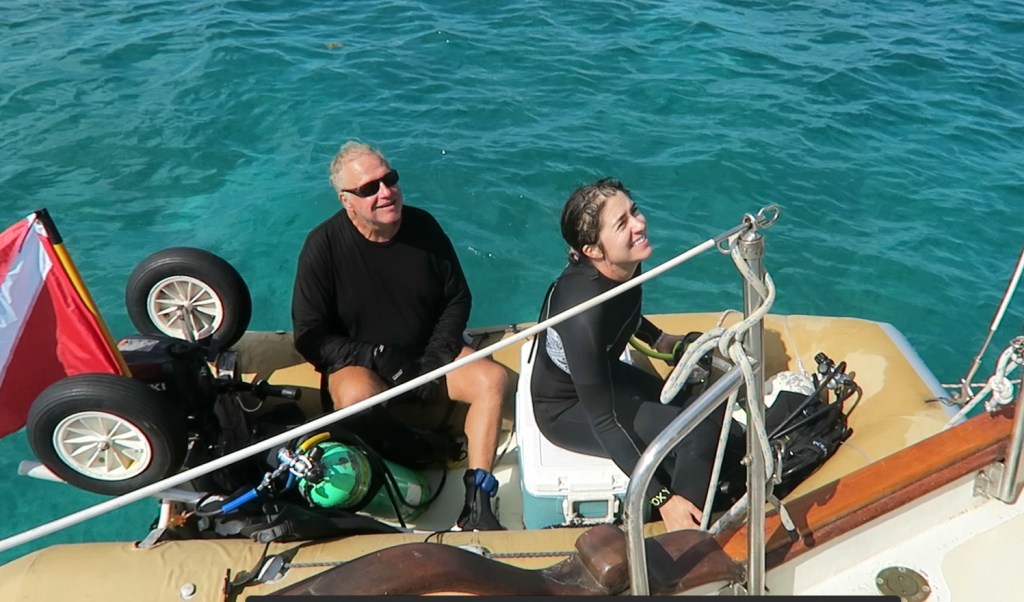
Heading out for a dive
I made an attempt to invite the little guy for dinner but he declined my invitation. Back aboard Maiatla, Stephanie seemed to have enjoyed the dive despite being less than remarkable. I was still hopeful of showing her something spectacular so we wasted no time in pulling anchor and headed north.
The wind had filled back in so under the headsail and mizzen, Jib and Jigger as we call it, we had another great sail. As we tacked up wind we came upon one of the many islands in the vicinity. Crawl Island is a ragged shaped mangrove covered island.
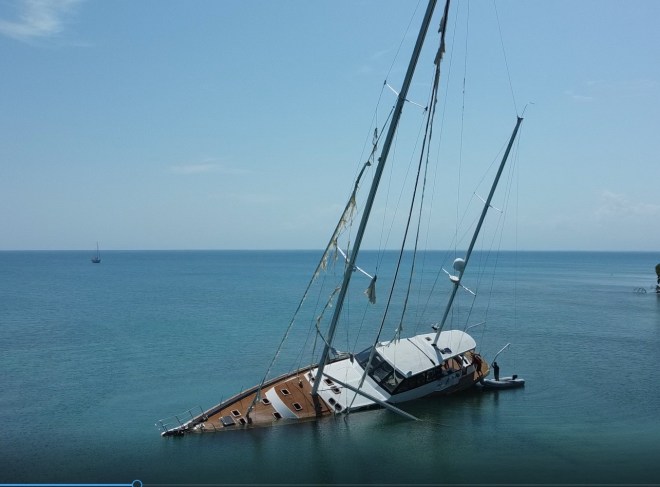
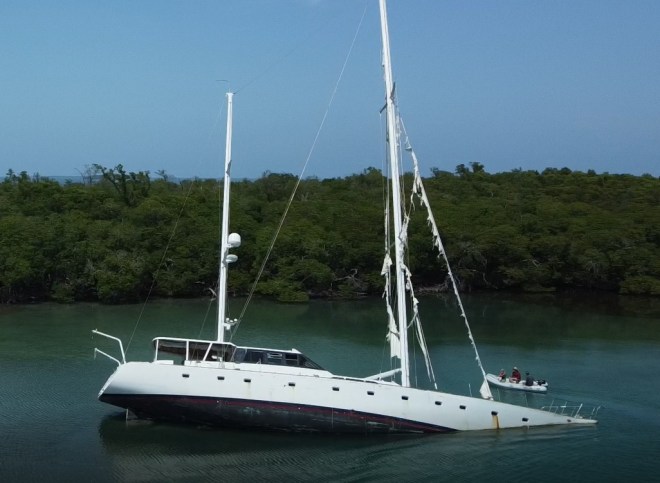
On its west end there were a few thatched roof houses and what looked like a small resort. But what caught my eye was what appeared to be a very large sailboat, perhaps 90 feet long or more. As we closed in on the island and through the binoculars, we saw what appeared to be a large sailing vessel in distress, canted over on a sharp angle with tattered sails flapping in the breeze. It was a shipwreck and a recent one at that.
The Super yacht MAS TAZ with Maiatla anchored in the back ground on a later visit.
“Wow that looks so interesting,” Stephanie said as she studied the wreck through the binoculars. “I’m going to get my big camera” she said as she dropped below. We sailed in as close as we dared before veering westward around the tip of the island. My research sometime later would reveal that the wreck before us was the super yacht, Mas Tas, out of Texas. 28 meters long and had sunk here in 2022.
Sails in tatters, a forlorn looking vessel.
We were still speculating on the ships likely demise when I suddenly noticed the water shoaling, and fast. The bottom had risen from over 50 feet up to less than 10feet in a couple of boat lengths. A quick check of the Navionics chart indicted that it should still be over 50 feet of water beneath us. Charts show the theoretical, the depth sounder shows reality.
Abruptly we made a course change to head beck the way we had come. After several minutes I attempted to resume our original heading but almost immediately we found ourselves in even shallower water with less than a couple of feet below Maiatla’ s keel.
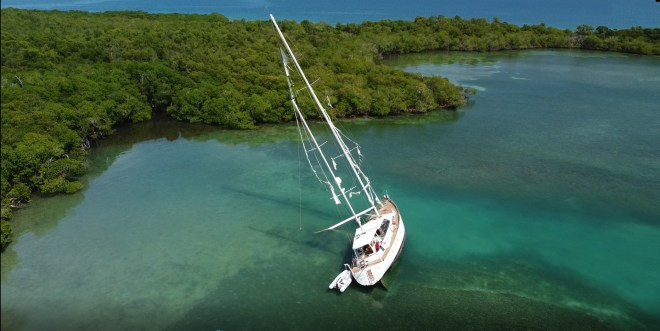
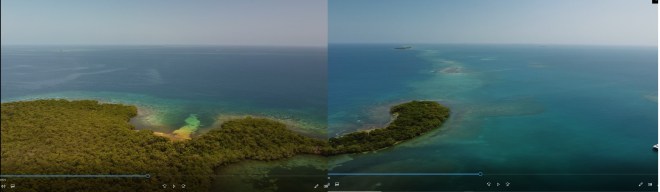
Crawl island- Maiatla drone shot shows the dangerous banks that extends to the east.
We made another abrupt course change but this time we swung well wide of the western end of the island. Apparently there is a shallow bank that extends outward from the island for almost a mile and surprisingly the charts failed to mention this.
“Wow that was scary”, Stephanie said once we were clear of the bank. “That’s probably why that ship was wrecked,” she then added, “do you think seeing it was a bad omen?”
I’m not the superstitious type so I quickly dismissed the notion, but perhaps too quickly. As the wreck fell behind the point, we sailed onward to our planned anchorage for the night. It was getting late, about 3 o’clock and I suggested that by the time we get in it would be too late for another dive, but we could try in the morning.
Our destination was Northwest Cay with its almost entirely landlocked lagoon. A perfect anchorage as it was surrounded by islets and reefs. It would be a bit tricky but once in we would be safe from the fiercest of night gales. Still under jib and jigger with Stephanie at the helm, I handed the sheets as we tacked for the entrance. With one eye always trained on the chart plotter we closed in on a tiny island. At about 500 foot distance, we initiated a tack which would send us back across the channel. No sooner had I sheeted in the big headsail, Stephanie called out. “Andy I see the bottom!”
As I glanced over the side I was horrified to see weed patches just below the surface. Before we could react, Maiatla ground to a dead stop. Quickly I let loose the jib sheet and furled the sail. I ran the length of Maiatla to see how much trouble we were in. The bank appeared to consist of soft sand and weed, and it was shallow. I estimated that up to 2 feet of Maiatla’s great keel was buried in the bank. I then called on Stephanie to start the engine and give it full reveres. After a few minutes I called out, “I think we are moving” Stephanie’s response after looking over the side was, “I don’t think so Andy, I’m still looking at the same patch of weeds.” Ok, it may have been wishful thinking on my part. “Stephanie is the tide rising or falling? She checked her watch and I did not like her answer.
The realization that we were in quite a predicament quickly set it. We were fast on a bank, a long way from any potential help and the sun was beginning to set and the tide was falling. On the bright side, the bottom was soft, no coral and the boat was not damaged and the wind and waves was dropping for the night.
Stephanie, who had never experienced something like this was scared, I could tell by the tenor of her voice. I did my best to relieve some of her anxiety by stating that neither us nor the boat is in any real danger and that we would get her off.
She asked how and half-jokingly I said. “We can always wave down a passing pang and ask for a tow.” My remark did not help, in fact I think it did the opposite in giving my apprentice a sense of hopelessness in us helping ourselves.
Looking off the stern I could see the dark blue of deep water and leading back to it was the grove Maiatla excavated when we plowed into the bank. A sight that brought me hope.
We would have to kedge ourselves off. “Kedging off a bank” refers to the nautical technique of using a kedge anchor and line to pull a grounded or stuck vessel off a sandbank or other obstruction by hauling on the anchor cable. Decades ago, I had anticipated such an event and had worked out a plan and fortunately, I have never needed to perform the maneuver, until now.
With Stephanie’s help, I loaded the big Danforth that I use as a stern anchor, into the dinghy. We dug the spare anchor road and chain out of the locker and I went about setting the anchor as far off the stern as the length would permit.
Back aboard, I wrapped the rode around the portside primary winch and heaved the line tight. As Stephanie throttled up in reverse, I cranked on the winch. With the anchor rode bar-tight as it attempted to pull us astern and engine at full throttle, it quickly became obvious that we were not moving. “What now?” Stephanie asked dejectedly as she throttled down.
“More power is what we need,” I said. With that, I went forward to release the bow anchor. Back in the dinghy, Stephanie fed me chain as I drove the big CQR anchor out into deep water off the stern.
Once again I cranked on the winch as Stephanie worked the throttle and the anchor windless button on the consol. The first few pushes of the button did little more than stall the 1000 lbs. anchor windless. But after several attempts, I noticed I was finally able to crank in a foot or two of the stern anchor. The bow winch would retract a few feet of chain before stalling once more. We repeated the process over about 20 minutes. Suddenly the bow began to swing around as the boat made some sternway. The sky had fallen completely dark by the time Maiatla slid off of the bank and back into deep water. Stephanie emitted a cheerful laugh. We were off, but we still had a lot of work ahead of us.
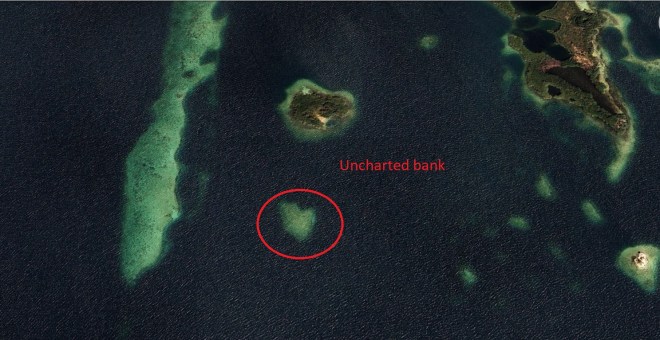
Clearly visible from the air, the bank was uncharted on my Navionics program.
Night had engulfed the seascape with the stars filling the moonless sky. Stephanie was concerned because were still preciously near the bank. “Don’t worry,” I offered, “we have two big anchors out in deep water and we are fine”. In fact, it took over an hour to retrieve both the anchors as they were so well buried into the bottom that neither wanted to come up. As the last anchor came aboard, Stephanie skillfully steered Maiatla on a reciprocal course, following original path in.
We took a wide swing around the western end of the island then turned for shore, creeping in under the guidance of the chart plotter and radar, (again, one theoretical the other actual) until finding 30 feet of water where we dropped the anchor for the night. With the hook down we poured a couple of stiff drinks to celebrate.
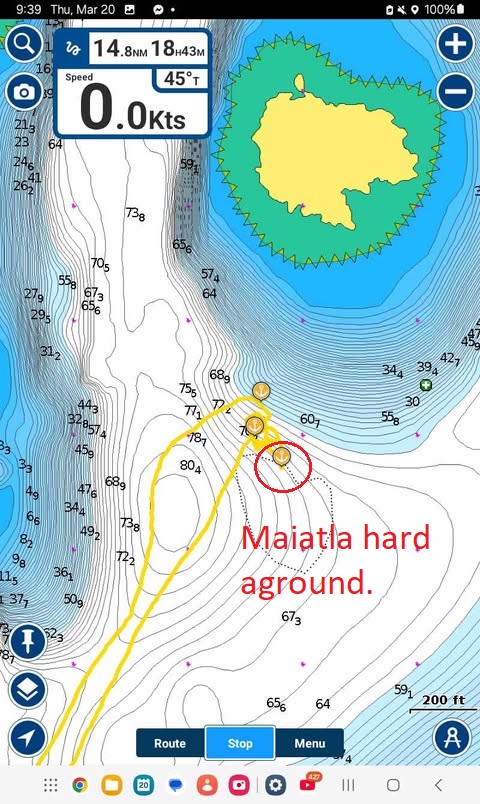
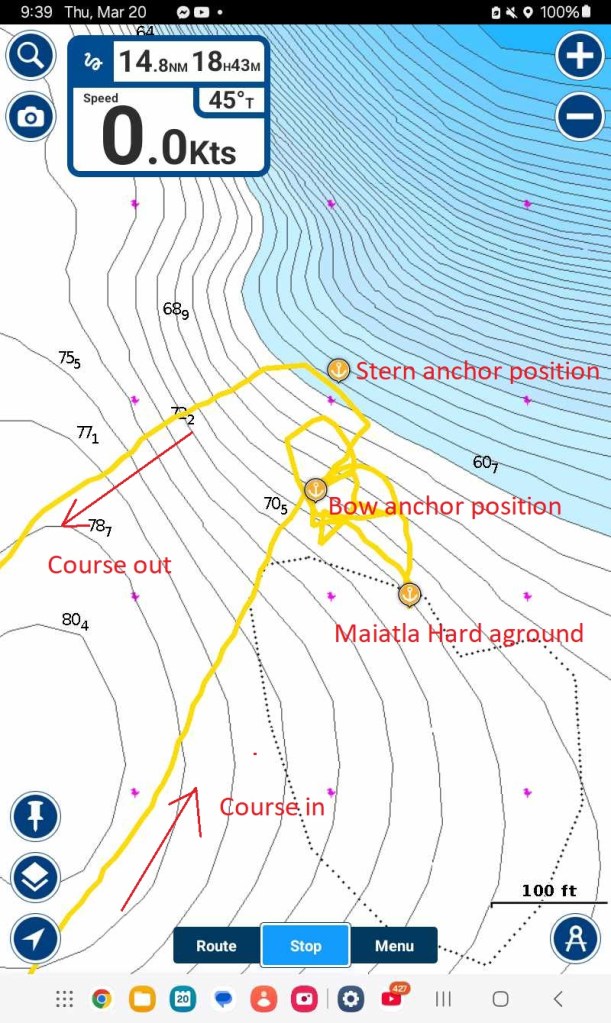
I later examined the recorded chart plotter and I was amazed to see that at the very spot where we had run hard aground, the plotter claimed that we still had 70 feet of water under and all around us. The only indication of an issues was a tiny heart shaped dashed line which was hardly noticeable. Placing the cursor atop the line, only a single word appeared which read “Obstruction.” I have seen many such dashed lines on the charts here but none have ever represented a problem before. In Belize, the prudent mariner must view nautical charts with some degree of suspicion and whenever possible, travel with the sun high and behind you with a good lookout on the bow to avoid such, “Obstruction.”
Was sighting the wreck a bad omen? Perhaps. But if so, perhaps the massive shooting star that we momentarily paused to witness during our struggle, was a good omen, a sign that all would be well.
A sailor is born!.
The apprentice, under a baptism of fire, passed her final exam.
The following is a post made by my crew and friend, Adrian Polo, who wrote about her recent adventure aboard Maiatla. I thought she captured the essence of the voyage well and with her permission I reprinted here. Andrew Gunson
March 30, 2025
Exhilarating and terrifying are the two words that come to mind when asked about our sailing trip around Belize.
How else can I describe the feeling as my sister Marina and I sat on the deck shivering as Stephanie (first mate-in-training and my daughter) and Andy (our interpret captain and friend and owner of the Maiatla II, a 50′ sailboat) dove into the abys known as The Great Blue Hole, located in the middle of nowhere. We knew we were powerless to save them if something went wrong. There was nobody around, and neither of us knew how to dive. We had to trust them and trust the safety they imposed on themselves. “What time is it?” I kept asking Marina. Her answer was always the same: “Adriane relax. You cannot make the time go faster”. This went on for 40 minutes, as that was their dive time. At 36.6 m(120 ft) below, they can only stay at that depth for 5 minutes, then ascent halfway and wait 15 minutes to decompress before surfacing. Minutes dragged by, and I’m sure time ticked much slower for us.
The Great Blue Hole (GBH as the cool folks call it) )is a National Monument, a UNESCO World Heritage site in Belize, home to many sea creatures like sharks and sea turtles. Did I mention sharks? Yes, and not the friendly reef sharks and nurse sharks, but also hammerheads, bull sharks, and black tip sharks. This sinkhole lies in the center of Lighthouse Reef. The hole is 318 m (1,043 ft) across and 124 m (407 ft) deep.
It was formed during the last Ice Age, about 14,000 years ago. The cave flooded and collapsed. Amazing stalactites hang from the cave, and abundant sea life, including lobsters. (No crab hunting here; they are protected in the hole)
In 2018, a crew from Aquatica Submarines found two human bodies. It is a dangerous place and not a novice dive. As Marina and I held our breath, we saw two heads pop up. We breathed a sigh of relief. They made it! And now, the bragging rights are theirs. They are the Great Blue Holers, and Marina and I are the Great Blue hole rimmers (we snorkeled around the hole). But we do have to work on a better name for us.
This called for a drink. We mixed up a cocktail we named after Maiatla (after the sailboat). Here is the recipe: 1 shot of coconut rum, 1 shot of pineapple juice,1 shot of coconut water, and a squeeze of lemon or lemon juice.
Marina and I were all ears as they recounted their dive. Did I mention we had the whole place to ourselves?
Under anchor at the edge of the Great Blue Hole in Belize
Heading for the Great Blue Hole for a dive
How did we get there? Let me start at the beginning.
Andrew W. Gunson (Andy), a friend of Marina’s, owns a sailboat called Maiatla II, in which he and his wife Janet have been sailing to different parts of the world for decades. Marina sailed with them on a few legs, including the Galapagos. For this leg, he invited her, her sister (me) and my daughter Stephanie. We had planned to join him in December, but Andy fell on drydock and broke his ankle. So, we postponed the trip for a few months while he healed. This is how we found ourselves headed to Belize on March 4th. We flew into Belize City and got a hotel for the night right by the water. That night, we treated ourselves to a fabulous dinner and discovered Belize’s national drink…the Panty Ripper! Embarrassing to order, but the reward of that smooth Caribbean coconut rum adorned with fruit juices goes down so smoothly. Too smooth. A few drinks later, we took a cab instead of a 3-block walk. Hmm…it must have been the heat!
Trying the national drink of Belize, the Panty Ripper.Sampling the local fare
The next day, we visited the local museum to learn about the history of Belize.
Once a thriving Mayan civilization, Belize became a British colony in 1840. Then, after a century, it finally got its independence in 1981. The language spoken here is English, and the currency is Belizean dollar, which is traded at 2:1 ratio to the US dollar, which is used here most of the time. The people are friendly, and the country is a tropical paradise.
We met up with Andy at the grocery store, where we stocked up on supplies for our voyage, before taking a taxi to pick up Stephanie at the hotel. We were not surprised to find her at the bar having a “panty ripper”.
When we finally arrived at the Old Belize’s Kukumba Marina, we got our first glimpse of the boat moored by the dock. She is a beautiful ketch just beckoning us to come aboard. We did, and after unloading all our luggage, we sat on the deck full of enthusiasm as our captain laid out safety drills and the sailing plans, which, I might add, are fluid, as a sailboat is weather and wind dependent.
In the morning, Andy took us for a walk to show us the Kukumba Marina’s amenities and for a quick dip into the saltwater pool before the high tide signaled our departure time. Well, you don’t show someone a seawater clear pool with slides and swings and lawn chairs and concession stands with cold beer. That is how we found ourselves drinking beer at 9:00 am, sunning and swimming and burning. Yes, I said burning. Since we missed our departure time, we just surrendered to the sun. It was a big mistake which would prove to cost us a lot more than burned skin. Naturally, we felt nothing until that evening. Lesson no. 1:” Always use sunscreen even if it is a quick dip.”
As evening came, we slathered each other with gallons of aloe vera and set on the deck, cooling. It was cool and breezy. Andy told us to use bug spray. And did we listen? No. So we became dinner to no-see-ums and other flying insects. Lesson no. 2. “When on the dock or by trees, use bug spray.”
Ahh that saltwater pool….Beer anyone?
We left on high tide the next morning. Beautiful, calm seas until we got out of the bay. Then the seas became confused, rough, the wind blew fierce. A rude awakening for me. ‘This is no cruise ship’ I thought as I was tossed around like lettuce in a salad spinner. I crawled below deck, holding on to everything imaginable, as I tried to dig out my gravel ginger chews and tried to keep them down. Then I remember an old saying from a sailor friend, “When you anticipate the motion, you will never get seasick!” Lesson 3: “Stay above deck and watch the waves.”
Trimming the sails
After 5 hours of this, we reached Caye Caulker. It is called a Caye because it is formed on top of a coral reef made by sand and coral debris. We threw an anchor in the shallow waters quite a way from the shore. Andy, to make sure the anchor was well positioned, jumped off the boat like some kind of Sea Tarzan and dove deep to check it. He did this at every anchor site, in the buff. They don’t call him “the naked Canadian” for nothing. Satisfied the anchor was good, he came aboard for a celebratory beer in the cockpit in which we all partook. We did this at every destination. Now to launch the dingy and motor to shore.
Caye Caulker is a small island split by a small channel called The Split. The south part has restaurants and bars and roads that are for bicycles and golf carts only. Around 3000 people are living on it. There are beautiful sandy beaches, and in the bay, the locals feed stingrays every evening so people can go and pat them and watch the tropical sunsets. The north part of the island is a Marine Reserve featuring dive sites on the Barrier Reef. That is where Andy and Stephanie went via dingy for a dive, while Marina and I snorkeled around the anchor point looking for manatees and, of course, sipping Maiatlas on Maiatla. That evening, we enjoyed a grand tour of the island (30 minutes) and dined on some local offerings at Swing Restaurant.
On anchor at Caye CaukerThe island is literally split in two.On Caye Caulker all the roads are sandyNight ritual on the island: feeding and playing with stingrays.Enjoying a beautiful Caribbean sunset
In the morning, we were all ready to leave, but the motor did not start. Andy fiddled with it for a while and went to shore trying to find parts. There were no parts available, so he would have to take the ferry back to Belize City the next day for parts. We had no working motor. Yes, we were worried. If a strong wind blew in the wrong direction, we could have found ourselves smashed to the shore, since our motor did not work.
Bad luck. Andy tried to leave in the morning only to find out it was Election day. Everything closed! We would have to wait until the next day.
That night, our fears came to fruition, as a strong, fierce storm came in blowing and howling towards the shore, as we sat on anchor, helpless. As the night approached, we were worried the anchor would drag. Andy had set an alarm, but regardless, we all poked our heads out throughout the night. It was a sleepless night, but the anchor held. We were okay.
The next day, while still dark and blowing, Stephanie motored Andy via dingy to shore, where he walked to the other side of the island to catch the earliest ferry at 6:00 am. Marina and I sat on the deck in the dark with binoculars, anxiously watching for Stephanie’s return. We were worried because it was still dark, windy, and the outdoor motor was finicky and had died on us the night before. Andy wanted us to have the dingy in case something happened, and we had to leave the boat. (Note to Andy: We would never leave the boat). That’s where the maitalas where after all.
Finally, on the horizon, we saw Stephanie in the dingy heading back with some Jack Fry’s she’s picked up for us to share. They were still warm! Thank you, Stephanie. In the afternoon, the wind died down, and the sun came out. We motored back to get Andy, and a few hours later, with a very dirty and tired Andy, we were ready to depart. Andy jumped in the water for an ocean dip as we raised the anchor and motored out of harbour.
Captain Andy teaching Stephanie navigation while Marina chillsAdriane enjoying the good life
We raised our full complement of sails, as the winds rocked us along, gently caressed the sailboat and bathing us in gorgeous colours of crimson, indigo, peach and lavender.
Stephanie (aka The Young Apprentice) quickly learned her way around the sailboat, and she looked at home raising and lowering sails and helping Andy steer the boat, while Marina and I looked at home lounging on the deck, giving way to wind and sun.
Stephanie at the helm
That night, we anchored in the protected bay of Drowned Caye’s mangroves. We were the only boat there, so we slept with fully open hatches and were treated to a symphony of chirping and clicking. We later found that not all sounds are friendly as a few flying insects made it inside the boat for an evening meal (us).
Captain Andy adjusting the courseStephanie, very happy to be here
In the morning, we counted new bites, mosquitos or no-see-um? We never heard them, so we take it they were no-see-ums. With sunrise comes a new day, the bugs disappear, the wind picks up, our spirits pick up, and our sails rise, and off we go.
We reached Turneffe Atoll by midday. Turneffe Atoll is the largest atoll in Belize and a designated marine reserve. It is home to turtles, sharks, reef fish, lobsters (No, you cannot eat them, they are in a nature reserve) and rays. It is called an atoll because it is a ring-shaped island formed of coral that surrounds a lagoon. We anchored in 2 feet of water below our keel. The reef was right there. We could see it and hear the waves breaking over it. Andy launched the dingy, and he and Stephanie went for a scuba dive about 10 minutes from the boat while Marina and I made dinner. When they got back, Andy took us into shallow water where we snorkeled. We saw the most magnificent coral of all shapes and sizes and textures and all the fish that call it home. And then we saw a shark. But it was a reef shark, and they are harmless. More scared of us. It was one of the best snorkeling experiences I have had in my life. The diversity of coral was grand.
A sailboat came and anchored right beside us. They were from Quebec. The crew dove in for a snorkel. A gentle breeze lullabied us to sleep after a freshly caught tuna dinner and a few Maiatlas on Maiatla.
Turneffe Atoll. Look how close the reef wall is.
Refreshed from a morning swim, we hoisted the anchor and set sail to Halfmoon Caye to see a park ranger about getting a permit to dive the Great Blue Hole. As we approached Halfmoon Caye, which is in the Lighthouse Reef, my heart jumped and rejoiced. I have never in my life seen such colour of ocean. It was transparent. So, clear you can see the bottom. Because it was so shallow, we had to anchor way out and take the dingy to shore.
The Polo sisters, Adriane and Marina, in their duffus hats. Note the sun burn blisters on Marina’s lips.Anchored at one of the most beautiful places on earth.Our dingy tied to a dock at Halfmoon CayeThis island looks like its from South Pacific!Admiring Halfmoon Caye
Halfmoon Caye got its name from its shape. It looks like a crescent moon. The Caye is a national monument. The first marine conservation area in Belize, it measures 45 acres in size and is home to about 4,000 red-footed boobies. This island reminded me of the South Pacific. We were the only tourists there. From the first step onto the island, I felt the magic of the place. Something out of prehistoric times it reminds me at every step that we are just a miniscule part of a bigger story. Hundreds of hermit crabs scurried beneath our feet as we traversed, keeping an eye on the moving floor. Andy and Stephanie walked around the island as Marina and I stared into the ocean and absorbed its natural beauty.
“Come, I know a spot,” Andy’s voice broke the silence. We followed, and he showed us a small beach perfect for a dip. All three of them jumped in the water while I contemplated the meaning of life, staring into the ocean. Listening, opening to it, letting its energy fill my soul… “Shark!” yelled Stephanie, breaking my trance. I jumped up and yelled, “Everyone out of the water!” as the shark beelined for Marina. Andy jumped in front, but it was a false alarm. It was just a frightened nurse shark.
Nature walkA male frigate bird inflating his pouchAndy holding up a piece of coral that washed to the beach.
A tropical isle sunset
After they had toweled off, we hiked up to the Bird Observatory. From the platform, we could see the birds’ nesting. There were lots of Frigate birds, with the males inflating their red throat pouch to attract the females. It looked dramatic, and we were captivated by the sight. We also spotted the rare Red-Footed Boobies.
That night, as we anchored by the coral reef wall, it was quiet. Marina slept on deck. We all got up multiple times at night to see the full moon and the lunar eclipse. The moon looked huge and outwardly.
The next day, we fired up the motor as we headed to the Great Blue Hole where Andy and Stephanie would dive. It has been on Andy’s bucket list for decades. Andy is an accomplished diver, and Stephanie has her PADI and did a few deeper dives as a novice. They were both excited and ready. They dove to 120 feet, and when they came out, they were forever changed and bonded by the mutual experience. Down there, all you have is each other, and you trust them with your life. A video of the dive is to come.
We spent the night tied to a buoy that the diving charters use, right at the edge of the hole with coral reef all around us. It was windy, and I did not get much sleep. As dawn broke, I was up first making breakfast, as they launched the drone to get some aerial videos. A coast guard boat came beside us and asked if we were okay and to see our tickets. They were impressed to see us there, wondering how we got a boat of that size through the reef?”. Depth sounder, careful navigation by our skilled captain and Stephanie at the bow calling out for obstacles!
Stephanie on a lookout for bommiesThe different colors of ocean by the Great Blue HoleMarina and Adriane dressed up for the occasion
The return trip was easier as we motored back through the coral reef, following our trail on the chart plotter. That took an hour. Once out and in the open ocean, we raised the sails, put on some music and enjoyed rolling along the six-foot swells. Yes, they were big, but not scary. The boat pitched and rolled and glided along the waves. We were happy and relaxed and enjoyed every minute of the five-hour sail to the southern tip of Tobacco Caye. There is where we discovered Reef’s End Restaurant right on the water. This small Caye, which is a resort, houses Reef’s End, a bar. They also offer all inclusive stays at their eco-friendly cabanas. Run on a solar system that provides more than 95% of power, the water they use for showers and basins is rainwater from their roofs and stored in tanks.
Reef’s EndStephanie posing after a grand mealAt Reefs EndLand Shark…yea, and not just the beer
After a few drinks and watching the sun set, we were getting hungry. We tried to order dinner, but because it is a small place they only make enough for their guests and those who reserve ahead of time. Oh well, we were resigned to fill up on drinks when a couple from England told us their captain wouldn’t be joining them and there might be a spare dinner. We jumped at the opportunity and asked the lady in charge if we could buy it. She agreed, and luckily, there was another no-show, so we were able to buy two dinners with desserts that we shared amongst the four of us. We were very thankful and gobbled everything. We even licked the bones of the fish and ate the fried fish tail. Yumm.
With full bellies, we dinghied back to the boat under the moonlight. But guess what? The motor died five feet from the boat. Out of gas. I had images of Andy jumping in and pulling us, but when he didn’t, I asked, and he said, “You cannot swim against the current!” I asked for the paddle, but again he answered, “You can’t paddle against the current”. My heart sank, and I was scared for a moment. Images of us adrift in a small dingy for days, no food, no water. I wished I had not read “438 Days at Sea” before coming on this trip. But Andy was prepared. Lesson 4: Always have a back up. And he did. He had extra gas. When Marina asked what would happen if the motor quit, he said that he had an anchor on the dingy that he could use to anchor us or pull us closer. That Andy is a smart guy! I was so glad we were in such capable hands.
Cruising along at 6 knotsUnder the sailsMarina getting ready for a snorkel
That night, Stephanie slept under the stars while Marina and I snored away, hatches fully opened. Best sleep ever. As morning broke, we set sail to look for a place to snorkel. About an hour in, we found a perfect spot. Close to an island that had a resort under construction. It was the weekend, and the place looked empty. We anchored and jumped off the boat for some fabulous snorkeling around the reef. I had to cut mine short because I spotted a jellyfish, and I am kind of scared of them. (I know, never mind the sharks and the barracudas and the stingrays, it’s jelly fish that frighten me.)
Happy snorkelersEnjoying the wind
After a terrific, leisurely sail, we reached Placencia, where we tied up at the dock of Andy’s friends, Chris and Shannon. They live there in an open concept house with their dog and cat, to whom we had to pay a toll of treats for passage. They also have a boat; it is a large powerboat that runs on used vegetable oil. They were gracious enough not only to let us moor on their dock but also to open their house to us and let us use their laundry facility and their pool. After a few beers and good conversation, we retired for the night and slept like babies.
In the morning, we dinghied over to town to go explore it. Placencia is a small village located on the southern tip of the Peninsula. It is a popular place for boaters and tourists. There are many artisan shops, local restaurants, and homemade gelato and rum. Rum is cheap, and it flows freely during happy hour. So, after a few, we went to the beach and had a long swim. We were the only ones there. It was overcast but not raining. The water was warm and inviting, and we swam and swam and did not want to go out. We eventually did, and air dried, then headed to Barefoot bar where Chris and Shannon met us. We dined on seafood and had more of those “panty rippers” drinks and danced the night away with the live DJ and popular music. We eventually headed for the dingy to get back to the boat. It was dark, and we swayed and sashayed like a bunch of drunken sailors (which we were). When we reached the dock where the dingy was tied, Marina overreached and did a face plant. “Blame it on alcohol,” she said, laughing hard. Earlier, she had had the distinction of being “cut-off” at the bar. An unheard of event according to the locals. We knew we were leaving in the morning, so we were very liberal with drinks. We motored back to the boat, where we attempted to pack. That was a mistake, so we just threw things into our suitcases to finish in the morning.
Open concept house on the docks at PlacenciaA final dip in the ocean at Placencia beach.Happy hour drinksOur sailing familyOur friends Shannon and Chris joining us for dinner and drinks
We barely slept when, at 5:00 am, Andy had the dingy ready, and we finished packing. Marina and I were very sad to go. Stephanie was staying for a few extra days with Andy for some more diving and snorkeling excursions. As we reached the shore where the taxi was waiting for us to take us to the airport, we turned and gave Andy a big hug. In the background we looked for the boat silhouetted in darkness. We knew we were different people leaving. The experience changed us. It brought back memories of when we sailed with our parents and boating was a big part of our lives. We were grateful to relive some of those sailing experiences and to feel the thrill of sails and the fill in our hearts. We will forever be thankful to Captain Andy for letting us share a small part of his world with us, and we were happy that he will always be our friend and our sea Tarzan.
This post will be a brief update to help you all get you all up to speed as it were.
Well I had a great sailing plan for this winter but what often happens to cruisers, the fickle winds of fate decided to blow a tempest into the mix. In November, I flew from Vancouver to Guatemala City with my friend Richard. Rick agreed to take a month and help me get the boat ready for a voyage to Belize where we I had planned to spend a couple of months. Friends and family were going to join me in Belize, Cuba and Jamaica with a side trip to the Cayman Islands then finally to Roatan Honduras. I had grand plans making for an epic voyage.
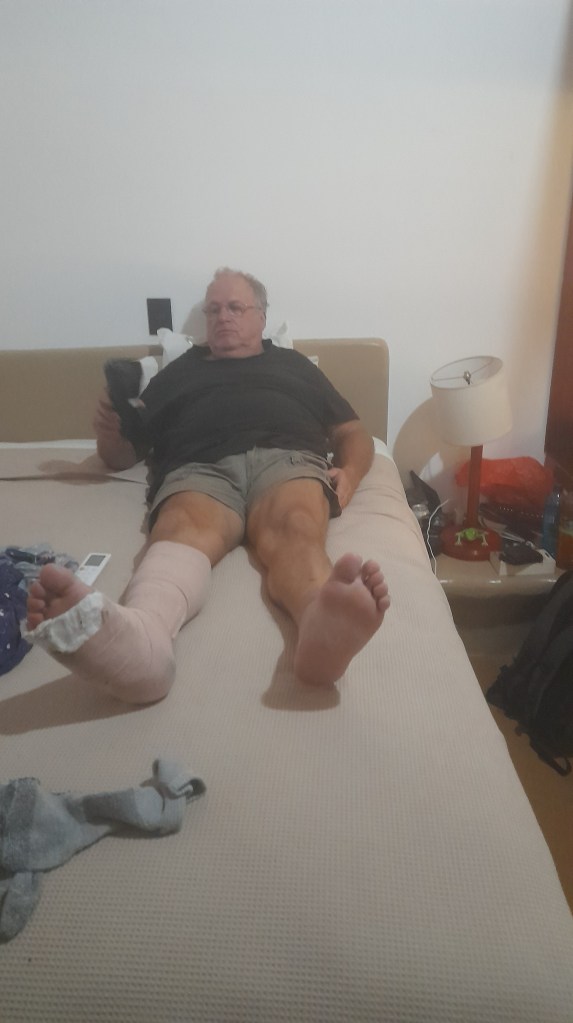
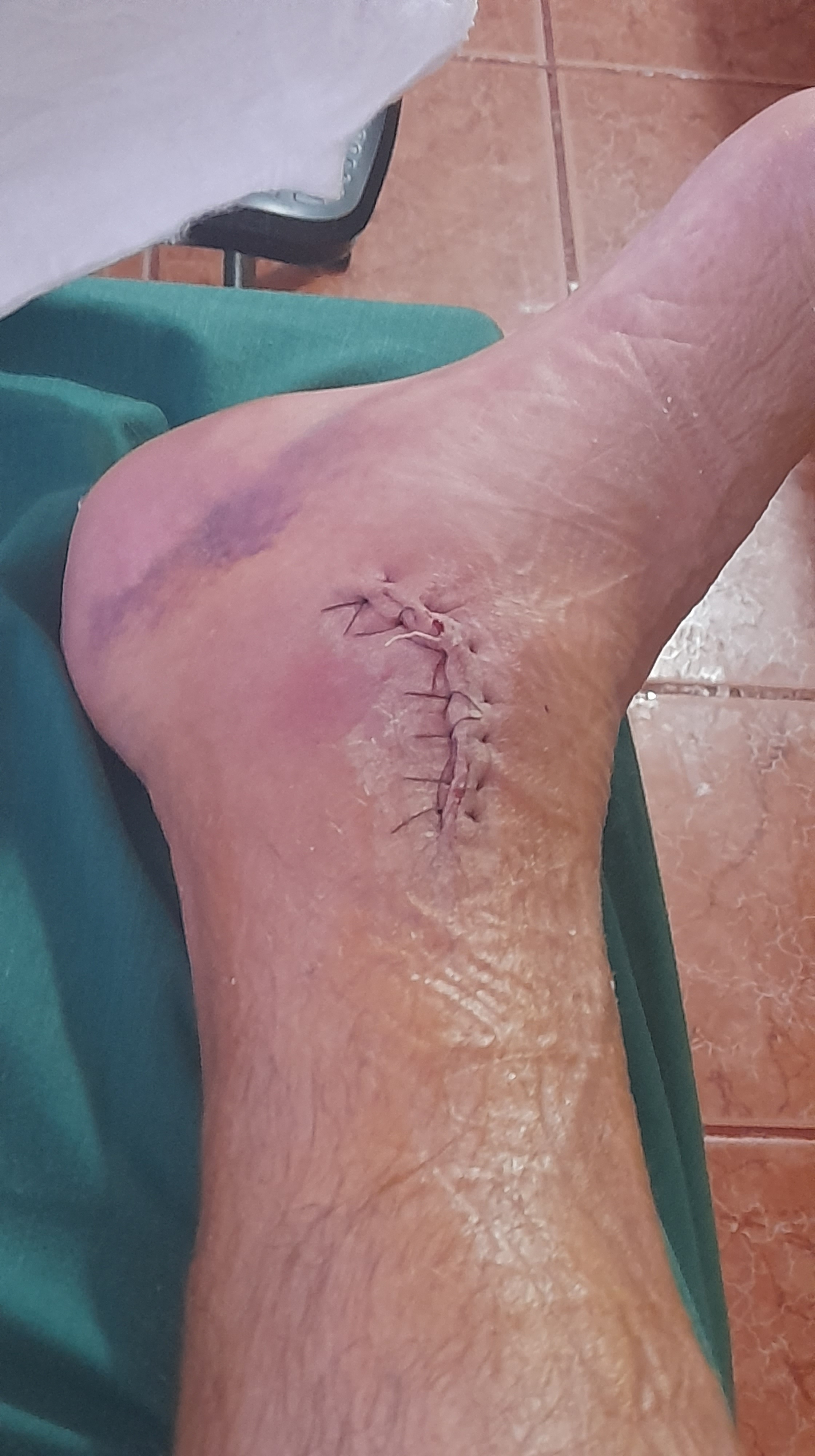
Well, a week after our arrival in the Rio Dulce we had finished all of our boat chores and we were ready to launch, but before we could hit the water, while carrying a bag of laundry up the ladder to the boat, I fell 10 feet to the concrete. The result was a broken ankle that required screws to put my foot back together. performed at a local clinic located in Frontaras, Rio Dulce Guatemala. I was rather hesitant to be operated on in a third world country, but when I learned that a Van of specialist was being dispatched from 5 hours away in Guatemala City to perform the surgery, I relaxed… some.
The operation went well and in two days I was back at Nanajuana Marina, checked into a room as Maiatla was still on the hard and there was no way I was going to attempt to climb the ladder anytime soon.
Rick brought meals to my room while he continued to prepare the boat for launching. A week later, Maiatla was put back in the lake. Armed with crutches and knee pads, I wasted no time in moving back aboard.
Bored stiff in my hotel room after surgery.
Well Maiatla was ready to hit the high seas but I was not. The dock would be home for me and Maiatla for the next 6 weeks. Unfortunately, after four weeks Rick had to leave so I was left alone to fend for myself. With the help from other cruisers, like Bill and JoAnne of Altrua. I survived.
JoAnne, Bill and Rick at diner at Nana Juana. These people made life bearable back at the Marina.
I spent Christmas alone on the boat but I was invited to a large cruisers Christmas day dinner. I was treated like royally as people that I hardly knew, took turns bring food, and drink. I even had an escort to make sure that this drunken sailor on crutches, made it back to his boat at the end of the night.
Life at the dock in Nana Juana Guatemala
I turned down an invitation to attend the New Year’s Eve celebration at the Nanajuana Marina restaurant. Choosing instead to make popcorn, sip on mediocre box wine while cruising Netflix. At midnight I retired to the aft deck to watch a spectacular display of fireworks that lit up the entire harbor.
My home of convalescents at Marina Nana Juana. All dressed up and no where to go!
Rick and I chilling by the pool.
After another two weeks of lying about, an old friend and shipmate, Al decided to fly in and give me a hand. Al also had an ulterior motive for his visit as he wanted to check out Belize as a potential retirement location. He said he was done with North Carolina and all its rednecks and with the re-election of Trump, he thought he best get out of the country.
Cruisers Christmas diner.
Al arrives to give me a hand.
Well six full weeks after my fall, I had follow up x-rays with the specialist who said that I was healing well but to stay off it for another two weeks. So with those encouraging words, Al and I prepared to cast of for a short day sail for Punta Gorda, Belize.
We arrive in Belize, customs dock at Punta Gorda.
I was there also!
We would spend three weeks exploring the magnificent islands of Belize as we made our way north to Belize City where we took a dock for a few days at Kukumber Marina. The place boasts a massive saltwater lagoon with a monster water slide with beachside food courts. And of particular delight was the bevy of tanned, bikini clad beauties laying about.
Anchored at Moho cay.
Kukumber (Pronounced Cucumber) was a great place for a couple of weary sailors fresh from the sea to hang out for a couple of days. Kukumber was the only marina in Belize City with enough water for Maiatla’s deep draft of 6 feet. Reluctantly, Al traveled inland to look at property while I headed back out to the Drowned Cays to hang out in peace and work on the boat.
By now my foot was healed and if it were not for the 6 inch long scar on my ankle, I would have forgotten all about it. No pain or discomfort. I was cured.
Al at South Water Cay
Al had intended to be gone for a week but he returned after just a couple of days as he had caught a bug and was sicker than the preverbal dog. While he fought his illness, we sailed to the tourist mecca of Cay Caulker where I promptly rushed Al to the clinic.
Al in the medical clinic on Cay Caulker.
He was sicker than he thought. After receiving intravenous antibiotics and 2 bags of saline, for extreme dehydration, I took Al back to the boat to rest. Four days later we were back in Belize City where I put Al onto a flight home. It would be many weeks before he would make a full recovery.
It was now mid-February. The boat was running well and my foot was no longer a concern. But I was at a bit of a loss as what to do. All the plans to have family and friends join me on this epic voyage were scuttled. But in an effort to salvage some of the sailing season, I texted family to see who could still come down. As typically happens, none were able to join me now. But I would not be alone for long. My friend Marina, her sister Adriane and her daughter, Stephanie would join the boat for two weeks in March.
With a crew inbound in a few weeks, I retreated solo back down the coast to Placentia, Belize for a couple of weeks to hang out on a friends dock, Chris and Shannon, my Newfie friends and work on the boat.